Modernized edition · Full text · Free PDF/EPUB
A Christian Directory: Volume 6 in Modern English
Want the file? The PDF/EPUB is free with an account.
Summary
- Author
- Richard Baxter (1615 to 1691 AD), Puritan minister of Kidderminster
- Published
- 1673 AD, in A Christian Directory: Or, A Sum of Practical Theology, and Cases of Conscience
- Source edition
- Volume 6 of a seven-volume modern English edition of the Directory, from the London edition of 1825
- Part of the Directory
- Part 4, Christian Politics, from the address to the reader through theft and fraud
- Length
- 110,000 words · 7 hours
What is A Christian Directory: Volume 6 about?
A Christian Directory: Volume 6 holds the opening chapters of Part 4, Christian Politics, of Richard Baxter's 1673 Directory. It covers uprightness, counsel to rulers, the duties of subjects and four public callings, then the sixth commandment: murder, revenge, persecution, scandal and soul murder, followed by peace with all people and theft.
Read the full summary (7 points, key themes)Show less
How the argument unfolds
- 01
Upright living and rulers. Twenty rules for an upright life, then eighteen memoranda placing the magistrate's power and laws under God, with Erasmus's portraits of a good and a bad prince.
- 02
Duties of Subjects. Forty-one directions on the origin of power, the magistrate's role in religion, oaths, taxes and nonresistance, ending with a case on whether human laws bind the conscience.
- 03
Four callings. Lawyers, physicians, schoolmasters and soldiers are each directed to serve God and others before their own gain.
- 04
Murder, wrath and forgiveness. The causes of murder and self-murder, twenty considerations against revenge, and seven cases on forgiveness, lawsuits and self-defense.
- 05
Persecution and Liberty. Forty-one directions for avoiding persecution, including church communion on terms all Christians can accept.
- 06
Scandal and souls. How scandal is given and taken, twenty-six ways of soul murder, means of saving souls, and rules for exhortation and reproof.
- 07
Peace, theft and fraud. Sixteen directions for peace, eleven against theft and fraud, and sixteen cases of conscience about taking what belongs to another.
Key themes
- Power from God, not the people. A people may name its rulers and bound their power by agreement, but the authority itself comes from God alone.
- Holiness as the friend of order. True religion is the firmest bond of obedience: “Sin is the cause, and holiness the cure, of all the disorders and calamities of the world.”
- Souls before bodies. Silencing a faithful preacher or mocking godliness is a murder worse than killing the body, because it hinders salvation.
- Love above strict rights. A Christian may defend what God entrusted to him, yet must often forgo his due: “Never plead justice as a pretext against the great duties of love and patience.”
Reader questions (9)Hide the questions
Questions about A Christian Directory: Volume 6
Is there a modern English version of A Christian Directory: Volume 6?
Yes. This is A Christian Directory: Volume 6 by Richard Baxter in modern English. The language is modernized and the author's order and argument are kept. The full modernized text is free to read on this page.
Can I read A Christian Directory: Volume 6 online for free?
Yes. The complete text of this modern English edition is on this page, with no sign-up or paywall.
Is there a free PDF of A Christian Directory: Volume 6?
Yes. The PDF and EPUB of this edition are free with an Updated Works account. Sign in with Google or an email link; no card is needed.
What is A Christian Directory: Volume 6 by Richard Baxter about?
It treats a Christian's duties in public life and toward a neighbor's life, soul and goods, from obedience to rulers to forgiveness, peace and honest dealing.
How does Volume 6 relate to the rest of A Christian Directory?
Volume 5 ends Part 3, on worship and the church. This volume begins Part 4, Christian Politics, and Volume 7 completes it with contracts, slander, love of neighbor, restitution and Baxter's reformed liturgy.
Why does Baxter argue against Richard Hooker?
Hooker held that lawmaking power belongs to whole societies and that a king is less than the whole body. Baxter answers that the people choose persons and may limit power but never confer it, while saying he does not oppose Hooker's case against tyranny.
Does Baxter allow subjects to resist their rulers?
No. Commands contrary to God must be refused and the penalty patiently borne, and a private man may not raise an army even to defend his own life against his prince.
Does Baxter favor toleration?
He would tolerate tolerable differences under a law that licenses and supervises them, as the Novatians once had churches in Constantinople, but not preaching against the Creed, the Lord's Prayer or the Ten Commandments.
May a starving person steal to save his life?
Ordinarily no, since the common good outweighs one ordinary life. Baxter allows exceptions where the public good requires the life, leaves the hardest case undecided, and requires repayment or confession.
A Christian Directory: Volume 6 in Modern English · Full text
Part 4: Christian Politics
To the Reader
Reader, do not think from the title of this part that I am repeating the work I recently revoked in my Political Aphorisms. Even though I declared that book to be as if it had never been written, I told you that I did not recant its teaching. That doctrine upholds the sovereign rule of God and the cause of government, order, and honesty in the world. This is not the place to give my reasons for revoking it, beyond the fact that it offended my superiors and stirred up talk in places where other subjects would be far more profitable. Set aside everything relating to our particular times and government, and you can see from it what principles of political order I consider divine.
Experience teaches me that men of my calling do best to meddle no further. We should leave it to writers like Contzen, Arnisaeus, and other Jesuits to advance their cause through massive volumes on politics. The pope’s falsely named church is a kingdom, so his ministers can write about politics more fittingly and, it seems, with less offense than we can. The Nubian Geography puts it aptly when describing him: “There is a certain king dwelling at Rome called the pope,” and so on. Nothing truly fits our office except the pure doctrine of salvation. Let statesmen and lawyers attend to the rest.
There are two things I must explain and defend in this part.
1. It is incomplete because it lacks directions for princes, nobles, members of parliament, and other magistrates, even though the happiness of kingdoms, churches, and the world depends on their duty. To this I answer that those must teach them whom they are willing to hear. My own reason and experience forbid me, as an unwelcome voice, to address them without a special invitation. Knowing this, I can bear the criticism of strangers who know neither them nor me.
I am not so proud as to expect men so far above me to stoop to read my directions, much less to think me fit to instruct them. Anyone may reprove a poor servant or a beggar, for that is part of their privilege. Great men, however, must not even be admonished by anyone except themselves and those they choose to hear. At the very least, nothing is a duty when a person has good reason to believe it will do far more harm than good. My own judgment is strongly against meddlesome, presumptuous preachers who are too eager to interfere with their rulers or public affairs. They imagine God sends them to reprove people and matters unfamiliar and above them, and they air their grievances on uncertain reports or without a calling.
2. I also expect to be both blamed and misunderstood for what I say here in refuting Mr. Richard Hooker’s political principles, as well as for my own citation of Bishop Bilson and similar authors. Yet readers should notice two things.
(1) I do not dispute everything in Mr. Hooker’s first and eighth books. I oppose only the principle that the people are the fountain of authority, or that kings receive their office itself from the people, along with the consequences of that claim. I do not meddle at all with how far the people in various countries have power to elect particular persons, families, or forms of government. Nor do I meddle with how far nature grants them property rights and the consequences that follow.
(2) Nor do I single out Mr. Hooker out of any envy toward his name and honor. I freely admit that I name him so people may know whose principles these really are. Some may groundlessly question whether the incomplete eighth book is genuinely his own in those passages. If so, let them remember that the substance of everything I refute is found in his first book, which is old and highly honored by … you know whom. I will do him the honor, and myself the dishonor, of admitting a plain fact. I think the far greater number of moral and political writers, both Roman Catholics and Protestants, are on his side, and the fewest on mine. Still, truth is truth.
I write at greater length on the duty of subjects because, even if they will not listen, I may at least instruct them boldly and freely.
If any useful cases of conscience are missing from the latter part, it is simply because I could not recall them. Farewell.
Chapter 1
Rules of Upright Living
Solomon says in Proverbs 10:9, “He that walketh uprightly walketh surely.” Blamelessness and uprightness are the distinguishing marks of Job (Job 1:1, 8; Job 2:3). Throughout Scripture, being upright or righteous, walking uprightly, and acting righteously are the titles of those who are acceptable to God. By uprightness is meant not only sincerity as opposed to hypocrisy, but also rightness of heart and life as opposed to crookedness or sin. This uprightness appears in different degrees. We usually call the lowest saving degree sincerity, and the highest degree perfection.
Concerning an upright life, I will first briefly show you some of the blessings that should make us all love it, and second give you some necessary rules for putting it into practice.
1. The Blessings of an Upright Life
1. Uprightness of heart and life is a sure fruit of the Spirit of grace. As a result, it marks our union with Christ and proves that we are acceptable to God. “My defense is of God, who saveth the upright in heart” (Psalm 7:10). “For the righteous Lord loveth righteousness, and his countenance doth behold the upright” (Psalm 11:7). It is a title God takes to himself: “Good and upright is the Lord” (Psalm 25:8), and “To show that the Lord is upright, he is my Rock, and no unrighteousness is in him” (Psalm 92:15). God also calls himself the Maker, Director, Protector, and Lover of the upright. “God made man upright” (Ecclesiastes 7:29). “The Lord knoweth the way of the righteous” (Psalm 1:6). “What man is he that feareth the Lord? him will he teach in the way that he shall choose” (Psalm 25:12). “He layeth up sound wisdom for the righteous; he is a buckler to them that walk uprightly” (Proverbs 2:7).
2. The upright are the pillars of human society who uphold truth and justice in the world. Without them, society would be nothing but a band of liars, deceivers, robbers, and enemies living in constant plunder and hostility. People could put no trust in one another beyond what self-interest required. “Lord, who shall abide in thy tabernacle? Who shall dwell in thy holy hill? He that walketh uprightly, and worketh righteousness, and speaketh the truth in his heart” (Psalm 15:1, 2). That is why the wicked, the enemies of peace, and the destroyers of society are always portrayed as enemies of the upright. “For lo, the wicked bend their bow, they make ready their arrow upon the string, that they may privily shoot at the upright in heart. If the foundations be destroyed, what can the righteous do?” (Psalm 11:2, 3). “The just and upright man is laughed to scorn” (Job 12:4). “The wicked have drawn out the sword to slay such as be of upright conversation” (Psalm 37:14).
Indeed, it is for the sake of the upright that God preserves societies, just as Sodom could have been spared for ten Lots. At the very least, the upright themselves are under the protection of the Almighty. “He that walketh righteously and speaketh uprightly, he that despiseth the gain of oppression, that shaketh his hand from holding of bribes, that stoppeth his ear from hearing of blood, that shutteth his eyes from seeing evil; he shall dwell on high, his place of defense shall be the munitions of rocks: bread shall be given him; his waters shall be sure. Thine eyes shall see the king in his beauty: they shall behold the land that is very far off” (Isaiah 33:15–17). “The upright shall have good things in possession” (Proverbs 28:10). “The house of the wicked shall be overthrown; but the tabernacle of the upright shall flourish” (Proverbs 14:11).
3. Uprightness brings peace of conscience, quietness, and holy security to the soul. This was Paul’s rejoicing, the testimony of his conscience, that “in simplicity and godly sincerity he had had his conversation in the world, and not in fleshly wisdom” (2 Corinthians 1:12). This was David’s comfort as well: “For I have kept the ways of the Lord, and have not wickedly departed from my God; for all his judgments were before me, and as for his statutes, I did not depart from them. I was also upright before him, and have kept myself from mine iniquity. Therefore hath the Lord recompensed me according to my righteousness; … with the merciful thou wilt show thyself merciful, and with the upright thou wilt show thyself upright” (2 Samuel 22:22–26).
Yet peace is too small a word. Exceeding joy is the inheritance and most fitting condition of the upright. “Be glad in the Lord, and rejoice, ye righteous, and shout for joy, all ye that are upright in heart” (Psalm 32:11). “Rejoice in the Lord, O ye righteous, for praise is comely for the upright” (Psalm 33:1). “The righteous shall be glad in the Lord, and trust in him, and all the upright in heart shall glory” (Psalm 64:10). “Light is sown for the righteous, and gladness for the upright in heart” (Psalm 97:11). The Spirit who sanctifies them will also comfort them.
4. Just as the upright themselves please God, so their upright life and duties are especially delightful and acceptable to him (Psalm 15:2). “The prayer of the upright is his delight” (Proverbs 15:8). Therefore God blesses their duties to them, and they are comforted and strengthened as they experience his blessing in them. “The way of the Lord is strength to the upright, but destruction shall be to the workers of iniquity” (Proverbs 10:29). “Do not my words do good to him that walketh uprightly?” (Micah 2:7).
5. No worldly schemes, no earthly power, no help of friends, and no other human means can place a person in such safety as uprightness of heart and life. To walk uprightly is to walk securely, because such people walk with God, in his way, under his favor, and under his promise. If God is not enough to keep us safe, nothing is. “Surely the righteous shall give thanks unto thy name; the upright shall dwell in thy presence” (Psalm 140:13). “The integrity of the upright shall guide them, but the perverseness of transgressors shall destroy them. The righteousness of the upright shall deliver them, but transgressors shall be taken in their own naughtiness” (Proverbs 11:3, 6).
6. Finally, the failings and weaknesses of the upright are pardoned, and therefore they will certainly be saved (Romans 7:24, 25; Romans 8:1). Even in all their weaknesses, the upright can say with Solomon, “I know also, my God, that thou triest the heart, and hast pleasure in uprightness; as for me, in the uprightness of my heart, I have willingly offered all these things” (1 Chronicles 29:17). “God will do good to them that are good, and to them that are upright in their hearts” (Psalm 125:4). The upright love him (Song of Solomon 1:4) and are loved by him. “No good thing will he withhold from them” (Psalm 84:11).
The right way to comfort the human mind is to show a person his uprightness (Job 33:23). “And whoso walketh uprightly shall be saved” (Proverbs 28:18). “For the highway of the upright is to depart from evil; and he that keepeth his way, preserveth his soul” (Proverbs 16:17). I conclude with Psalm 37:37: “Mark the upright man, and behold the just, for the end of that man is peace.”
2. Rules for an Upright Life
The true rules for an upright life are these:
1. Anyone who would walk uprightly must be completely devoted and submitted to God. He must have a God, the true God, and only one God, not merely in theory, but in sincerity and reality. His God’s word must be an absolute law to him. This God must command his whole self, his time, his possessions, and everything he has or can do. God’s will must be his will, so that God may do with him whatever he pleases. God must mean more to him than the whole world; God’s love must satisfy him as better than life, and God’s approval must be enough to encourage and reward him (Psalm 73:25; Psalm 63:3; 1 Corinthians 4:3, 4; Philippians 3:8, 9, 18, 19; Psalm 4:7, 8; Luke 12:4; Matthew 6:1–3).
2. His hope must be set on heaven as the only true happiness of his soul. He must look for his reward and the outcome of all his labors and patience in the world to come. He must not dream, like the hypocrite, of a happiness made up first of worldly things and then of heaven once he can keep the world no longer. Anyone who cannot and does not in his heart give up the whole world for a heavenly treasure cannot be upright in heart or life. He must stake everything on the promise of better things to come and, forsaking all, take Christ and everlasting joy as his portion (Luke 14:26, 27, 33, 34; Luke 18:22; Matthew 6:19, 20; 1 John 2:15; Philippians 3:18, 21).
3. He must have an infallible teacher, who is Christ alone, and the encouragement of pardoning grace when he fails so that he does not sink into despair. Therefore he must live by faith in a Mediator. He must also possess the settled inner principle of a nature renewed by the Spirit of Christ (John 12:16; John 15:1 and following; John 3:5, 6; Romans 8:8, 9).
4. Anyone who would walk uprightly must have a sure, just, and infallible standard, hold fast to it, and test everything by it. That standard is the word of God alone. Human teaching should be valued as a help to understanding this word. The judgment of our teachers and of those wiser than ourselves should carry great weight with us in subordination to Scripture. Yet neither the learned, nor the godly, nor the great may ever stand on the same level as the word of God as our final rule (2 Timothy 3:15; Isaiah 8:20; 1 Thessalonians 5:12; Isaiah 33:21; James 4:12; Hebrews 8:10; Hebrews 10:16; Nehemiah 9:13, 14; Psalm 19:7; Psalm 119:1–3).
5. Anyone who would walk uprightly must have both a solid and a broad understanding. He needs to know things truly as they are and see every relevant detail in the cases he must decide and the actions that involve his integrity.
(1) There is no walking uprightly in the dark. Zeal will make you move quickly, but it will not keep you on the right path if sound judgment does not guide it. Misguided zeal will drive you to do evil with double force, blasphemously attributing your sins to God, refusing to repent, and justifying your wrongdoing (Proverbs 1:5; Proverbs 10:23; Proverbs 17:27; Proverbs 3:4; Psalm 111:10; Ephesians 1:10; Acts 26:18; Colossians 1:9; Colossians 2:2; 2 Timothy 2:7; 1 Corinthians 14:5, 20). This is what drove Paul to fury in persecuting the church. As Proverbs 15:21 says, “Folly is joy to him that is destitute of wisdom; but a man of understanding walketh uprightly.” No one can do well what he does not understand well. Therefore you must study and take tireless pains to gain knowledge. Wisdom never grew out of idleness, though the illusion of wisdom thrives nowhere better. Our own age has shown us to what dangerous cliffs ignorant zeal can drive people.
(2) Your understanding must also be broad, or it cannot be solid. When many details bear on an action, overlooking even a few can ruin the whole work. Narrow-minded people turn like a weathervane with the wind of the times or with every temptation, and they rarely escape one sin except by falling into another. Prudence must govern an upright life. Prudence sees everything that needs to be seen and weighs every circumstance in the balance. Without it, you may do great harm while seeming to do the greatest good (Luke 24:45; Matthew 15:16; Ephesians 5:17; 1 Timothy 1:7; Proverbs 8:5; John 12:40; 2 Peter 2:12; Romans 3:11; Matthew 13:19, 23; Isaiah 52:13; Hosea 14:9; Proverbs 14:15, 18; Proverbs 18:15; Proverbs 22:3; Proverbs 8:12; Ephesians 5:15; Psalm 101:2). “The prudent man looketh well to his going” (Proverbs 14:15). “See therefore that ye walk circumspectly” (that is, to a hair’s breadth), “not as fools, but as wise.”
6. You may object that, sadly, few even among the upright have minds strong enough for this. I therefore add that anyone who would walk uprightly must have this knowledge for himself in the great essentials of religion, and in everything else must at least have the guidance of the wise.
(1) He must be wise in the great matters of his salvation, even if he is weak in other things.
(2) He must work hard to recognize who are truly wise and qualified to guide him. In cases of conscience, he must go to them just as a sick person goes to a physician. It is a great mercy to be wise enough to tell a wise man from a fool and a faithful counselor from a deceiver (Psalm 119:98; Proverbs 1:6–8; Proverbs 12:15, 18; Proverbs 13:1, 14, 20; Proverbs 15:2, 7, 12, 31; Proverbs 22:17; Proverbs 25:12; Ecclesiastes 12:11; Daniel 12:3, 10; Matthew 24:45; Psalm 37:30; Ecclesiastes 2:13; Isaiah 33:6; Matthew 12:42; Luke 1:17; Luke 21:15; Acts 6:3; 2 Peter 3:15; Malachi 2:6, 7; 1 Thessalonians 5:12, 13; Hebrews 13:7, 17; Titus 1:9, 13; Titus 2:1, 8; 2 Timothy 4:3).
7. Anyone who would walk uprightly must master his passions. He should not be unfeeling, but calm and sober. Some emotion is needed to stir the mind to its duty, yet unruly passion powerfully deceives the understanding. People readily grow certain of whatever they feel passionately about. Passionate judgments are often wrong and should always be held suspect, because it is exceedingly hard to indulge any strong passion without twisting our reason to some degree. That is one major reason why the most confident people are usually the most mistaken and blind. Whenever you have been wronged, or whenever your emotions are stirred in any way, be sure to post a double guard over your judgment (Proverbs 14:29; Colossians 3:8).
8. Anyone who would walk uprightly must distinguish not only between plain good and evil, but also between a greater good and a lesser one. Most sin in the world consists in choosing a lesser good over a greater good. He must keep the scales in his hand and weigh good against good. Otherwise he will build himself a religion of sin and put sacrifice ahead of mercy. He will hinder the gospel and human salvation for the sake of a ceremony, break the bonds of love and faithfulness over every opinion he calls truth, and tithe mint and cumin while neglecting the weightier matters of the law. Choosing a lesser good over a greater one is sin, and it is the most common way of sinning. Something is not a duty at a moment when it conflicts with a greater good (Matthew 9:13; Matthew 12:7; Psalm 40:6; Psalm 51:16; 1 Samuel 15:22).
9. He must always pay joint regard to both the command and its intended purpose. The goodness of some actions can barely be seen anywhere except in the command itself, while other actions are clearly good because of the good they produce. We must neither do evil and break a law so that good may come from it, nor use pretended obedience to do harm, as if God had made his laws to destroy the church or human souls rather than to build them up (2 Corinthians 10:8; 2 Corinthians 13:10; Romans 15:2; Romans 14:9; 1 Corinthians 14:26; 2 Corinthians 12:19; Romans 3:8).
10. He must remain in union with the universal church, place its welfare above the goals of any faction whatsoever, and do nothing that tends to harm it (Ephesians 4:12 and following; 1 Corinthians 12).
11. He must love his neighbor as himself, treat others as he wants to be treated, love his enemies, forgive wrongs, and bear slander against them as if it were against himself (Matthew 22:39; Matthew 5:43, 44; Matthew 7:12).
12. He must be impartial, never surrendering his judgment or love to the views or agenda of a party or sect. He must not assume that everything believed or done by those he likes best is right, nor that everything believed or done by his opponents is wrong. Instead, he must judge the words and deeds of those who oppose him as if they had been spoken or done by people on his own side. Otherwise he will live in slander, backbiting, and gross injustice (James 3:15–18; Galatians 2:13, 14; Deuteronomy 25:16; 1 Corinthians 6:9).
13. He must be deliberate in judging both matters and people. He must not be rash or hasty in believing reports or adopting opinions. He must not judge truth by first appearances, but examine the plain evidence. Nor should he judge people by prejudice, rumor, and common talk (Matthew 7:1, 2; John 7:24; Romans 14:10, 13; 1 Peter 1:17).
14. He must be willing to receive and obey the truth at the highest cost, especially the cost of hard study and a self-denying life. He should not assume that everything is true simply because it costs people dearly, yet he must never think that real truth can be valued too highly (Luke 14:26, 33; Luke 12:4; Proverbs 23:23).
15. He must be humble and distrustful of himself, coming to Christ’s school like a little child, without proudly overvaluing himself and his own understanding. The proud and selfish are blind and contrary. They usually hold personal opinions or private agendas that clash with duty and with the good of others (Matthew 18:3; Proverbs 26:12, 16; Proverbs 28:20; 1 Corinthians 3:18; Proverbs 3:7).
16. He must keep an eye on future generations, not just on the present moment or age, and consider other nations, not merely the country where he lives. Many measures look necessary for some immediate crisis or project we want to finish, yet in the next generation they can produce harmful results. Especially in church and political pledges, covenants, and enforced requirements, we must look beyond our immediate needs. Likewise, many things seem necessary for a narrow local concern that people at a distance will view very differently (Judges 8:27; 1 Corinthians 7:35; 1 Kings 14:16; 1 Kings 15:26; Deuteronomy 29:22; Exodus 12:26; Joshua 4:6, 22; Joshua 22:24, 25).
17. Anyone who would walk uprightly must be able to bear the displeasure of the whole world when the cause of truth demands it. He must even be willing to face rejection from learned and good people themselves. He must value human favor for no more than it is worth. He should not despise it when it serves as a means of doing good. Yet he must rise completely above it as far as his own advantage is concerned. Uprightness does not ordinarily make a person despised by other upright people. Still, it may draw their criticism on specific points that are not yet widely accepted or recognized as coming from God (1 Corinthians 4:3, 4; John 5:44; Luke 14:26; Galatians 2:13, 14; Acts 11:2, 3).
18. He must make it a major part of his life’s work to put to death all those fleshly desires that sensual people make it their aim and happiness to indulge. Appetite, physical sensation, lust, and self-will must not be allowed to constantly twist his life. It is just as a fool suffering from dropsy works to satisfy his thirst, while a wise man works to cure it (Colossians 3:4, 5; Romans 6:1 and following; Romans 13:12, 13; Romans 8:13).
19. He must live a life of constant, skillful watchfulness. He must recognize that he is in continual danger and know his own particular corruptions, temptations, and remedies. He must keep a tender conscience and stay as far from temptation as possible. He must guard against unnecessary closeness to sin or pleasurable thoughts of it. Oh, what firm resolutions and sound knowledge have been brought down by the close baits of sensuality, such as food, drink, lust, and pleasures! Never think yourselves safe amid nearby temptations and easy opportunities to sin (Matthew 24:42; Matthew 25:13; Mark 13:37; 1 Thessalonians 5:6; 1 Peter 4:7; 1 Corinthians 16:13; Matthew 6:13; Matthew 26:41).
20. Live as people on their way to the grave. Die daily, and look at this world as if you were looking back at it from the world to which you are going. Let faith gaze as steadily at the unseen world as your eyes look at this one.
Death and eternity make people wise. When we come to die, we readily confess and repent of many things that no counsel or sermon could bring us to confess before. Death answers a thousand objections and temptations. It proves many empty pursuits to be sin that you once thought the preacher had failed to prove. Dying people are not drawn to drunkenness, impurity, or time-wasting amusements. They are not flattered into folly by sensual baits, nor do they fear the faces or threats of persecutors. Just as we must draw the motives for an upright life from the world to come, so we must draw its defense from there as well (Ecclesiastes 7:2–6; 2 Corinthians 4:16; 2 Corinthians 5:1, 7, 8; Luke 12:17–20; Luke 16:20 and following; Matthew 25:3–8; Acts 7:56, 60). And oh, how happy are those who faithfully practice these rules of uprightness!
In my judgment, far more of the doctrine of politics or civil government belongs to theology than those people understand who treat kings and laws as mere human creations. (Among the Jews, being a lawyer and being a theologian were one and the same, though being a lawyer was not the same as being a priest.) Still, I want to free my readers from the fear that I might meddle in matters outside my calling, and spare my book that reproach. I will therefore pass over all the following subjects that I otherwise would have addressed as useful in governing and obeying:
1. Humanity as social, communities and societies, their reason for existing, their origin, and the obligations resting on their members.
2. The nature of a city and of civil life.
3. A republic in general: (1) its institution; (2) its constitution and its parts; (3) its kinds; (4) how it differs from [1] a community in general, [2] a family, [3] a village, [4] a city, [5] a church, and [6] an accidental gathering; (5) its administration; and (6) the relation between God’s government and human government, between God’s law and human law, how they differ, and how human judgment relates to God’s judgment.
Indeed, I will not only gratify you by passing over all of this and much more in theory, but on the practical side as well, I will pass over the following:
1. Directions for supreme rulers.
2. Directions for lower magistrates regarding their duty toward God, their superiors, and the people.
3. The question of how far magistrates have authority in matters of religion, whether they are Christian or heathen.
4. How far magistrates should grant or withhold liberty of conscience, as it is called, namely in judging, professing, and practicing religion, along with other matters belonging to government. I also pass over all controversies over titles, supremacy, preservation, forfeiture, decay, danger, remedies, and restoration, which belong to statesmen, lawyers, or theologians.
All of these I pass over, except that I will venture to leave civil rulers a few brief memorandums (instead of formal directions) for advancing the cause of Christ, the church, and human salvation. Yet I assure the reader that I omit none of these topics out of contempt for the subject or for civil authority. I do not think magistrates unworthy of all our prayers and help, nor do I think their office of little importance to the welfare of the world and the church. I omit these topics instead for reasons well known to everyone who knows me and the government under which we live, and which I must not tell to others.
Chapter 2
Reminders for Rulers
Memorandum 1. Remember that your power comes from God. Therefore it must be used for God, and never against him (Romans 13:2–4). You are his ministers, and you can have no power unless it is given to you from above (John 19:11). Just as constables are your officers and subjects, so you are the officers and subjects of God and the Redeemer. You stand infinitely lower beneath him than the humblest subject stands beneath you. You owe him greater obedience than any subject can owe to you.
Therefore study his laws in nature and Scripture. Make them your daily meditation and delight (Joshua 1:3–5; Psalm 1:2–3; Deuteronomy 17:18–20). Remember also how strict a judgment you must face when you give an account of your stewardship. The greater your honors and mercies have been, the heavier your punishment will be if you abuse them through ungodliness (Luke 16:2; Luke 12:48).
Memorandum 2. Watch with the greatest care that you never embrace any cause opposed to the will or cause of Christ. Never set yourself against his cause or his ordinances. Let no temptation persuade you that Christ, the gospel, and the church are enemies to you or against your true welfare. Refuse to harbor suspicions against them. Instead, devote yourselves and your power wholly to Christ’s will and service. Make all your own pursuits stand in pure submission to him, just as they truly depend on him. (Read Psalm 2 and Psalm 101 often.)
Memorandum 3. Remember that, under God, your goal is the public good. Therefore desire nothing for yourselves, and do nothing to others, that genuinely works against that goal.
Memorandum 4. Remember that all your laws must simply serve the laws of God, promoting obedience to them among your subjects. Your laws must never contradict God’s laws. Nor may they stand as equals alongside them or claim independence from them. Rather, they stand toward God’s law just as a town’s bylaws stand toward the laws and will of the sovereign, from which they draw all their life and force.
Memorandum 5. Let no one persuade you that you are mere earthly creatures with nothing to do with the heavenly concerns of your subjects. Suppose people think your office aims only at their bodily prosperity, while the ministry aims at the good of their souls. They will then be tempted to rank a minister above you, just as they rank their souls above their bodies. Those who are taught to despise earthly things will soon think they may despise your office too, since no means can be greater than its end. There is no true temporal happiness for any people except what serves the happiness of their souls. All earthly welfare must be measured and judged by that standard.
Ministers work more directly upon the soul, yet your office also aims ultimately at the salvation and happiness of souls. You promote that end through outward means, such as rewards and punishments, which ministers as ministers may not use. You are therefore guardians of both tables of the law. You must direct the full force of your government toward saving your people’s souls.
As for the objection drawn from pagan rulers, distinguish between an office itself and the fitness to carry it out. The office consists of two things:
1. An obligation to do the duty.
2. Authority to do it.
A pagan ruler possesses both of these. Otherwise his neglect would be a duty rather than a sin. What a pagan ruler lacks is the fitness to perform the duty of his place, and he lacks it through his own fault. Therefore his omission is his sin, just as it is a sin for an unqualified minister not to preach. Both questions share the same nature and the same answer: Is an ignorant, incompetent, or heretical minister bound to preach? If he is truly a minister, he lacks neither authority nor obligation, but fitness. Yet he is obligated in a proper order: first to gain the needed abilities, and then to preach. The same holds true for a pagan ruler.
Memorandum 6. Encourage and strengthen a learned, holy, self-denying, earnest, and hardworking ministry. Recognize that the very Lord who instituted your office also commissioned theirs. Such men are fitted for the work their office requires. Souls are precious, and the guides and physicians of souls can never be too well equipped or too diligent. Nowhere on earth has the church prospered except where the abilities, holiness, and diligence of its pastors have prospered. God has always built up his church through such men. The devil has always pulled it down by pulling them down.
Memorandum 7. Remember that earnestly religious people, who love, worship, and obey the Lord with all their hearts, are the best of your subjects and the honor of your realms. See to it that serious godliness is encouraged everywhere. Never let the profane and ignorant mob be emboldened in their hostility toward it. At the same time, prudently discourage and suppress genuine fanaticism, hypocrisy, and schism. Leave no one any encouragement to attack true godliness under the slander or pretext of those labels.
If Christianity is better than paganism, which Christians deserve your favor? Surely those who go further in holiness, love, and justice than pagans do. Do not favor those who rise no higher, apart from opinions and outward forms, than a Cato, a Plato, or a Socrates. If all religion were a fraud, it would deserve to be banished, atheism should be openly professed, and men should admit they are nothing more than beasts. But if there is a God, there must be religion. And if we must be religious, we must surely be so in earnest, not in hypocrisy and jest. Religion is no small or contemptible thing to be reduced to hollow flattery.
Memorandum 8. Work for the unity and harmony of all churches and Christians under your rule, on the terms that once united all the churches of Christ. Those terms are the Holy Scriptures implicitly, as the general rule, and the ancient creeds explicitly, as the summary of what we must believe. They also include the Lord’s Prayer, as the summary of what we must desire, and the Ten Commandments, as the summary of what we must do. This presupposes that we live in peaceful obedience to our rulers. Their laws must govern us not only in civil affairs, but also in ordering those external circumstances of worship and discipline that God has left to their determination.
Memorandum 9. See that everything in God’s worship is done to build people up, decently and in order. Let the body honor God as well as the soul. Yet take care that the ornaments or outward garments of religion are never used against its substance. Holiness, unity, love, and peace must always take first place.
Memorandum 10. Cherish the fear of sinning against God in everyone. Show tenderness toward those who are overly scrupulous and cautious in smaller matters. Do not arrange affairs in ways that chiefly favor corrupt consciences, people who dare to say or do anything for their own selfish ends. Those who are truest to their God are truest to their rulers. When a person fears the wrath of God and hell, it is a pity to push him too harshly. Men without conscience will remain loyal to their rulers no longer than it serves their own advantage. Therefore conscientiousness ought always to be encouraged.
Memorandum 11. If clergy or the most religious citizens commit an offense, let their punishment fall only on themselves, without striking at Christ, the gospel, or the church. Never punish Christ for his servants’ failings. Never punish the gospel for those who sin against it, nor the souls of the people for their pastors’ faults. Make sure that the cause of Christ and the welfare of human souls remain protected.
Memorandum 12. If disputes among lawyers or statesmen create factions in the commonwealth, do not lay the blame on religion, even if some ministers join one side or the other. When the quarrel concerns points of law rather than theology, do not fault religion for something in which it has no hand. Stay alert against Satan. He constantly works to turn civil factions and disputes to the dishonor of religion and the harm of the church and the gospel.
Memorandum 13. Regard covetous, ambitious, and selfish men who chase after promotion as the least fit to be consulted in religious matters. Count them also as the least fit to be entrusted with the care of souls. Instead, choose humble, self-disciplined, self-denying men as the fittest pastors for the churches.
Memorandum 14. Never side with one faction of quarrelsome pastors to oppress the rest when their disagreement concerns tolerable matters. Instead, press them toward unity on humble, yielding, and patient terms. Otherwise there will be no end to the trouble. The faction you favor will split into still more factions. Meanwhile, the church will suffer both from losing the oppressed party and, even more, from the division itself.
All history declares only too openly what tragic ruin the quarrels of bishops have brought upon the churches in every age since primitive times. Yet it is easy to see how much a holy, wise, and peaceable magistrate can accomplish in keeping peace among them. He can do far more than will ever happen if their own hot-headedness goes unchecked. This is especially true when the ruler keeps the sword in his own hand. He must never place it in the hands of churchmen, above all a single faction bent on oppressing the rest.
Memorandum 15. Do not believe accusations brought against Christ’s faithful ministers until they are proved. Never judge them, or any of his servants, on the reports of their enemies before they have had a chance to speak for themselves. The common corruption of fallen nature fills ungodly people with deep hostility toward holiness. Little truth or fairness can be expected from wicked and malicious lips regarding any holy cause or person. If such informers receive a welcome hearing and encouragement, their malice will multiply and their slanders will grow shameless. That is the meaning of Proverbs 29:12: “If a ruler hearken to lies, all his servants are wicked.” The story of Saul and Doeg would soon become commonplace if rulers listened to such slanderers (Proverbs 22:7; Proverbs 28:16; Psalm 119:23; Proverbs 25:2).
Memorandum 16. Whenever a case is doubtful regarding punishments or harsh measures against conscientious people in matters of religion, return to your broad governing principles. Let them guide your specific decision. Remember that the very work and aim of your office is that under your rule people may live quiet and peaceful lives in all godliness and honesty (1 Timothy 2:2). Remember that rulers are not a terror to good works, but to evil. You exist to praise those who do good, serving as God’s ministers for our good and as avengers executing wrath on wrongdoers (Romans 13:3–4).
Remember also the grave danger of persecution described in Scripture (Matthew 18:6, 10, 14; 1 Thessalonians 2:15–16; 2 Chronicles 36:14–17). Remember that whoever doubts concerning morally neutral matters is condemned if he does them, because he does not act from faith (Romans 14:23). Keep in mind whom and what God himself forgives and bears with. Always distinguish the weaknesses of earnest, conscientious Christians from the wickedness of unscrupulous and ungodly men. At the same time, never excuse anyone’s wickedness simply because he makes a hypocritical profession of religion.
Memorandum 17. Remember that you must serve as examples of holiness to your people. Avoid every sin you would have them avoid, and excel in every virtue you would commend to them. This is essential not only for the happiness of those under your care, but also for your own salvation. As Paul tells Timothy, “Take heed unto thyself, and unto the doctrine, continue in them; for in doing this, thou shalt both save thyself, and them that hear thee” (1 Timothy 4:16). In the same way I may say to rulers: take heed to yourselves and to your government, and persevere in them. In doing this, you will save both yourselves and those you govern. Good men are most likely to do good, while the wicked will do wickedly (Daniel 12:10).
The chief means by which rulers become thus holy and exemplary are four:
1. Listen to the teaching and counsel of the word of the Lord, and meditate on it day and night (Joshua 1:3–4; Deuteronomy 17:18–20). Surround yourselves with faithful, holy, and self-denying teachers (2 Chronicles 20:20).
2. Beware of the company and advice of the wicked. “Take away the wicked from before the king, and his throne shall be established in righteousness” (Proverbs 25:4–5).
3. Guard most carefully against the special temptations of high office. Watch especially against sensuality and pride, and against placing your own honor, advantage, and will ahead of the honor, cause, and will of Jesus Christ. “Woe to thee, O land, when thy king is a child, and thy princes eat in the morning! Blessed art thou, O land, when thy king is the son of nobles, and thy princes eat in due season, for strength, and not for drunkenness!” (Ecclesiastes 10:16–17). “It is an abomination to kings to commit wickedness; for the throne is established by righteousness” (Proverbs 16:12).
4. Keep the outcome of holiness always in view. Think how surely it leads to glory hereafter and leaves a sweet, honorable name and memory on earth. Wickedness, by contrast, is the certain path to shame on earth and misery forever (Luke 18:22, 24; Deuteronomy 17:20; Proverbs 29:14; Proverbs 22:29; Proverbs 16:13; Proverbs 31:3–4; 2 Chronicles 32:25; 2 Chronicles 20:16; Ezekiel 28:2, 5, 17; Luke 12:19–20; Luke 16:19–20, 25).
Memorandum 18. Rulers should not be content merely to do good at home and be the joy and blessing of their own subjects. They should also set their hearts on advancing faith, holiness, and concord throughout the churches of the world. Use your influence with other princes and states through friendly correspondence and treaties to promote these ends. In that way you may be a blessing to the fullest extent of your power, just as Constantine interceded with the Persian king to stop him from persecuting Christians in his realm.
I will presume to speak no further to my superiors. In the golden age, these reminders will be put into practice. I will simply add Erasmus’s portrait of a good prince and of a bad prince, as quoted by Alstedius in his Encyclopedia.
The Image of a Good Prince
“If you will draw the picture of a good prince, depict some heavenly being, more like God than a man. He is complete in all the perfections of virtue and given for the good of all. Indeed, he is sent from heaven to relieve mortal men’s affairs, most discerning and watching over all. To him nothing is more prized, nothing sweeter, than the commonwealth. He bears more than a fatherly affection toward all, and every citizen’s life is dearer to him than his own.
“Night and day he labors and strives for nothing else than that all may prosper. He holds rewards ready for all who are good, and pardon for the bad, if only they will turn to a better course. He longs so freely to deserve well of his subjects that, if need be, he will not hesitate to preserve their safety at his own peril. He counts his country’s welfare as his own gain. He keeps constant watch so that others may sleep peacefully. He allows himself no idle leisure so that his country may enjoy quiet peace. He burdens himself with unending cares so that his subjects may live in tranquility. In short, he is one on whose virtue the public happiness depends.”
The Image of a Bad Prince
“If you would set a bad prince before the eye, you must paint some savage, horrid beast made up of monstrosities like a dragon, a wolf, a lion, a viper, and a bear. He is armed on every side, with six hundred eyes, toothed on every side, and terrifying on every side. He has hooked talons and an insatiable belly, fed on human flesh and drunk with human blood. He watches to prey upon the lives and fortunes of all the people. He is a plague to everyone, especially to the good, and a fatal evil to the world. Everyone who wishes the commonwealth well hates and curses him. He can neither be endured because of his cruelty, nor removed without great calamity to the world, because his wickedness is armed with guards and wealth.”
Supporting Notes
On Memorandum 1. The treatise On the Government of Princes, ascribed to Thomas Aquinas and cited by Grotius, makes this clear. “The end at which a king must chiefly aim, both in himself and in his subjects, is eternal blessedness, which consists in the vision of God,” it states. “Because that vision is the most perfect good, it ought above all else to move a king and every ruler to see that his subjects attain this end.”
Even Aristotle could write in his Politics that each citizen’s active and contemplative life, not merely public peace, is the goal of government. He adds that the best life is the one that contributes most to our contemplation of God, while the worst draws us away from contemplating and worshiping him. As Cicero observes in On Ends, “How many unjust things can be done that no one can censure!” Read also Plutarch’s Precepts of Policy, including his counsel that older men should be rulers.
On Memorandum 7. Julius Capitolinus writes of the Antonine emperors that they refused to be greeted by corrupt persons. Likewise, Lampridius reports of Alexander Severus that he admitted none to greet him except honorable men of good reputation. He commanded that no one enter his presence unless he knew himself to be innocent. He also proclaimed through a herald that no one who knew himself to be a thief should greet the emperor, so that he would not be exposed and put to death. Even Croesus, Dionysius, and Julian were generous to philosophers and eager for their company. As Augustine writes in The City of God, “The true happiness of a commonwealth is to love God and be loved by God, recognizing him as its King and itself as his people.”
On Memorandum 10. Augustine writes in his Letter to Boniface: “All kings who did not forbid and overthrow practices established among God’s people contrary to God’s commands are blamed. Those who forbade and overthrew them are praised above the merits of others.”
On Memorandum 11. Victor of Utica records how Hunneric, the Arian Vandal king, resolved to banish, imprison, and persecute the orthodox bishops and pastors. First he tested them with threats and various cruelties, and then he appointed a public debate. Having no better pretext, his own bishops and officers cruelly beat the people and pastors. They then falsely reported to the king that the orthodox had avoided debating through uproar and clamor. At last the king summoned all the pastors who had gathered for the debate. To trap them, he imposed an oath requiring them to accept his son as king after his death and to send no letters overseas.
This oath divided the orthodox among themselves. One group of bishops and pastors argued, “If we refuse a lawful oath, our people will say we abandoned them. The ruin of the churches will then be blamed on us.” The other group, seeing the snare, felt forced to plead Christ’s command, “Swear not at all.” Having separated them and taken all their names, the king sent every one of them to prison.
To those who took the oath, his officers said, “Because you swore contrary to the command of the gospel, you shall never see your cities and churches again. You shall be sent into the countryside to farm the land. You must not presume to sing psalms, pray, carry a book, baptize, ordain, or absolve.” To those who refused the oath, they said, “Because you did not desire the reign of the king’s son and refused the oath, you shall be banished to the island of Corsica to cut timber for the ships.”
Consider also what Mariana wrote about his own order in On the Reform of the Jesuits. He was a ninety-six-year-old Jesuit, learned in Hebrew, Chaldean, Syriac, Greek, and Latin. “Out of an excessive love of absolute rule, the General of the Jesuits admits secret accusations into his files and believes them without hearing the accused,” he writes. “Even pagans condemn this kind of injustice. In his governing he does not imitate good kings who honored the senate, but tyrants like Tarquin the Proud, who strove above all to weaken the senate’s numbers and authority so that he could do whatever he pleased. In the same way, the General and his assistants hate general synods. They try every device to prevent assemblies where they would have to account for their actions.”
Mariana continues: “In choosing officers, the Jesuit General cares nothing for a man’s talents or higher gifts. He cares only for how closely a man conforms to himself or his provincial. That is why base, servile men are put in office, men who let themselves be pulled by their superiors like a wooden puppet on another’s strings. There is no band of robbers in which justice does not have more place than in our Society … Not only are learning and ignorance treated as equal, but learning itself is a barrier to receiving the rewards owed by human and divine right. The superiors of our Society are men unworthy of office, because the General fears and wants removed those whose virtues stand out. Good men are more suspect to him than bad men.” The rest of Mariana’s writings are well worth reading as a warning from a Jesuit to rulers in both state and church.
On Memorandum 14. Lampridius counts it among the good deeds of Alexander Severus that he preserved the privileges of the Jews and allowed Christians to exist. By contrast, Victor of Utica notes that in his day “the Arian bishops, presbyters, and clergy raged more cruelly than the king and the Vandals.”
On Memorandum 15. As Cicero writes, “The first duty of justice is that no one harm another unless provoked by injury.” Read also Cicero’s letter to his brother.
On Memorandum 16. Lactantius asks: “Who can impose on me the necessity either of believing what I am unwilling to believe, or of not believing what I wish to believe?”
On Memorandum 17. Diogenes Laertius quotes a saying of Solon: “A ruler of the people must first order himself rightly before ordering the people. If princes and great men live according to the laws, every commonwealth will be governed best.” On Paul’s words “continue in them” (1 Timothy 4:16), Dr. Hammond glosses them as “spend your time in them.”
Acosta makes a sad observation about the peoples of the Indies: “Certain experience has shown that those Indian nations with the greatest royal power and political skill held more numerous and graver forms of devilish superstition. By contrast, among those whose condition was humbler and less politically organized, idolatry is far rarer. Some even affirm with certainty that several Indian tribes are completely free from idol worship.”
Erasmus writes in his preface to Suetonius: “Among countless other benefits gained from trustworthy historians, this is the chief one. Nothing else equally fires the hearts of good kings to praiseworthy deeds, or curbs and restrains the lusts of tyrants. Both realize that through these writings their entire lives will soon be brought out onto the stage of the whole world and of every coming age. Whatever they now commit in secret or disguise with painted pretexts will soon be dragged into the clearest light before everyone’s eyes. Even what they force men through fear to pretend not to see, rather than truly conceal, will be exposed. Then posterity, free alike from fear and hope and uncorrupted by partisanship, will applaud noble deeds with common consent. With equal freedom, it will hiss and condemn the opposite.”
Chapter 3
Duties of Subjects
Since I am now to speak of the duties that I myself must practice, and to address those of my own rank, I will do so with greater freedom, confidence, and expectation of attention and obedience.
Direction 1. I will pass by most political theory, especially controversial points, and will not presume to play the lawyer’s part. Still, I must advise you to understand enough of the cause, nature, and goal of government to guide your obedience and guard you against every temptation to rebellion.
Above all, beware of errors that confuse sovereignty and subjection. Guard against ideas that mislead people into imagining that they are the original source of power. Some imagine they may entrust it as they please, call their rulers to account, reclaim it as forfeited, and revoke their trust. I caution you against these errors of popular sovereignty not to flatter kings, but to give God his due. First, I will briefly set down the truth. Then I will answer a few of the chief objections.
Propositions on Civil Authority
Proposition 1. That government in general should exist, and that people should obey it, is established in nature itself by the God of nature. He made human beings social creatures, each one unable to stand alone. He made commonwealths necessary for the welfare and safety of individuals, and he made government necessary for commonwealths.
This, therefore, is not left to the people’s whim. We can imagine unusual cases in which a single person lives outside any commonwealth and is not bound to civil government. Yet that exception only confirms the general rule. In the same way, everyone is ordinarily bound to live in fellowship with a local church and know his own pastor. A few may still be excepted, such as ambassadors, travelers, sailors, soldiers, or exiles. So here: the obligation to live under government rests on humanity at large, even though a few individuals may be exceptions.
Proposition 2. Rulers are therefore God’s officers, placed under him in his kingdom, since he is the universal, absolute Sovereign of the world. They receive their power from God, who is the sole source of authority. Not only does their physical strength come from his strength, but their authority, their right to govern, comes from his supreme authority. They are like mayors and bailiffs in incorporated towns, who receive their power from the king. As Scripture says, “There is no power, but of God; the powers that be, are ordained of God” (Romans 13:1–3).
Proposition 3. This governing power in general is not an empty title. By its very institution, it contains everything genuinely necessary to achieve the proper goal of government.
Proposition 4. Yet God has left certain matters undetermined. These include what is commonly called the specific form of government, certain lesser details of its scope and manner of operation, and the particular persons or families who will rule. It is in these three areas that communities act:
1. God has not determined whether sovereignty shall rest in one person, two, ten, or more, nor how it shall be divided in practice.
2. Nor has he determined every detail of whether the power shall reach to this or that specific matter. He has not fixed whether it shall be exercised through standing courts, temporary judges, and the like.
3. Nor has he named the individual person or family who shall rule.
Proposition 5. Even though these three matters are settled in a nation’s constitution by explicit or implied agreement between ruler and community, none of them makes the people the true givers of the ruler’s governing power. Neither the first nor the third does so. Both merely identify who will receive that power, whether one person or several, and which specific individuals. Nor does the second do so. Limiting, bounding, or regulating governing power so that it is not used to harm the people is not the same as giving that power.
Since the people hold the physical strength, they cannot be governed against their united wills. If they agree with their rulers to be governed in such and such a way, or not at all, they are still not bestowing governing power. They do possess property, and in that realm they may be givers. Setting boundaries, choosing the form of government and the persons who rule, and contributing from their property are all that belong to them. Choosing a person or family does not confer authority at all. Their choice is only an indispensable condition. They merely open the door to admit the ruler and name the man or family to whom God, not they, grants the authority.
Consider a marriage. God has already determined what authority a husband holds over his wife. When a woman chooses a man to be her husband, she does not give him that authority. She simply chooses the man to whom God grants it by his standing law. She may place limits on how he disposes of her estate through agreements made beforehand. Yet if she contracts against his governing role, the contract contradicts itself and is void. Nor, if he abuses his power, does his authority revert into her hands.
Similarly, suppose the king grants a charter authorizing a town corporation to elect its mayor or other officers. The citizens only nominate the person who will receive the office. It is the king’s charter, not the citizens, that gives him his authority.
Again, suppose a soldier voluntarily enlists under the king’s general or other commanders. He only chooses the man who will command him. It is the king’s commission that gives the officer authority over those who voluntarily enlist. And if that authority is abused or forfeited, it returns not into the soldiers’ hands, but into the king’s.
Proposition 6. The founding consent or agreement of ancestors binds all their descendants to uphold the constitution, if those descendants wish to enjoy the protection and benefits of government. Otherwise governments would be so unstable and shifting that they could never achieve their proper end.
Proposition 7. Neither in nature nor in Scripture has God vested governing power, in whole or in part, in the people as a mere community, much less as subjects. That holds whether they are noble or common, learned or unlearned. It holds whether we mean a part of the community or the whole body, acting directly or through representatives. The people as such do not possess this power either to exercise or to bestow.
Instead, the absolute Sovereign of the entire world imparts sovereign power in every kingdom or commonwealth directly from himself. When I say directly, I do not mean without an instrument declaring his will. The law of nature and Scripture serve as his instrument and charter of authority. Nor do I mean without any intermediate condition, since the community’s consent and nomination, as explained above, may be an indispensable condition. Rather, it comes so directly from God that no intermediate holder first receives the power from God and then transfers it to the sovereign.
Proposition 8. The natural power that individuals hold over themselves differs completely in kind from political or civil power. An individual’s surrender of this natural power of self-disposal to one or more rulers is not the efficient cause of sovereignty or civil authority.
Proposition 9. Take the word “law” properly, meaning the expression of a ruler’s will that binds the governed and creates their duty, rather than loosely for mere agreements between sovereign and people. The definition itself then proves that neither subjects nor the community as such possess legislative power. Neither nature nor Scripture has given the people power to make laws, either by themselves or jointly with the sovereign, whether the whole power or a share of it. By the very nature of government, the entire legislative power, the power to enact binding laws, belongs to the supreme sovereign alone. (Only when supreme power is shared among many hands do we compare the sharers with one another and call one party the sovereign because it holds the larger share.)
Those who are not governors at all cannot perform the highest act of government, which is making governing laws. And the people are not governors at all, either as a community or as subjects. You can therefore see easily that all arguments for a natural democracy rest on false assumptions. Wherever the people hold any share in sovereignty, they hold it by a later constitution, not by nature. Kings do not receive their authority as a gift from the people, who never possessed it to use or give. They receive it from God alone.
Proposition 10. God has not issued a universal rule favoring one form of government over the others, whether monarchy, aristocracy, or democracy. What suits one people best may be worse for another. Still, monarchy is ordinarily judged better than aristocracy, and aristocracy better than democracy. So much, briefly, on the origin of power.
Objections from Richard Hooker Answered
Objection 1. Worthy Mr. Richard Hooker writes in The Laws of Ecclesiastical Polity: “That which we spoke of the power of government must here be applied to the power of making laws by which to govern. This power God has over all. By the natural law to which he has made all subject, the lawful power of making laws to command whole political societies of men belongs so properly to those same entire societies that for any prince or potentate of whatever kind upon earth to exercise it of himself, without either an express commission received directly and personally from God, or else authority derived at first from the consent of those upon whom he imposes laws, is no better than mere tyranny. Laws they are not, therefore, which public approval has not made so.”
Answer. Because this famous theologian carries such great weight among his admirers, I will venture a reply so that his words do not cause greater harm. I do not write in confident defiance, but in humble proposal. I submit my judgment to superiors and wiser men, well aware of my own inferiority and weakness. Yet I consider his claim an assertion nowhere proved by him, and fully refuted by me elsewhere.
Laws are the effects and signs of a ruler’s will, and the instruments of government. Making laws is the primary work of government. If the entire body of people are naturally governors, then the ruling part and the subject part are hopelessly confused. If even the most absolute monarch can make no laws, then disobeying them would be no fault. It is enough that rulers derive their authority directly from God, even though men choose the persons who hold it. Their authority does not flow from the people’s consent. It flows from God, with the people’s consent serving merely as an indispensable condition.
Suppose an entire community addresses its elected king in these words: “We do not claim to possess any governing power either to use or to give. We simply choose you or your family for the office God has instituted, and through that institution God gives you the power upon our choice.” Can anyone prove that such a king has no authority and is a tyrant simply because the people disclaim being the source of his power, when in fact they are doing their exact duty? Remember that throughout this discussion we are not speaking of the particular constitution of this or that kingdom. We speak of kingdoms and commonwealths in general.
Objection 2. Hooker writes further: “To me it seems almost beyond doubt and controversy that every independent multitude, before any fixed form of government is established, has under God supreme authority and full dominion over itself …”
Answer. If “dominion” means property, then every individual possesses it. But as for governing power, it seems just as clear to me that an independent multitude has no civil governing power at all. They have only the ability to choose governors for themselves. While they have no governors, they have no governing power, for it is that power that makes a governor.
Objection 3. He adds: “A man who is lord of himself may be made another’s servant,” and so on.
Answer.
1. A man may hire himself out to work for another because he has control over himself to that extent. His labor is his own to sell for wages. Yet within a household, the master’s authority to see that God’s laws are obeyed by his servants comes from divine appointment. The servant does not bestow this governing authority on his master; he merely places himself under it.
2. The power nature gives a person over himself is completely different in kind from civil government, as Dr. Hammond has ably demonstrated against John Goodwin. An individual does not hold the same power over his own life that a king holds. He may not put himself to death for crimes for which the king may rightly execute him.
3. Even if every individual could, through self-surrender, give a king power over him, possibility does not prove actuality. We know this is not what actually happens because God, the universal Sovereign, has acted beforehand. He himself appoints his officers and grants them their power in the very charter by which he permits the people to choose them. Hooker’s argument is no better than claiming that if all the citizens of London submitted to the lord mayor, he would receive his authority from them. In reality, the king has already forestalled that by granting the mayor’s power in his royal charter. He leaves to the citizens only the choice of the person, under the rules the king has prescribed.
Objection 4. Hooker writes again: “In kingdoms of this kind, like the one we live in, the highest governor has indeed universal dominion, yet with dependency upon that whole entire body over whose several parts he holds dominion. So it stands as a maxim in this case that the king is greater than any individual, yet less than the whole body.”
Answer. If you included the king himself within the whole, he obviously cannot be greater than the whole, because he cannot be greater than himself. Since you speak of the whole body in distinction from him, I answer that with respect to the final cause, the end of government, the sovereign is indeed less than the whole body. That is, the entire kingdom naturally has greater worth than one person, and its happiness is a greater good. Otherwise the public good and the welfare of the people could not be the goal of government.
Yet that does not touch our question, for we are speaking of governing power as a means to that goal. With respect to the efficient cause, the sovereign, and even his lowest officer, possesses more authority and right to govern than all the people as a body. The people as such have none at all. In the same way, the church is of greater worth than its pastor, yet the pastor alone has more authority to administer the sacraments and govern the congregation than the entire flock has. Whatever some may say to the contrary, the flock has no such authority either to exercise or to bestow. It simply chooses the man to whom God will grant it.
Objection 5. The reverend author continues: “Nor can any reasonable person think otherwise than that the first institution of kings, by an original flow of power from the body into the king, is the cause of kings’ dependency in power upon the body, a sufficient reason why their power should always depend on the source from which it flowed. By dependency we mean subordination and subjection.”
Answer.
1. If the institution of rulers in general comes from God, and that institution gives them their authority without it ever flowing from the body of the people at all, then your entire structure collapses with its foundation.
2. Here you seem plainly to overturn every kingdom by turning the ruling part into the subject part, and vice versa. If the king is subject to the people, how are they his subjects? I will not trace out what this teaching will lead people to do once they are told that kings stand in subordination and subjection to them. Bitter experience has already shown us what this very principle produces.
Objection 6. He adds: “A clear sign of this dependency may be seen here. Just as there is no surer proof that lands are held under a lord than seeing those lands return to him by reversion when heirs fail, so it rightly follows that since dominion returns to the body when no heir remains to inherit it, those who formerly inherited it held it in dependence on the body. Thus, comparing the body with the head regarding power, power seems always to reside in both: fundamentally and at the root in one, derivatively in the other; in one as a settled possession, in the other in active exercise.”
Answer. Governing power no more reverts to the multitude when heirs fail than a pastor’s power reverts to the congregation, a physician’s power to the hospital, or a schoolmaster’s power to his students. That is, it does not revert at all. When all royal heirs have died, the people become an ungoverned community. They have the ability to choose a ruler, but no power to govern, neither as a settled possession nor in active exercise, neither originally nor derivatively. It is just like an incorporated town when the mayor dies: his authority does not fall back to the townspeople.
Therefore you lay no sound basis for your next question: “May a political body then at all times withdraw, in whole or in part, the flow of dominion that passes from it, if inconveniences arise?” You answer that question cautiously yourself. Yet it is easy to see how the multitude may be tempted to answer it on your premises, especially when they convince themselves that an inconvenience has grown into a necessity. Consider too what use they will make of your next remark: “It must be presumed that supreme governors will not in such cases resist and be stubborn in holding onto what is used to the public harm.” That is a strange presumption indeed.
Objection 7. Hooker writes: “The maxims of our royal government are these: ‘The law makes the king’; the king’s grant of any favor contrary to law is void; ‘The king can do nothing except what he can lawfully do.’”
Answer. Suppose “law” is taken loosely for the founding contract between prince and people, and “makes” refers only to the form of government and the person chosen rather than to the substance of governing power itself. In that sense, I do not contradict you. But take “law” strictly as an authoritative establishment of duty, or the declaration of the sovereign’s will obliging subjects. Then the law does not make the king. Rather, the king makes the law.
Objection 8. Hooker argues: “When all the wisdom of every sort of person has done its utmost in framing laws for the church, it is the general consent of all that gives them the form and vigor of laws. Without that consent they could be no more to us than a physician’s advice to the sick. They might well appear as wholesome warnings and instructions, but laws they could never be without the consent of the whole church to be guided by them. Both nature and the practice of God’s church recorded in Scripture agree so fully with this that God himself would not impose even his own laws upon his people by the hand of Moses without their free and open consent.”
Answer.
1. Wisdom merely prepares laws. Governing authority enacts them and gives them their legal force. Because the whole body of people holds no such governing authority, they cannot give laws their binding form.
2. The people’s consent to God’s laws did not give those laws their form or authority. I have already refuted that opinion elsewhere against a more erroneous writer. Their consent to God’s laws was indeed required as naturally necessary for their obedience, not as necessary for the existence or binding force of the law. Can you really believe that disobeying God’s laws would have been no sin unless people had first consented to them? On that view, the entire world could escape sin and condemnation simply by withholding consent from God’s laws.
3. This teaching will persuade people that we have no church laws at all, because the entire church has never expressed its consent. Millions of the poorer sort have no vote in electing members of Parliament or church convocations. Such a principle will also teach every dissenting minority to consider itself freed from obligation for lack of consent. It hands every dissenting group or individual a veto over all church laws.
4. A single bishop holds governing authority over his local church, and the members are bound to obey him (Hebrews 13:7, 17). If the governing authority of one pastor is not suspended for lack of consent from any or all of the people, much less is the governing authority of king and Parliament.
Objection 9. Hooker claims: “It is an undoubtedly natural thing that all free and independent societies should make their own laws, and that this power should belong to the whole, not to any particular part of a political body …”
Answer. This is often asserted, yet never proved. In many nations, the representatives of the whole body hold the legislative power, or a share of it. Yet that stems from the particular constitution of that commonwealth, not from nature. Nor is it common to all nations. All that naturally belonged to the people as such was to choose their lawmakers and safeguard their liberties. It was never theirs to make laws themselves, whether directly or through mere delegates.
Objection 10. He states further: “No one doubts this point, namely, that in all societies, companies, and corporations, whatever each member is individually bound to do must be ratified by the assent of all. It would violate all fairness for a man to suffer harm at the hands of others for failing to keep what he never agreed to, either directly or through representatives …”
Answer. I am one who more than doubts what you say no one doubts. Do you not even make an exception for God’s laws, and for all human laws that merely enforce them and move people to obey them? Just as people are bound to obey God whether they consent or not, so they are bound to obey the laws of their sovereigns even if they never consented to those laws, or even to the sovereign’s rule. As long as they remain members of a commonwealth to whose government the sovereign is lawfully called, millions of dissenters may still be bound to obey until they leave that society.
Objection 11. Hooker asserts: “If magistrates are heads of the church, they must of necessity be Christians.”
Answer. That can never be proved. A constitutive head of the church must indeed be a Christian, and more than that: a pastor for a local church, and Christ for the universal church. That kind of headship our kings disclaim. Yet a king would still be head over the church, in the sense of being its coercive civil governor, even if he were not a Christian.
A man who is not a physician may still be head over all the physicians in his kingdom. Though he is no philosopher or craftsman, he may still be head over all philosophers and craftsmen, holding supreme coercive power in all their civil affairs. In the same way, a king would hold civil authority over all Protestants even if he were not a Protestant, and over all Christians even if he were not a Christian. You object that someone who is not a member of the church cannot be its head. I reply: he cannot be its constitutive, essential head, as the pastor is. Yet he may be head over it and hold all coercive civil power over it. A king is not a member of many town corporations within his kingdom, yet as head of the kingdom he is head over them as parts of the whole.
Objection 12. Hooker writes: “Whatever power the king has, he has it by law; its bounds and limits are known, and the entire community gives order …” He adds: “As for those who exercise power wholly against order, although the kind of power they hold may be from God, their exercise of it is against God, and therefore not from God except by permission, as all injustice is.” And again: “By usurpers of power we do not mean those who by violence have climbed to places of highest authority, but those who use more authority than they ever received in the form and manner just mentioned. Such usurpers, who in exercising their power do more than they were authorized to do, cannot in conscience bind anyone to obedience.”
Answer. It is true that no one can exercise more power than he actually possesses. Since the power we are discussing is rightful authority, the right to govern, it is impossible to use more authority than one has. Rulers may, however, issue commands beyond and without authority. It is also true that where a person has no authority or right to command, he cannot directly bind anyone to obedience.
Even so, a ruler may legitimately exercise more power than human beings ever gave him, and bind people to obedience by it. God grants rulers power to govern for his glory, according to his laws, and to promote obedience to God’s laws in nature and Scripture through subordinate laws of their own. A sovereign may do all of this even if the people, when choosing him or his family, simply said, “We take you as our sovereign ruler.” In that case, he may do everything that sound reason and Scripture make the duty of a sovereign. He may govern the people by all just means that serve the public good and their everlasting happiness. A people who merely choose a person or family to govern them, setting no limits, give no power to those they choose. They simply designate who shall receive power from God.
Still, I grant you this: if the chosen person or family enters into a contract with the people to govern only within specified limits, they have bound themselves by their own agreement. In that way, both specific forms of government and particular limits on power enter through human action. Yet always maintain four clear distinctions:
1. Distinguish between the people giving away their property, such as their goods and labor, which they may do, and giving away authority or governing power, which they do not have to give.
2. Distinguish between naming the persons who shall receive authority from the universal King and granting that authority themselves.
3. Distinguish between bounding and limiting power and actually conferring power.
4. Distinguish between a sovereign binding himself by contract and being bound by the governing authority of others.
When rulers are limited by contracts, commonly called constitutional or fundamental laws, it is their own consent and contract that effectively binds and limits them. The people’s will may indeed be the occasion of that contract, when they resolve to be governed on no other terms. Yet suppose no contract limits them, and they are simply chosen as the supreme powers without naming specific concessions or restraints. Then in their ruling they are absolute with respect to men. They remain limited only by God, from whose supreme authority they can never be exempt. In nature and Scripture, God restrains them from everything impious and unjust, everything against his laws and honor, or against the public happiness and safety. Remember here too that subjects may wrongly imagine that God restrains a magistrate when he does not, or claim that a ruler’s commands contradict God’s word when they do not. In such cases, their error will not excuse their disobedience.
Although I have answered these passages from this reverend author, I have not done so to lead anyone to undervalue his learned writings. My aim is simply to set the reader straight on the principles of obedience, on which faithful practice so deeply depends.
I admit that other political writers say just as much as Mr. Hooker, both Roman Catholics and Protestants, though not all of them, nor in my judgment the soundest. I will cite Alstedius alone, an excellent man though mistaken on this point. In his Encyclopedia, he writes: “The whole people is worthier and more powerful than both the magistrate and the ephors. Hence political writers rightly teach that the people hold the kingdom and the rights of majesty by ownership and dominion. The prince and the ephors hold them by use and administration.” (In truth, the people do not hold the kingdom or the rights of majesty in any way at all.)
Alstedius continues: “Suppose the administrators refuse to do their duty, command wicked and unjust things, or act against the love of God and neighbor. Then the people will take up the care of their own safety, revoke the rule of those who abuse it, and put others in their place. Moreover, the ephors hold stronger authority than the king himself. They appoint and depose the prince, which is the fullest proof of preeminence. This prerogative is established by mutual covenants. Meanwhile, the prince is said to hold supreme power insofar as the ephors commit to him the administration of rule and the fullness of authority.
“Finally, the power of the whole body of nobles is not infinite and absolute. It is bounded as it were by fixed laws and barriers, since it is tied not to their own pleasure but to the benefit and safety of the people. Hence their duties are to designate, appoint, and inaugurate the king, and to aid him with counsel and support once appointed. They undertake nothing in public affairs without the prince’s consent and approval so long as he does his duty. Yet at times they hold an assembly without the prince’s knowledge when public necessity demands it … They defend the people against every kind of disturber and violator.” I think Mr. Hooker’s principles and Alstedius’s were much the same. I will not venture to quote Alstedius’s further conclusion on resisting a tyrant.
Many other authors take the same path, claiming that the people hold underlying sovereignty. Roman Catholics, Protestants, and pagans alike have said so. Yet I believe what I have answered to Hooker is enough to expose the weakness of their foundations. It is no part of my purpose to contradict Hooker or anyone else insofar as they expose the hateful sin of tyranny. Tyranny today bars the gospel from by far the greatest part of the world and stands as the chief enemy of Christ’s kingdom. Nor do I oppose them when they plead for the just liberties of the people. What I reject is their claim that governing authority originates with the people.
Direction 2. Begin with an absolute, universal, and resolute obedience to God. He is your Creator and Redeemer, your sovereign King, and your final, righteous Judge. Someone who is not a loyal subject to the king can never properly obey the king’s officers. In the same way, someone who does not submit his soul to the original authority of his Creator can never truly obey the derived authority of earthly rulers.
Objection. Experience teaches us that many ungodly people obey their superiors just as readily as others do.
Answer. They may obey outwardly in the act itself, but not formally, from a right principle, or for right ends. A rebel against the king may obey a justice of the peace for his own convenience, as long as the justice leaves him alone or takes his side. Yet he does not obey him sincerely as the king’s officer. In the same way, ungodly people may flatter princes and magistrates for selfish ends or from some secondary motive, not sincerely as God’s officers.
Someone foolish, dishonest, and impious enough to rebel against his Maker is unlikely to give true obedience to men. He will not honor an authority whose original source and first cause he denies. Satan and his servants may claim otherwise, and some hypocrites may contradict in their lives the religion they profess. Yet nothing is more certain than that the most earnest, godly Christians are the best subjects on earth. Their own core principles easily prove it.
Direction 3. Having begun with God, obey your rulers as God’s officers, with an obedience that is ultimately directed to God. Holy people must do everything in holiness. That is, God must be seen, obeyed, and aimed at in all things, and therefore in civil magistrates in a special way.
Ungodly people obey, or rather flatter, magistrates on two lower grounds. First, they view them as men who can bring them bodily benefit or harm. In this they are like a horse, dog, or other animal that follows you for its belly and loves to stay where it is fed best. Second, whenever they find corrupt rulers, they prize them as the leaders of their own party and encouragers of their evil ways. Wicked men love wicked magistrates for serving Satan. Faithful people, however, must honor and obey a magistrate as an officer of God. Even a magistrate simply as a magistrate, and not only as a holy man, is an officer of the Lord of all.
That is why the fifth commandment serves as the hinge of the two tables of the law. Many ancient writers considered it the last commandment of the first table, while modern writers place it as the first commandment of the second table. It commands our duty toward the highest rank of human beings, not merely as human beings, but as God’s officers. Those who view rulers merely as strong men mastering weaker men, like the strongest beast dominating the rest, degrade the office. Nothing will make you sincere and steady in honoring and obeying rulers except receiving them as God’s officers. Remember by whose commission they govern and whose work they perform, knowing that “they are the ministers of God to us for good” (Romans 13:1–5).
If you fail to do this, you commit a threefold wrong:
1. You wrong God, whose servants they are. Whoever despises them despises not man, but God.
2. You wrong the magistrate. You treat him like an ambassador mistaken for the messenger of some Jack Straw, or some ordinary fellow carrying no more weight than his personal worth.
3. You wrong yourselves. By overlooking God’s claim and authority in your rulers, you forfeit God’s acceptance, protection, and reward.
Subjects, just like servants, must learn that great lesson in Colossians 3:23–25: “Whatsoever ye do, do it heartily as to the Lord, and not unto men: knowing that of the Lord ye shall receive the reward of the inheritance, for ye serve the Lord Christ: but he that doth wrong shall receive for the wrong, which he hath done; and there is no respect of persons” (see also Ephesians 6:5–8).
Magistrates are just as truly God’s officers as preachers are. Therefore, just as whoever listens to preachers listens to him, so whoever obeys rulers obeys him. The exceptions are alike in both cases: we must not accept everything a preacher says, nor do everything a ruler commands. Yet both, within their proper sphere and work, must be honored as officers of God, not as mere men who have no higher authority than their own to back them up.
Direction 4. Do not let a ruler’s personal vices make you forget the dignity of his office. The authority of a sinful ruler comes from God and must be obeyed accordingly. On this point, read Bishop Bilson at length in his excellent treatise Christian Subjection. He writes against the papists who excommunicate and depose princes whom they consider heretics or supporters of heretics.
The sins that will damn a man’s soul and shut him out of heaven will not strip him of his kingdom. Nor do they release his subjects from their duty of obedience. An unbeliever or an ungodly Christian (that is, a hypocrite) can hold the office of a prince, just as he can be a parent, husband, or master.
The apostle has taught all people, as well as servants, their duty to such rulers. He writes: “Servants, be subject to your masters with all fear; and not only to the good and gentle, but also to the froward; for this is thankworthy, if a man for conscience toward God, endure grief, suffering wrongfully. For what glory is it if when you are buffeted for your faults, you take it patiently? but if when ye do well and suffer for it ye take it patiently, this is acceptable with God; for even hereunto were ye called” (1 Peter 2:18–21). Having godly rulers is a rare mercy. Having ungodly ones is a heavy judgment, yet it is a judgment that must be borne.
Direction 5. Do not expose or magnify the vices of your governors to their dishonor. Their honor is essential to the public good. Even if they fail to guard their own honor, their subjects must guard it. Once rulers lose honor, people far more easily despise, hate, and disobey them. Dishonoring rulers therefore leads toward the breakdown of government and the ruin of the commonwealth.
Only in two cases did the ancient Christians emphasize the wickedness of their governors.
1. When rulers were cruel monsters like Nero, who lived to the misery of mankind.
2. When rulers were not only open enemies of Christ’s church, but their honor stood in direct rivalry with the honor of Christianity, piety, and honesty, as in Julian’s case.
I admit that wise and sober people have spoken very freely with tongue and pen against Nero and Julian, both living and dead, and against many like them. Yet we must not forget the fifth commandment: “Honor thy father and mother.” Nor may we forget Peter’s charge: “Fear God, honor the king” (1 Peter 2:17). Though you must never call evil good, you may conceal and cover evil. Ham was cursed for uncovering his father’s nakedness. You must flatter no one in sin or hinder anyone’s repentance, but rather promote it by every righteous means. Even so, speak honorably of your rulers and strive to build an honorable esteem for them in the people’s minds. Do not imitate those who think they do well when they secretly make their rulers look hateful by exposing and magnifying their faults.
Direction 6. Subdue your passions, so that no injuries you suffer from rulers disturb your reason or move you to dishonor them in revenge. If you may not avenge yourself on private individuals, much less may you do so on magistrates. The tongue can be an unjust avenger just as surely as the hand. Passion will provoke you to tell everyone, “This and that is how I was treated.” It will also persuade you that telling the truth about your suffering is no sin. Remember, however, that the public good and the honor of God’s officers matter far more than vindicating one injured person. Many a discontented individual has set whole kingdoms on fire by spreading governors’ faults to vindicate himself.
Objection. Shall cruel, unrighteous, or persecuting rulers do mischief and never hear of it or be humbled for it?
Answer. Consider three things in reply.
1. Preachers of the gospel, and others who have opportunity, may privately tell rulers of their sin to bring them to repentance (if they will receive it). That can be done without dishonoring them publicly.
2. Historians will report their wickedness to posterity, to their lasting disgrace, unless repentance and right conduct restore their honor. Flatterers mislead the living, yet truth will expose their wickedness once they are dead. It is God’s own decree that “the memory of the just is blessed, but the name of the wicked shall rot” (Proverbs 10:7).
3. God himself will execute full vengeance on the impenitent forever. He has told you that “it were better for him that offendeth one of his little ones, that a millstone were hanged about his neck, and he were drowned in the depth of the sea” (Matthew 18:6). Is not all this enough without the revenge of your angry tongues? Speaking evil of dignitaries, despising authority, and bringing slanderous accusations were the sins of the ancient licentious heretics. Christ left us his example not to revile even the lowest person when we are reviled (1 Peter 2:23). If you believe that God will vindicate the innocent and avenge them speedily (Luke 18:7–8), why are you so eager to justify and avenge yourself?
Objection. If God wills that their names rot and be spoken ill of after death, why may I not speak against them while they are alive?
Answer. A faithful historian and a self-avenger differ vastly, both in the nature of the act and in its effects. Dishonoring bad rulers while they live stirs up the people to rebellion and renders them unable to govern. Speaking the truth about them after death casts reproach only on the sin and warns others not to follow them in evil. No wicked prince has ever been great or powerful enough to prevent this, because it is part of God’s settled judgment. Even then, historians must expose the faults of the person without bringing the office into contempt. They must preserve the reverence due to the authority and station of governors.
Direction 7. By all means overcome a selfish mind. Cultivate a holy, public spirit that values God’s honor and the public good above your own. Selfishness is the great rebel and enemy of God, the king, and our neighbor. A selfish, self-centered person does not care what the commonwealth suffers as long as he profits by it. To avenge himself, climb higher, or increase his wealth, he will betray and ruin his king, his country, and his closest friends. A selfish, ambitious, covetous man stays faithful to no one any longer than that person serves his ends. Nor can he be trusted any further than his own advantage allows. Self-denial and a public spirit are essential in every faithful subject.
Direction 8. Do not wish evil to your governors even in your secret thoughts. If any such thought tries to enter your heart, reject it with horror. Scripture warns us: “Curse not the king, no, not in thy thoughts; and curse not the rich in thy bedchamber; for a bird of the air shall carry the voice, and that which hath wings shall tell the matter” (Ecclesiastes 10:20). A feverish, misguided zeal for religion and angry resentment over personal injuries make many people deeply guilty here. They would be well pleased if God sent some dreadful judgment on persecutors. Taking no warning from Christ’s rebukes of James and John, they secretly wish for fire from heaven, not knowing what kind of spirit they are of. They nurse these thoughts because they find them pleasing, even though they dare not speak them aloud. Whoever dares to wish harm is in danger of being drawn by temptation to do harm.
Objection. May we not pray for persecutors to be cut off? And may we not give God thanks if he does it himself, without any sinful action on our part?
Answer. Keep these five principles carefully in mind.
1. When a ruler puts down one sect or party of Christians and elevates another (perhaps one just as loyal to the cause of Christianity), the suffering party must not pray against him or wish for his destruction.
2. Even if a ruler persecutes Christianity and godliness itself, as pagans and unbelievers do, you may not even wish for his downfall if his government does more good than his persecution does harm.
3. Even if he were a Nero or a Julian, pray first for his conversion. If that cannot be, pray next for his restraint. Never pray for his destruction except on the assumption that neither of the first two can be attained, which you cannot know.
4. Pray for the deliverance of the persecuted church. Leave the way and means to God rather than prescribing to him. Wishes and prayers for another’s harm are seldom from God.
5. You may rejoice more freely afterward than you may desire it beforehand. Once a Julian is cut off, you know God’s righteous will has been accomplished, whereas beforehand you did not know it was his will. Even afterward, give thanks for the church’s deliverance, not for the harm done to a persecutor as such. Be deeply on your guard here, so that partiality and passion do not blind you.
Direction 9. Learn how to suffer. Understand what use God can make of your sufferings, and do not think better of prosperity or worse of suffering than you have reason to think. A fleshly, unbelieving heart makes a huge catastrophe of poverty, imprisonment, banishment, or death. It acts as if believers were ruined by suffering for Christ or by being sent to heaven ahead of schedule. It talks as if kingdoms must be overturned to spare you from suffering. That attitude fits an unbeliever or a worldly person who takes earthly prosperity as his portion and thinks he has nothing else to win or lose.
Do you not know what the church has gained by suffering? Think how pure it has been when the fire of persecution refined it. Think also how prosperity itself polluted the church and shattered it to pieces. Prosperity let the ungodly world into the visible communion of the saints. It also set bishops contending for supremacy and exalting themselves above emperors and kings. Thousands who would prove to be excellent Christians in adversity cannot handle a high or prosperous condition. Their heads are turned, and their pride and quarreling make them the scorn of the adversaries who watch them.
Direction 10. Trust God and live by faith, and you will see no need for rebellion or any sinful means. Do you believe that the hearts and lives of kings, along with all their affairs, are in God’s hands? If not, you are an atheist. If you do, do you not think God is better able than you to direct them? He who believes will not act in panic. Deliverance from persecution must be prayed and waited for. It must not be snatched by violence the way a hungry dog snatches meat from its master’s hand and bites his fingers.
Do you believe that “all shall work together for good to them that love God” (Romans 8:28)? Do you believe that the godly are more than conquerors even when they are killed all day long and counted as sheep for the slaughter (Romans 8:36–37)? Do you believe you have cause for exceeding joy when you are hated, persecuted, and falsely spoken evil of for righteousness’ sake (Matthew 5:10–12)? If not, you do not believe Christ. If you do, why fight by sinful means against your own good, happiness, and joy? Why long merely to conquer when you may be more than conquerors? Relying on sinful means certainly springs from secret unbelief and distrust. Learn to trust God, and you will easily submit to your governors.
Direction 11. Do not expect great things in this world. View it simply as the wilderness that leads to the promised land of rest. Then you will not find it strange to meet with harsh treatment and suffering from almost everyone. Scripture says: “Beloved, think it not strange concerning the fiery trial, which is to try you, as if some strange thing happened to you; but rejoice in that ye are partakers of the sufferings of Christ” (1 Peter 4:12–13). Are you content with God and heaven as your portion? If not, how can you call yourself a Christian? If you are, you have little temptation to rebel or use unlawful means for earthly privileges. Paul says that he “took pleasure in persecutions” (2 Corinthians 12:10). Learn to do the same, and you will bear them easily.
Direction 12. Hate the popular spirit of envy that makes most poor people think bitterly of the rich and their superiors. They resent them simply because those superiors possess what they wish they had themselves. I have long observed that poor laborers tend to speak of the rich the way sober people speak of drunkards, as if wealth, rank, and greatness were vices in themselves. Much of this flatters their own consciences and deludes them with baseless hopes of heaven. Lacking the Spirit of regeneration and holiness to witness to their title to eternal life, they imagine their poverty will do instead. They commonly say they hope God will not punish them in the next world because they have had their share of trouble in this one.
At the same time, they readily assume that nearly all rich and great people go to hell. When they read Luke 16 about the rich man and Lazarus, they picture themselves as Lazarus. They read it as if God saves people merely for being poor and damns them merely for being great and rich. Yet they would gladly be just as rich and great themselves if they knew how to achieve it. They imagine that they alone sustain the commonwealth while the rich are its caterpillars, living off their labor like drones in a hive, or like mice and vermin devouring the honey the poor working bees spent so long gathering. Unfamiliar with the labors and burdens of their governors, they feel only their own. This envious spirit strongly inclines the poor to discontent, riots, and rebellion, yet it is not from God (James 3:15–17).
Direction 13. Do not keep company with envious grumblers against government. Their words eat away like gangrene, and their sin is contagious. Think of the multitude drawn into Korah’s rebellion, no doubt stirred up by the discontented speeches of their leaders.
It seems they favored popular rule: “Ye take too much upon you, seeing all the congregation are holy, every one of them, and the Lord is among them: wherefore then lift you up yourselves above the congregation of the Lord? … Is it a small thing that thou hast brought us up out of a land that floweth with milk and honey, to kill us in the wilderness; except thou make thyself altogether a prince over us? … Wilt thou put out the eyes of these men?” (Numbers 16:3, 13–14). What boldness and what plausible pretexts appear here! Their words sounded so convincing and reasonable to the crowd that it is no wonder multitudes were swept into rebellion by them. Yet God disowned them by a dreadful judgment and showed whom he had chosen to govern his people.
Direction 14. Stay humble and guard against pride. Humble people are ready to obey and yield. They willingly submit not only to magistrates, but to all people, even voluntarily yielding to those who cannot force them. As Scripture directs, “Be all of you subject one to another” (1 Peter 5:5). It is easy for a twig to bend, and easy for a humble soul to yield and obey another in anything lawful. Proud people, however, treat subjection as bondage and obedience as slavery. They say, “Who is lord over us? Our tongues are our own. What lord shall control us? Will we be made slaves to such and such?” Scripture tells us, “Only from pride cometh contention” (Proverbs 13:10). By breeding impatience, pride produces disobedience and sedition.
Direction 15. Do not meddle uninvited in the affairs of your superiors. Do not take it upon yourself to criticize the actions of those whom you have neither the ability, the fitness, nor the authority to judge. How common it is for every tradesman and laborer at his workbench to criticize the counsels and administration of the king! They speak freely about matters they have never had the means to understand properly.
Unless you had been on the spot, heard all the debates and consultations, and understood every circumstance and reason behind the business, how can you imagine yourself a competent judge from such a distance? Fear God, and do not judge, so that you will not be judged. Scripture condemns busybodies who meddle in other people’s affairs among equals (2 Thessalonians 3:11; 1 Timothy 5:13; 1 Peter 4:15). How much more does it condemn those who meddle critically in the affairs of their governors! If you want to please God, know your place and keep it, like soldiers in an army. That is both their proper order and their strength.
Direction 16. Consider the severe temptations facing the rich and powerful. Pity those who stand in so dangerous a station instead of grumbling at them or envying their greatness. You have little idea what you would become in their place, if the world and the flesh had as strong a pull on you as they have on them. A person who swims easily in calm water may be swept away by a violent current. It is harder for a bird to fly with heavy pound weights tied to hold it down than for one carrying only a straw to its nest. It is harder to climb heavenward carrying lordships and kingdoms than with your lighter burdens.
Why do you not pity those who stand on barren mountaintops, exposed to the blast of every storm and wind, while you live in quiet, fruitful valleys? Do you envy those who must enter heaven like a camel passing through a needle’s eye, if they ever arrive there at all? Are you discontented because you do not share their condition? Would you rebel and fight just to make your salvation as difficult as theirs? Are you so ungrateful to God for your safer station that you grumble at it and long for a far more dangerous place?
Direction 17. Pray constantly and heartily for the spiritual and physical welfare of your governors. God has commanded you to offer such prayers. You therefore have good reason to believe he will not let them be wasted, but will answer them in some way for the good of those who fulfill this duty (1 Timothy 2:1–3). Even the act of praying does us great good in itself. It keeps our hearts well disposed toward our governors. It also shuts out sinful wishes for their harm, or checks and drives them out if they creep in.
Prayer is the exercise of love and good desires, and exercise strengthens and establishes habits. If any ill will against your governors steals into your mind, conscience will accuse you of hypocrisy the next time you pray for them. Either those sinful desires will corrupt and stop your prayers, or your prayers will drive out those ill desires. Surely the faithful, fervent prayers of the righteous accomplish much with God. Affairs in the world would go far better than they do if we prayed for rulers as earnestly as we should.
Objection. For all the prayers of the church, five-sixths of the world are still idolaters, pagans, unbelievers, and Muslims. For all the prayers of the Reformed churches, most of the Christian world is still sunk in popery or gross ignorance and superstition. The poor Greek churches live under Muslim or tyrannical governors. Carnal, proud, usurping prelates domineer over the Roman church. There are only three Protestant kings on the whole earth! Even among the Israelites themselves, who had priests and prophets to pray for their princes, a good king was rare. Once you name five or six over Judah (and not a single one over Israel after the division), you hardly know where to look for the rest. What good, then, do your prayers for kings and magistrates accomplish?
Answer. Consider five responses to this objection.
1. As I said before, such prayers keep the hearts of subjects in an obedient, holy disposition.
2. Were it not for prayer, those few good rulers would be even fewer or worse than they are. The bad rulers, too, might be worse or at least do far more harm to the church than they now do.
3. We should not expect every prayer of believers to be granted in the exact form requested. Otherwise, not only kings but the whole world would be converted and saved, since we are called to pray for everyone. God knows best how to distribute his mercies, honor himself, and refine his church through the malice and persecution of its enemies. Yet he still uses his people’s prayers as a means of whatever measure of good he chooses to do for rulers and through them in the world. That is reason enough to encourage us to pray.
4. Think what would happen if proud, ungodly worldlings sold their souls by wicked means to climb into power and domineer over others, and the prayers of the faithful immediately converted and saved them all simply because they were governors. That would seem to charge God with favoritism and a failure of justice. It would flood the world with wickedness, treason, bloodshed, and chaos. Men would be encouraged to use flattery, treachery, or murder to seize offices where they could indulge their lusts and still save their souls afterward, while the godly were obliged to pray them into heaven. That is not the kind of answer to prayer for governors that God has promised.
5. Still, I must observe that most Christians are cold and formal in praying for the rulers of the world and the church. We have strong reason to blame their neglect for much of the misery of governors. Almost everyone is so absorbed in personal concerns that they brush past the public concerns of the world, the church, and the state with a few routine, heartless words. They fail to grasp the meaning of the first three petitions of the Lord’s Prayer and the reason for their priority. Or if they understand them, they do not offer them with the same feeling they bring to the last three.
Suppose we once saw the body of Christians praying more earnestly and urgently for the hallowing of God’s name throughout the world, the coming of his kingdom, the doing of his will on earth as it is in heaven, and the conversion of kings and kingdoms than for any personal concern. I would take that as a better sign of blessing for kings and kingdoms than anything yet seen in our day. Consider also those who are absorbed in expecting Christ’s visible reign on earth. They would find it far more lawful and comforting to advance his rule in this way, through his own appointed officers. That is far better than rebelling against kings and trying to pull them down under the pretense of setting up the very Lord who appointed them, whose kingdom (personally) is not of this world.
Direction 18. When you are tempted to entertain dishonorable thoughts about your governors, look across the whole earth and compare your situation with the other nations. Then your grumbling may turn into thankfulness for so great a mercy. What reason does God have to set us apart from other nations and give us more than an equal share of mercy with the rest of the world? Have we deserved a Christian king when five-sixths of the world have pagan and Muslim rulers? Have we deserved a Protestant king when the entire world has only two others? How blessed the world would be if all nations stood in the condition we enjoy! Remember that ingratitude forfeits our happiness.
Direction 19. Consider the benefits you receive through governors as well as the hardships you endure. Pay special attention to the common benefits, and value them above your private ones. Think about what human nature is, what the world is, what temptations great people face, and what you yourself deserve. Remember too how much even the best people need affliction, and what good they gain by making right use of it. Anyone who knows these things will never be surprised or resentful to find earthly mercies mixed with crosses, or some salt and sharpness in the sauce of his pleasant dishes. After all, the richest food is not the easiest to digest. Whoever dwells more on his few afflictions than on his many blessings shows far more selfish tenderness toward his flesh than sincere thankfulness to his benefactor.
Rulers are God’s servants for your good (Romans 13:3–5). You may think it strange to hear me say what I have often said before. I believe very few rulers, even tyrants and persecutors, are so bad that the godly living under them do not receive more good than harm from their government. Better governors would certainly do better, yet almost the worst governors are better than none at all. No one owes more thanks to God for magistrates than the godly do, even though in most parts of the world no one suffers more at their hands. I have two reasons for saying this.
1. If the multitudes of the needy and reckless spendthrifts were left ungoverned, they would tear out the throats of the wealthier and more industrious. They would treat everyone around them the way robbers treat victims in their homes and on the highway, turning society into constant war. All honest industry would be destroyed, because the fruit of people’s labor would lie at the mercy of whoever was stronger than its owner. A robber could take away in a single night what you worked years to earn, or burn everything down over your head. More people would die in those conflicts at the hands of plunderers than tyrants and persecutors usually kill, except for the very cruelest sort.
2. It is also obvious that in most countries, the universal hostility of corrupt human nature toward serious godliness would inflame the rabble if it went unrestrained. They would commit more murders and cruelties against the godly than most persecutors in the world have ever committed. I do not deny that most places have a sober middle rank of people who listen to reason and are more fair-minded toward religion than either the highest or the lowest classes usually are. Even if these sober people were more numerous, however, the unruly rabble is far more violent. If rulers did not restrain it, few of the faithful would remain alive on earth.
For all the volumes written about martyrs who suffered under persecutors, I believe those very rulers saved many more believers than they killed. They deserve no credit for that, yet it is still a mercy to others. As many as Queen Mary martyred, far more would have died if she had simply turned the mob loose on them without ever touching them by authority. I do not think Nero or Diocletian martyred nearly as many Christians as an unchecked mob would have slaughtered. Even more clearly, Julian protected the church from popular fury, though compared with a Constantine or a Theodosius he was a plague. If you weigh these benefits of common protection, thankfulness for rulers will overcome your grumbling. In certain places and seasons, the people might favor the gospel and flock after Christ if rulers did not hinder them, yet that would not be the usual pattern. Their fickleness is so great that what they built up one day in zeal, they would tear down the next day in fury.
Direction 20. Do not imagine that changing the form of government will cure problems caused by the people’s sin or the universal depravity of human nature. Some people think they can design a system of government in which rulers cannot do any harm. In reality, they will either make rulers unable to do good, or their contrivance will prove to be made of glass and shatter as soon as it is put into practice. People who are themselves so wicked and unhumbled that they do not see how bad they are, or how corrupt mankind is, always blame the form of government whenever anything goes wrong. They hope a change will cure it. That is like expecting a change of general or command structure to cure an army struck by plague or made up of cowards. If a monarch is flawed, an aristocracy merely gives you many flawed governors instead of one, and a democracy gives you a whole multitude of tyrants.
Direction 21. Apply yourself far more to studying your duty to your governors than their duty to you. Know that both your temporal and eternal happiness depend much more on yourself than on them. God does not call you to study other people’s duties as much as your own. If your rulers sin, you will not answer for it; if you sin yourself, you will. Even if you lived under the Turkish ruler and he oppressed and persecuted you, your soul would fare no worse for it. He, not you, would be damned for it.
If you object, “Yet we are the ones who would be oppressed by it,” I answer two things.
1. How small are temporal things to a true believer compared with eternal things! Do you not have a far greater harm to fear than having your body killed by human hands (Luke 12:4)?
2. Even regarding this life, do you not believe that your life and liberty are in God’s power? He can relieve you from the oppression of the entire world with less than a word, by his sheer will. If you do not believe this, you are an atheist. If you do, you must see that it matters far more to mind your duty to your governors than theirs to you. Care less about what you receive and more about what you do. Care less about how others treat you and more about how you conduct yourself toward them.
Be far more afraid of becoming guilty of grumbling, dishonoring, disobeying, flattering, or failing to pray for your governors than of suffering anything unjustly from them. Scripture charges us: “Let none of you suffer as a murderer, or as a thief, or as an evil-doer, or as a busybody in other men’s matters; yet if any man suffer as a Christian, let him not be ashamed, but let him glorify God on this behalf. … If ye be reproached for the name of Christ, ye are happy” (1 Peter 4:13–17).
Live so that all your adversaries are forced to say what was said of Daniel: “We shall not find any occasion against this Daniel, except we find it against him concerning the law of his God” (Daniel 6:5). Give no one just cause to punish you as a drunkard, thief, slanderer, fornicator, perjurer, deceiver, rebel, or troublemaker. Then never fear suffering for Christ or righteousness. Even if you suffer as Christ himself did, under a false charge of disloyalty, fear neither the suffering nor the disgrace as long as you are free from the guilt. Make sure all is right at home, and that you are blameless toward God and your governors. Then you may boldly entrust yourself to God (1 Peter 2:23–24).
Direction 22. The more religious people are, the more obedient they should be in all lawful matters. Excel others in loyalty as well as in godliness. Far from providing a just pretext for rebellion, true religion is the only effective bond of sincere subjection and obedience.
Direction 23. Therefore do not believe those who would exempt the clergy from subjection to civil powers. Because no one should know God’s law better than ministers, no one should be more obedient to kings and states when God’s law so plainly commands it. On this subject, read Bishop Bilson’s Christian Subjection, who along with many others says enough to settle it. The arguments papists draw from the supposed spiritual incapacity of princes would exempt physicians and every other art and science from civil government just as much as the clergy.
Direction 24. Do not lower magistrates so far as to imagine that their office and power do not extend to matters of religion and the worship of God. If they existed only for the low and trivial concerns of this world, their office itself would be low and trivial. To clarify this matter, I will answer several of the commonest doubts.
Question 1. Is the civil magistrate a judge in controversies of faith or worship?
Answer. It has often grieved me to hear so easy a question raised repeatedly and answered so poorly by people whose public usefulness required far better understanding of such matters. In brief, judgment is either public or private. Private judgment is simply the rational discernment of truth and duty needed for our own choice and practice. It belongs to every rational person. Public judgment always aims at execution.
Now execution is of two kinds: first, by the sword; and second, by God’s word applied to the case and person. The first acts on the body or estate. The second acts on the conscience of the individual or the church, bringing the person to repentance or requiring him to refrain from church communion and the church to refrain from communion with him. Thus public judgment is either civil or ecclesiastical. It is either coercive and enforced by force, or exercised solely over willing volunteers. In the first sphere, the magistrate is the only judge; in the second, the pastors are the proper judges.
Regarding faith or worship, suppose the question is who should be protected as orthodox and who should be punished by the sword as heretical, idolatrous, or irreligious. Here the magistrate is the only judge. Suppose instead the question is who should be admitted to church communion as orthodox and who should be excluded and excommunicated as heretical or profane. Here the pastors are the proper judges. This is the truth, and it is enough to end all the endless disputes over “Who shall be judge?” It also answers the quibbles of the papists against the power of princes in matters of religion. It is a pity that such crude, foolish fallacies, in a matter a child could answer, should degrade Christian princes, strip them of their highest authority, and hand it over to a proud and quarreling clergy to persecute and divide the church.
Question 2. May we lawfully take our Oath of Supremacy, which declares the king to be supreme governor in all causes ecclesiastical as well as civil?
Answer. There is no ground for hesitation for anyone who understands three points.
1. The phrase “causes ecclesiastical” comes from the ancient usurpation of the pope and his prelates, who pulled much of the magistrate’s work into their own courts under that label.
2. Our church canons and many declarations of our princes have explained this title fully by disclaiming all proper pastoral power.
3. The word “governor” refers strictly to one who governs coercively, by the sword. Taking the oath therefore means nothing more than swearing that in all ecclesiastical causes, insofar as coercive government is required, that authority belongs neither to the pope nor to prelates under him, but to the king and his officers or courts alone. In other words, the king is supreme in governing by the sword in ecclesiastical causes as well as civil ones. Even if you substitute “spiritual” for “ecclesiastical,” the word is taken materially (regarding the subject matter) and not formally (regarding the manner of rule). It does not mean the king is supreme in spiritual government through the keys of excommunication and absolution. It means he is supreme in coercive government concerning spiritual matters, as already explained.
Question 3. Does this not confuse church and state and hand the pastor’s power over to the magistrate?
Answer. Not at all. It simply means that both the word and the sword may need to be used against the same people for the same offense. The magistrate alone must wield the sword, and the pastors must wield the word. A heretical preacher may be silenced by the king under penalty of banishment, and silenced by the church under penalty of excommunication. What confusion is there in that?
Question 4. Does the king not have power in cases of church discipline and excommunication itself?
Answer. There is a magistrate’s discipline and a pastoral discipline. Discipline by the sword is the magistrate’s work; discipline by the word is the pastor’s work. Likewise, there is coercive excommunication and pastoral excommunication. A magistrate may command, under penalty of physical punishment, that a heretic or an impenitent, wicked person stay away from sacred ordinances and privileges. Commanding it solely on the basis of divine and spiritual penalties belongs to the pastors of the church. The magistrate has authority over their pastoral work, even though he has no authority within it to perform it himself. Simply imagine all the physicians in the nation, along with their colleges and hospitals, to be established by divine institution. In that comparison you will see all these difficulties cleared up and the next question fully answered.
Question 5. Since the king and the pastors of the church may command and judge for different ends in the same case, which of them should the church obey if they disagree?
Answer. Distinguish here, first, between a right judgment and a wrong one. Distinguish, second, between the kinds of matters in question. A matter may be primarily proper to the magistrate, primarily proper to the pastor, or common to both (though under different kinds of judgment). With those distinctions in place, I answer as follows.
1. Sometimes God himself has already decided the matter, so that his officers only judge under his law and declare his will. Then we must obey whichever side speaks according to God’s word, if we can truly discern it, and not the one we know is acting contrary to God. Suppose, for example, that the magistrate forbids communion with Arians or heretics, while the pastors command us to hold communion with them as though they were not heretics. Here we must obey the magistrate rather than the pastors, because we must obey God, even though the issue concerns faith and worship.
If you object, “Then you make all the people judges,” I reply that you must indeed allow them that private judgment to discern their own duty. Every person must have it. Otherwise, you must govern them like beasts or madmen. You would also have to prove that there is no heaven or hell for anyone except kings and pastors, or at least that ordinary people will be saved or damned solely for obeying or disobeying their governors. Even if you could prove that, you would still be no closer to reconciling contradictory commands from those governors.
2. If the matter is not predetermined by God, however, but left to human judgment, then three cases arise.
(1) If it belongs properly to the magistrate’s work, we must obey the magistrate alone.
(2) If it belongs properly to the pastor’s work, we must obey the pastor even if the magistrate opposes him, provided the pastor acts within the general rules of his office and the matter is weighty. Suppose the magistrate and the pastors command different translations or expositions of the Bible to be used. Or suppose one forbids while the other commands a specific person to be baptized, admitted to the Lord’s Supper, or recognized as a church member. If the people cannot tell which side judges rightly, it seems to me they should first obey their pastors, because these matters pertain intimately to the pastoral office. I speak strictly of formal obedience, and of the people’s duty alone. In practice, prudence may require us to do what the magistrate commands (though not because he commands it) to avoid a greater evil. It is also always assumed that when we do not obey the magistrate’s commands, we patiently bear his penalties.
(3) In matters common to both offices, the case is more difficult. Here we must distinguish further. First, distinguish between matters equally common and matters unequally common. Second, distinguish between decisions that carry good, bad, or neutral consequences for the chief purpose and welfare of God’s cause and people’s souls.
[1] In matters equally common to both, the magistrate is to be obeyed over the pastors. He is more strictly a commanding governor, whereas pastors are guides and governors of willing volunteers. In such cases the pastors themselves ought to obey the magistrate, and therefore the people should obey him first.
[2] Much more clearly, in matters unequally common where the magistrate has the greater concern, the magistrate is undoubtedly to be obeyed first. Both kinds appear in the outward circumstances and accessories of public worship. Think of the place of worship, its location and design, bells, fonts, pulpits, seating and seating precedence, tables, cups, and other vessels. Think also of parish boundaries, church furnishings, gestures, clerical dress, certain councils and their order, and similar matters. In all these things, all other things being equal, I would personally obey the laws of the king rather than the canons of the bishops if the two disagreed.
[3] In matters common to both where the pastor’s office is more closely and directly involved than the magistrate’s, the question is harder. Examples include the hour when the church assembles, what portion of Scripture is read, and what text the minister preaches on. They also include how long the prayer, sermon, or other church exercises last, what prayers the minister uses, what method he follows in preaching, what doctrine he delivers and the people hear, and many similar things. Judging as well as carrying out these duties belongs most closely to the pastoral office, yet in certain cases the magistrate may step in with his authority.
Here, suppose one side clearly decides for the necessary preservation of religion while the other decides in a way that ruins it. That difference in consequences makes a huge difference in the case. In such a situation God himself has already decided the matter, since he commands that “all be done to edification.” Suppose a Christian magistrate decrees that no assembly may exceed forty or a hundred people, at a time when preachers and meeting places are plentiful enough that souls suffer no harm, and especially when danger of infection or some other evil justifies the limit. In that case I would obey the magistrate’s order, even if the pastors opposed it and commanded larger gatherings.
Suppose, however, that a Julian issues the exact same order on purpose to wear out the Christian religion, in circumstances that ruin people’s souls. For instance, preachers may be so scarce that either more people must meet together or most must go untaught and shut out from God’s worship. There I would obey the pastors who command the contrary. They are simply delivering the command of God, who determines the necessary means whenever he determines the end. On the other hand, if the consequences of the magistrate’s and the pastor’s commands are equally neutral, with neither discernibly good or bad, the difficulty reaches its highest point. I will not presume to settle that case here.
Undoubtedly the king is supreme governor over all the schools, physicians, and hospitals in the land. That is, he is supreme in civil, coercive government. He is supreme magistrate over theologians, physicians, and schoolmasters, yet he is not the supreme theologian, physician, or schoolmaster. Whenever there is work for the magistrate’s office (that is, for the sword) among any of them, it belongs solely to him and not at all to them. Whenever there is work for the theologian, the physician, the schoolmaster, or even the shoemaker, the tailor, or the watchmaker, it does not belong to the king to do it or issue detailed technical orders for it. Even so, all of it must be carried out under his government. For good reason he may enact laws compelling all of them to perform their respective tasks faithfully and restraining abuses.
To clarify the point at hand, suppose the king is informed that physicians charge excessive fees, or that some, out of ignorance or greed, prescribe badly compounded medicines and harmful drugs. Without question the king, with the advice of knowledgeable experts, may ban drugs proven harmful to his subjects. He may also regulate not only fees, but the compounding of medicines and the attendance of physicians.
Suppose, however, that he commands someone suffering from a fever, dropsy, or consumption to take only this or that medicine, so often, in such a dose, and with such a diet. Now suppose the physicians whom my reason obliges me to trust (and perhaps my own experience as well) tell me that all of this will harm me. They explain that different constitutions and symptoms require different remedies, and that I am likely to die or endanger my health unless I follow them instead of the king’s order. In that case I should obey my physicians. I should do so partly because otherwise I would sin against God, who commands me to preserve my life, and partly because this matter belongs far more to the physician than to the magistrate. Richard Hooker explains the reason more fully in the eighth book of his Laws of Ecclesiastical Polity.
Direction 25. Do not give the magistrate’s power to anyone else. Do not give it to the people on the pretense of what they call their “real majesty.” Nor give it to the pope, prelates, or church pastors on the pretense of authority from Christ or the distinction between ecclesiastical and civil government. The people’s claims to natural authority, real majesty, or the bestowing of power I have refuted earlier and more fully elsewhere. The claim that pope, prelates, or pastors hold the power of the sword in ecclesiastical causes has been thoroughly disproved by Bishop Bilson in the work mentioned above, and by many others. Little more needs to be said on it.
All Protestants, as far as I know, agree that no bishop or pastor holds any power of the sword. That is, they hold no coercive force over people’s bodies, liberties, or property, except as magistrates deriving that power from their sovereign. Their spiritual authority acts solely on willing consenters, applying God’s word to the conscience either generally in preaching or personally in church discipline. No church court or command can compel anyone to appear or submit, or impose even a penny fine on anyone, except by that person’s own consent or by the magistrate’s authority.
Few papists, however, will admit this. If the sword were once taken from them, the world would quickly see that their church held the hearts of very few among the multitudes whom they forced by fire and sword to appear as its members. At the least, once the windows were opened, the light would swiftly deliver poor souls from bondage to those men of darkness. Few would then fear the unrighteous excommunications of mere usurpers. Their kingdom (for it deserves to be called a kingdom rather than a church) rests on a sixfold usurpation.
1. They usurp the power of the keys, or ecclesiastical government, over the entire world, appointing themselves pastors of churches they have no right to govern. They excommunicate princes and peoples in other lands and churches that never accepted them as pastors. That usurpation is all the more detestable because the authority usurped is so sacred. Moreover, discharging a pastor’s duties across a parish as vast as the whole world is naturally impossible for the Roman usurper.
2. Under the name of ecclesiastical jurisdiction, they usurp the magistrate’s coercive authority in what they call ecclesiastical causes.
3. More than that, they claim immunity for their clergy from civil government, as if they were not subjects of the king or as if the king lacked power to punish offending subjects.
4. Under the claim of ordering matters toward spiritual ends, they grasp yet more of the magistrate’s authority.
5. One wing of them even assigns the pope direct temporal authority over kings and kingdoms.
6. Their most eminent theologians routinely maintain that the pope may excommunicate kings and place kingdoms under interdict, and that an excommunicated king ceases to be king and may be killed. Moreover, they hold as a settled article of their religion a decree of one of their approved general councils (the Lateran Council under Innocent III, Canon 3). Under that decree, if temporal lords refuse to exterminate heretics from their lands (such as the Albigenses who denied transubstantiation, mentioned in Canon 2), the pope may give their territories to others and release their vassals from allegiance. When some in recent times tried to save their honor by questioning that council’s authority, the rest would not tolerate it and vigorously defended it. Whatever that council means to us, among them it stands already enrolled among the approved general councils.
Between the Erastians, who allow no government except by magistrates, and the papists, who hand the magistrate’s power to the pope and his prelates, the truth lies in the middle. Pastors hold a declarative and guiding authority from Christ, along with a discipline exercised by the word alone upon volunteers. It is much like the authority of a philosopher in his school or a physician in his hospital, assuming those callings existed by divine appointment.
Direction 26. Do not refuse to swear allegiance to your lawful sovereign. Although oaths are solemn and must never be taken without weighty cause, they should not be refused when the cause is weighty, as it is here. Must the sovereign swear to fulfill his office for you and take on so heavy and dangerous a charge on your behalf, which he can never carry out if his subjects are unfaithful to him? Shall those very subjects then refuse to promise and swear fidelity? That violates every principle of reason and fairness.
Direction 27. Never imagine that the pope, or any power on earth, can exempt you from this oath, release you from its obligation, or shield you from the punishment God will bring on the perjured and treacherous. On this point, see what I have written earlier against perjury.
Direction 28. Do nothing that tends to bring the sacred bond of oaths into irreligious contempt or lead people to treat the terrible crime of perjury as a minor sin. Sovereigns have no adequate security for their subjects’ loyalty, or for their own lives and kingdoms, once oaths and covenants are taken lightly and people play fast and loose with the bonds of God laid upon them. Anyone who brings perjury and treachery into fashion and teaches people to break oaths and vows is in effect a traitor to princes and states. Human societies and governments cannot endure where people cannot trust one another. And no trust can be placed in a person who treats an oath or vow as no matter of conscience.
Direction 29. Be ready to defend your governors to the best of your ability against all treasons, conspiracies, and rebellions. This is a major duty of your relationship to them. The wisdom and goodness needed for government reside largely in the governors themselves. Yet the strength required to enforce laws and preserve the people resides in the people and the prince’s backing among them. Therefore, if you withhold your help in a time of need, you desert and betray the rulers you ought to defend.
If you say, “They are the ones who are supposed to protect us,” I answer, “True, yet they do so through you.” They protect you by wisdom, counsel, and authority, and you must protect them by obedience and strength. Would you rather have them protect you using mercenaries or foreign troops? If not, you must be willing to do your part. Do not imagine that during treasons, invasions, or rebellions it is enough to sit quietly, protect yourself, and let whoever can grab the crown keep it. What prince would want to govern a people he knew would abandon him in his hour of need?
Direction 30. Do not grumble at paying the necessary taxes by which common safety is preserved and the proper honor of your governors is maintained. Mean-spirited greed has ruined many a commonwealth. When everyone looks out only for himself, hoards his own wealth, and grumbles at the expense needed to defend the public safety, as though kings could fight for them without troops and money, such selfishness becomes the deadliest enemy of government and the common good. Tribute and honor must be paid to whom they are due: “For they are God’s ministers, attending continually on this very thing” (Romans 13:6–7). None of your goods or cabins will be saved if your greed causes the whole ship to sink.
Direction 31. Do not resist where you cannot actively obey. Never let the prospect of some likely good for yourself or the church tempt you to use unlawful means such as treason, sedition, or rebellion. We must never do evil so that good may come of it. All evil methods are merely superficial, deceitful cures that seem to help for a moment yet leave the disease far more dangerous in the end than it was before. Lying or perjury might appear to serve a governor’s interests at the moment, yet it prepares future danger for him by teaching people treachery. In the same way, rebellions and treasons may look very helpful for a time to a people or party that considers itself oppressed. In the end, however, they leave them far worse off than they were before.
Objection. If we must let rulers destroy us whenever they please, the gospel will be wiped off the earth. Once they know we hold it unlawful to resist them, they will be emboldened to destroy us and make sport of shedding our blood, just as the papists did to the poor Albigenses and others.
Answer. All of this would carry weight if there were no God who can restrain and destroy them at his pleasure far more easily than they can destroy or harm you. Yet there is a God who holds the whole world in his hand and can speak them all into dust with a single word. This God has bound himself to protect you. He has told you that the very hairs of your head are numbered. He cares far more for his honor, his gospel, and his church than you do. He regards his servants as the apple of his eye, has promised to hear them and avenge them speedily, and has forbidden them to avenge themselves. In light of all this, trying to save yourself by sinful means is sheer atheistic distrust of God, as if he either could not or would not protect you. In this way, whoever seeks to save his life will lose it.
Do you believe that you are in the hands of Christ, that no one can touch you without his permission, and that he will turn all your sufferings to your immense benefit? Will you still risk sin and hell to escape such sufferings from human hands? Wolves, bears, and lions fight fiercest for themselves, yet everyone hates and hunts them down, so that few of them remain in the land. By contrast, even though a hundred sheep will flee before one little dog, their master watches over their preservation. Likewise, everyone is careful not to hurt little children who cannot step out of the way of a horse or cart.
Suppose Christians conducted themselves with the conspicuous love, humility, meekness, patience, and harmlessness their Lord has taught and required. Perhaps the very cruelty and malice of their enemies would soften and relent, and “when a man’s ways please God, he would make his enemies to be at peace with him” (Proverbs 16:7). Even if not, their fury would only hasten us to our joy and glory. Note, however, that I speak all of this strictly against rebellion, unlawful arms, and unlawful acts.
Direction 32. Obey subordinate magistrates according to the authority delegated to them from the supreme ruler, yet never against the supreme ruler from whom their authority derives. The same reasons that bind you to obey the personal commands of the king also bind you to obey the lowest constable or other officer. They are necessary instruments of the sovereign power. If you do not obey them, obeying the sovereign amounts to almost nothing. Still, no one is bound to obey them beyond the limits of their authority, much less against those who grant them that authority.
Direction 33. No human power is ever to be obeyed against God. Rulers have no authority except what they receive from him, and everything that comes from him exists for him. He gives no power against himself. He is the first efficient cause, the chief directing cause, and the ultimate final cause of all authority.
An order that contradicts God’s law and opposes him is not an act of authority at all. It is resistance to his authority. All human laws are subordinate to God’s laws, never equal to them, and far less superior. Therefore, any human laws that oppose him are null by that very fact and carry no binding force. Yet the magistrate’s office itself is not annulled when it is abused in certain matters, nor is his authority void in other things.
No one may commit the smallest sin against God to please the greatest prince on earth or to avoid the worst bodily suffering. “Fear not them that can kill the body, and after that have no more that they can do; but fear him, who is able to destroy both body and soul in hell: yea, I say unto you, fear him” (Luke 12:4). “Whether we ought to obey God rather than men, judge ye” (Acts 5:29). “Not fearing the wrath of the king: for he endured, as seeing him that is invisible … Others were tortured, not accepting deliverance …” (Hebrews 11:27, 35). “Be it known unto thee, O king, that we will not serve thy gods, nor worship the golden image …” (Daniel 3:18).
Objection. If we are not obligated to obey, then we are not obligated to suffer. A law binds primarily to obedience and only secondarily to punishment when obedience fails. Therefore, where there is no primary obligation to obey, there is no secondary obligation to suffer punishment.
Answer. Because the word obligation is metaphorical, controversy requires us to explain it in proper terms. A law first establishes a debt of obedience. Then, on account of disobedience, it establishes a debt of punishment. Here you must distinguish two things.
1. Distinguish between an obligation in the court of conscience and an obligation in a human court.
2. Distinguish between an obligation to punishment imposed by that human law and an obligation to patient suffering imposed by another divine law.
The answer, then, is twofold. First, suppose the higher powers forbid the apostles to preach on pain of death or scourging. In the court of conscience, both the duty to obey and the duty to suffer the penalty are genuinely void. A human court may treat both as due, but it does so falsely. Therefore, the apostles must preach despite the prohibition. So far as God permits, they may also avoid the penalty by fleeing, because properly speaking there is neither a debt of obedience nor a debt of punishment.
Second, God himself obligates them not to “resist the higher powers” (Romans 13:1–3), and “in their patience to possess their souls.” That divine command creates a true obligation to patient suffering and non-resistance. Meanwhile, the human law against their preaching created no genuine obligation either to obedience or to punishment. This is the true solution to that fallacy.
Direction 34. One of the most needful duties toward rulers belongs to those who have a calling and opportunity, such as their pastors. They must warn rulers wisely and submissively about the sins that most endanger their souls. Those same sins are no small enemies to their government and the public peace.
Every Christian admits that sin is the one thing that forfeits God’s protection and provokes his displeasure. It is therefore the sole danger to the soul and the greatest enemy to any nation. Moreover, the sins of rulers, whether personal or committed in governing, harm the public state far more dangerously than the sins of ordinary people.
Even sins pardoned upon true repentance as to everlasting punishment may still remain unpardoned as to the public ruin of a nation. The tragic example of Manasseh proves this. As 2 Kings 23:26 declares, “Notwithstanding the Lord turned not from the fierceness of his great wrath, wherewith his anger was kindled against Judah, because of all the provocations that Manasseh had provoked him withal.” And 2 Kings 24:3–4 adds, “Surely at the commandment of the Lord came this upon Judah, to remove them out of his sight for the sins of Manasseh according to all that he did; and also for the innocent blood that he shed, (for he filled Jerusalem with innocent blood,) which the Lord would not pardon.”
All this happened even after Josiah had reformed the nation. Likewise, Solomon’s sin caused the ten tribes to be torn away from his son’s kingdom. Even tolerating the high places was a provoking sin in kings who were otherwise upright.
Since sin is a fire in the thatch, quenching it is plainly an act of duty and faithfulness to rulers. Those who tempt them to sin, or soothe and flatter them in it, are their worst enemies. Yet not everyone is called to reprove a governor, only those with a proper calling and opportunity. Even they must never do it imperiously, reproachfully, or publicly to a ruler’s dishonor. They must do it privately, humbly, and with love, honor, reverence, and submission.
Objection. Great men have proud spirits and cannot tolerate reproof. I am not bound to do what will accomplish no good and only ruin me.
Answer.
1. You wrong your superiors when you assume they are so proud and brutish that they forget they are God’s subjects, with souls to save or lose like everyone else. Will you judge them so harshly before even trying, as if they were far worse and more foolish than the poor? Will you turn that insult into an excuse for neglecting your duty? Surely there are good rulers in the world who will speak to Christ’s ministers as the Prince Elector Palatine spoke to Pitiscus. When he appointed Pitiscus court pastor, he charged him to tell him plainly of his faults.
2. How do you know beforehand what effect your words will have? Has the word of God, wisely delivered, lost its power to turn even bad men into good ones? Can you claim to love your rulers while writing off their souls as hopeless, simply because you fear suffering at their hands?
3. What if you do suffer while doing your duty? Have you not learned to serve God on those terms? Do you suppose a command stops being a duty just because it brings suffering upon you? Reasoning like this shows no trace of faith.
Direction 35. Do not suppose it is unlawful to obey everything that is unlawfully commanded. In many cases, a subject’s duty is to obey a magistrate who sins in issuing the command. Not every sin in a magistrate’s act of commanding enters into the substance of the thing commanded. Suppose a prince orders me to perform a great duty out of an evil design or for some selfish end. He sins in giving the order, yet I must still obey his command for better ends.
Indeed, the substance of a command may be sinful in the commander without being sinful in the one who obeys. Suppose I am ordered without any good reason to chase a feather. The ruler sins in causelessly making me waste my time. Yet it may still be my sin to disobey while the act itself is lawful. Otherwise, servants and children would have to prove that every order given them is necessary, and not merely lawful, before they obeyed.
A command may also be evil by its circumstances while obedience to it is good both in itself and in its circumstances. Very good consequences and effects can follow from our obedience even when the circumstances of the command itself are evil. I could give you abundant examples of this.
Direction 36. At the same time, we must neither obey everything that is evil only by circumstance, nor disobey everything of that kind. Instead, we must weigh the circumstances carefully. If obeying will do more good than harm, we must obey. If it will clearly do more harm than good, we must refuse.
Most sins in the world are evil only because of their circumstances, rather than in the bare act stripped of its context and consequences. Selling poison is lawful in itself, yet you may not sell poison to someone you know intends to poison himself. Lending a sword is lawful in itself, yet you may not lend one to a traitor you know intends to murder the king. Nor may you lend it to someone who would kill his father, his neighbor, or himself.
No human command could excuse such an act from sin. David executed the man who killed Saul at Saul’s own command. Even lending Saul a sword for that purpose would have been a sin. On the other hand, some harmful circumstances may be outweighed by far greater evils that would clearly follow if we refused to obey.
Direction 37. The debate over whether human laws bind the conscience does not necessarily affect your practical duty. Everyone agrees that human laws bind subjects to obedience, and that God’s law binds us to obey them. If God’s law requires us to obey human laws, making disobedience materially a sin against God’s law, that is all you need to settle your conduct.
Without question, human law has no original binding power of its own. Its authority is derived entirely from God and stands under him. Strictly speaking, “binding the conscience” is an imprecise expression. It simply means binding a person to recognize an act as his duty and therefore to perform it. Certainly a subject is bound to recognize his duty immediately by human law and remotely by divine law. Disobeying it is therefore a sin immediately against man and ultimately against God. This much is plain. The rest is merely a war of words.
Direction 38. A much harder question is whether breaking any human penal law is a sin against God even when a person submits to the penalty, since what every sin deserves is death. Richard Hooker’s last book unhappily broke off before he gave us the full reasons for his judgment on this case. His closing words were these: “However, it would be too rigorous for the breach of every human law to be a deadly sin; there is a middle way between those extremes, if only we can find it out …” William Ames and many others have examined this question thoroughly.
The argument for the affirmative runs like this. God binds us to obey all lawful commands of our rulers, and suffering a penalty is not obeying. The lawgiver’s primary aim is the duty, not the penalty. The penalty exists only to enforce the duty. Even though paying the penalty satisfies human authority, it does not satisfy God, whose law we break by disobeying.
Those on the negative side reply differently. They argue that God only binds us to obey the magistrate, whose law binds either to obedience or to punishment. Therefore, I fulfill his will whether I do the act or pay the penalty. If I do not obey, I satisfy him by accepting the consequence of my disobedience. He never intended for my choice of the penalty to bring sin or damnation upon me.
To this the first side answers that the law imposes a penalty only on the assumption of disobedience. Since God forbids disobedience, the penalty satisfies man, not God. The second side rejoins that satisfying man satisfies God, because God’s law merely gives force to human law according to its own nature. Yet if that argument held universally, no disobedience at all would be a sin for anyone who submitted to the penalty.
A full explanation of so difficult a case requires more distinctions than most readers care to wade through, so I will offer only this brief judgment. Some penalties fulfill the magistrate’s will just as fully as obedience does. They act more like a fee or substitute than a punishment. For example, someone who does not keep watch or repair the highways pays a set sum to hire another to do it. Someone who does not practice archery so often in a year pays a set sum. Someone who eats meat in Lent pays so much to the poor, and someone who does not mend his hedges pays a fixed amount.
The same holds for most local fines and various penal statutes where we have good reason to judge that the penalty fully satisfies the lawgiver and leaves the choice to us. In these cases, I think we need not torment our consciences with the fear of sinning against God.
Other penal laws, however, are different. In them, the penalty is not desired for its own sake and only imperfectly satisfies the lawgiver’s intent. He does not freely leave the choice to us, but would much rather have us obey than suffer. He imposes no harsher penalty only because none is within his power or some practical harm forbids it. Assuming the act lies within his rightful authority to command, I would fear that disobeying such a law is a sin even if I submitted to the penalty.
Direction 39. Beware the destructive scheme of atheistic politicians who try to persuade the world that everything excellent among mankind is at enmity with monarchy, and even with government itself. On the other side, take care that the most excellent things are never twisted against government through misuse.
Here I must warn you of two dangers. The first is certain Machiavellian and destructive principles. The second is certain erroneous and unchristian practices.
Regarding the first danger, two kinds of atheistic politicians promote these principles. The first sort are atheistic flatterers who want to turn monarchs against everything good by convincing them that all good things threaten their interest. Their real aim is to enlist princes to drive everything good out of the world. Yet in doing so, they are the deadliest underminers of monarchy itself. What faster way is there to turn the whole world against monarchy than to convince people that it stands at war with everything good? These secret enemies would erect a leviathan to become the target of universal hatred and resistance.
The second sort are the open enemies of monarchy. In their zeal for popular government, they marshal everything excellent as though it opposed monarchy. Both groups together try to set monarchy at enmity with seven things: (1) political theorists, (2) lawyers, (3) history, (4) learning, (5) theologians and ministers, (6) the entire Christian religion, and (7) humanity itself.
Objection 1. The painters of the leviathan scorn all political writers as ignorant of royal power, apart from the atheistic inventions of their own brains. Meanwhile, the opponents of monarchy say that reading political theory will turn men against monarchy. In those books, they claim, you routinely read that real sovereignty resides in the people and personal sovereignty in the prince. You read that the prince receives all his power from the people, to whom it was first given, and that it may be forfeited and revert to them. Much else of the same kind appears in political writers of every religion.
Answer.
1. Not all political theorists build on those principles. One error among certain writers does not disgrace the true science of politics, which can easily be cleared of such mistakes.
2. Nearly all political writers regard monarchy as a lawful form of government. Most, or at least very many (especially among modern authors), consider it the best form of unmixed government. They are therefore no enemies to it.
Objection 2. As for lawyers, they make two claims. First, civil lawyers exalt reason so highly that they dangerously measure royal power by it. Even Barclay and Grotius, the most famous pair of zealous and learned defenders of monarchy, list numerous cases in which it is lawful to resist princes by arms, and even more than that. Second, common lawyers are wholly devoted to the law and eager to repeat with Hooker that the law makes the king. They insist that whatever power the king holds comes by law whose bounds are known, and that he is greater than any individual subject yet less than the whole community.
Answer.
1. Surely the Roman civil laws were not hostile to monarchy when monarchs themselves enacted so many of them. Whatever true authority reason possesses comes from God, whom no one can overtop. When reason is misused to defend what is unjust, true reason can answer and refute it.
2. Whatever force the laws of the land possess, they have through the king’s consent and enactment. It is strange shamelessness to claim that the king’s own laws are against him. If anyone misinterprets them, he can be refuted.
Objection 3. As for historians, they say that anyone who studies ancient Greek and Roman history closely will find them speaking harshly of monarchy and warmly of popular government and liberty. Those writers praise the defenders of the people’s liberty against kings so highly that their books quietly plant a dislike of monarchy and a love of democracy in the mind.
Answer. We must consider the times and places in which the ancient Greek and Roman historians lived. Those who lived where popular government held sway and honor naturally wrote in keeping with their era and political order. Even so, they still praise the virtues and heroic deeds of monarchs and often describe the fickleness and instability of the common crowd.
For my part, look at what every historian records even of Rome and Athens: popular riots, irrational outbursts, furies, instability, and cruelties. Anyone who reads those accounts will more likely feel his heart turned away from democratic chaos. Moreover, historians of other times and places write just as strongly for monarchy as those ancients wrote for democracy.
Objection 4. Some of these men attack Aristotle and all universities. They argue that when crowds dabble in learning they can never truly master, they read dangerous books and pick up false ideas. These half-witted pretenders then disturb every society. Do you not see, they ask, that the two strongest empires in the world stay intact by keeping their subjects ignorant? The Greek and Latin empires were ruined by disputes among men claiming to be learned. The Turkish ruler keeps everyone quiet by suppressing learning. Likewise, the pope confines nearly all of it to his governing officials and keeps ordinary people in ignorance, leaving them no grounds for quarrels and disobedience.
Answer. I hope you will not claim that ancient Rome or Athens followed that policy. We do not deny that knowledgeable people are more prone to debates, questions, and disputes over right and wrong than people sunk in utter ignorance. Beasts do not fight over crowns and kingdoms as humans do. Dogs and swine will not scramble for gold if you throw it among them.
It is easier to manage swine or sheep than human beings. Yet it is not better to be swine or sheep than human, nor better to govern beasts than people. Dead men are quieter than the living, and blind men submit to being led more easily than those who see. Yet it is not better to rule brutes, blind men, or corpses than living people who have their sight. A king of human beings who have many disagreements is better than a king of beasts that all agree. Even more, true knowledge actually leads to harmony and to the surest, steadiest obedience.
Objection 5. Their fiercest slanders, however, are aimed at ministers and theologians. They claim that ministers turn religion into a trade. Under the cloak of divine laws, conscience, and church discipline, they supposedly bring both prince and people under their thumb. They set up courts they call ecclesiastical, keep the people dependent on their decrees, and teach disobedience by claiming God forbids what rulers command. By quarreling over opinions or competing for rank and dominance, ministers allegedly fill kingdoms with strife, fracture them into sects and factions, and become the chief disturbers of public peace.
Answer. We cannot deny that carnal, ignorant, worldly, proud, and unholy pastors have been and still are a great calamity to the churches. Yet that disgraces their office and theology no more than ignorant, mistaken, divided, and quarrelsome philosophers disgrace philosophy or reason. Nor does it disgrace the ministry any more than flawed, wicked, contentious kings who fill the world with war and bloodshed disgrace civil government.
In fact, this points to the excellence of theology itself. Philosophers and rulers fail so often because philosophy and government are too noble for fallen, imperfect human nature to manage without serious flaws. In the same way, theology and the pastoral office are so sublime that fallen human nature cannot attain perfection in them. The fault lies in human weakness measured against the greatness of what ministers must know and practice. If anything is to blame, it is the depravity of human nature.
Surely the pastoral office contains men as free from ignorance, worldliness, pride, and restlessness as any calling on earth. Think how foolish and unjust it is to blame human weakness on the very profession that exposes those faults, never caused them, and works to heal them so far as they can be healed on earth. Consider what will follow if such unreasonable critics get their way.
So the leviathan and his spawn drag down ministers along with everything else good, and zealots for democracy boast that their new commonwealths have no place for a clergy. Their boast is their shame in the eyes of everyone except unbelievers. Let them help us root out and cure ignorance, pride, carnality, worldliness, and quarrelsomeness among the clergy, and we will thank them. But to attack the best of men for the common depravity of human nature is simply to act as open enemies of mankind. The same is true when they slander the noblest science and calling merely because fallen nature cannot perform it perfectly.
Objection 6. These atheists and unbelievers also spit their venom against Christianity and godliness itself. They try to make princes believe that Christian principles oppose royal interests, government, and peace. They draw their carping objections from five sources. First, they point to Scripture’s sharp words against worldly wealth and greatness. Second, they cite its prohibition of revenge and of enforcing our own rights. Third, they complain that it stands above all human laws, filling minds with anxious scruples through its authority and obscurity. Fourth, they blame it for the divisions religion occasions in the world. Fifth, they cite the accusations various Christian sects bring against one another. I will answer each of these briefly and directly.
Five Objections Against Christianity Answered
Objection 1. The unbelieving politicians ask: How can subjects hold honorable thoughts of their superiors when they believe a book to be God’s word that speaks so contemptuously of them? In Luke 6:24, “Woe to you that are rich! for ye have received your consolation.” In James 5:1–3, “Go to now, ye rich men, weep and howl for your miseries that shall come upon you.” And in James 5:5–6, “Ye have lived in pleasure on earth, and been wanton … Ye have condemned and killed the just.” Likewise, Luke 12:21 and Luke 16, with the parable of the rich man and Lazarus, seem designed to make people view the rich as miserable, damned creatures. Again, Ezekiel 21:25 says, “Thou profane, wicked prince of Israel.” Proverbs 25:5 says, “Take away the wicked from before the king.” And Proverbs 29:12 says, “If a ruler hearken to lies, all his servants are wicked.” Thus, they claim, contempt for greatness is built into the Christian religion.
Answer.
1. As if contempt for riches and worldly prosperity were the same thing as contempt for government! A man must be blind not to see that wealth and authority are not the same. In fact, overvaluing wealth fuels sedition and disturbs governments. Holding riches lightly removes the chief obstacles to obedience and peace.
2. Cannot rulers be properly honored unless they are exempted from God’s government and their sins are called virtues? Must their duty, their final account, and the danger to their souls be treacherously hidden from them? God will not flatter dust and ashes. Great and small stand alike before him, for he shows no partiality. When you can exempt the greatest rulers from death and judgment, then you may exempt them from the duties needed to prepare for both.
3. How absurd to suggest that God teaches people to despise the very authority he himself ordains and owns! Has he placed officers over us to govern, only to teach us to hold them in contempt? There is no trace of any such thing in Scripture. No principles in the world honor and elevate civil magistracy higher than Christian principles. The only way to go further would be to turn rulers into gods, as the Roman senate did with the Antonines and other emperors.
Objection 2. How can any government survive when people believe they must not resist evil and must give place to wrath? They are told to turn the other cheek to anyone who strikes them, give their coat to whoever takes their cloak, and lend without asking anything back. Does this not hand everything over to thieves and violent, greedy men, letting them have their way unpunished? What use are courts or judges then? Moreover, Christ tells his disciples that though the kings of the nations rule over them, exercise authority, and are called benefactors, it must not be so among them.
Answer. These are the old quibbles of Celsus, Porphyry, and Julian, and brazen ones at that, as though love and patience were enemies to peace and government! In all those words, Christ commands nothing except that we love our neighbor as ourselves and value his soul above our own wealth. He teaches us to treat others as we wish to be treated, refuse private revenge, and leave the magistrate’s work to the magistrate. How is that doctrine against government?
Christ gave these commands not to civil magistrates, but to ministers and private Christians. He forbade them to take private vengeance or to exercise coercive lordship like civil rulers. Whenever pursuing our legal rights would harm another’s soul more than the gain is worth, we must forgo lawsuits, and private citizens must never avenge themselves. Every lawsuit, quarrel, or injury that contradicts loving our neighbor as ourselves is forbidden by the gospel.
When was government ever disturbed by such principles and practices? Rather, when was it ever disturbed except through the lack of them? Every sedition, rebellion, and unlawful war springs from selfishness, love of earthly things, and a lack of love for one another. How easily princes could govern people who are ruled by love and patience!
Objection 3. Christianity teaches people to obey Scripture above their rulers and to reject any law contrary to the Bible. Since the Bible is a large book with many passages hard to understand and easy to twist, some of them will always be interpreted against human laws. People are then taught to fear no one against God and to endure any pain or death. They stay unmoved by the penalties meant to enforce obedience, even rejoicing in this as a blessed martyrdom to the face of kings. Meanwhile, rulers who punish them are branded as persecutors, threatened with damnation, and painted as the vilest and most hateful people on earth.
Answer. The entire sum of this objection is simply that there is a God. Unless you deny God’s existence, you cannot deny that he is the universal Governor of the world, with his own laws, judgment, rewards, and punishments. Nor can you deny that magistrates are his ministers with no authority except from him. Consequently, God’s commands, warnings, and promises matter a thousand times more than those of human beings. Anyone who does not fear God more than man, and hell more than bodily suffering, is a beast and not a human being.
1. As for the Scriptures, are they any harder to understand than the law of nature itself? Surely the marks of God’s will written in the nature of things are far more obscure than they are in Scripture. God has sent so great a messenger from heaven to reveal the mysteries of his kingdom, tell us what awaits in the next world, and bring life and immortality to light. Shall his revelation now be accused of being darker than nature itself? Suppose an angel had been sent from heaven to any of these unbelievers by name to deliver the exact message Scripture gives us. They would never have attacked it with such charges.
2. Are not the laws of the land, dealing with far smaller matters, much bulkier and harder to understand? Does anyone treat that as an argument against civil government? As for misinterpretation, that is the fault of ignorant and rash human nature, not of Scripture. Will you tell God you refuse to obey him unless he frames his laws so no one can possibly misread them? When or where have such laws ever existed?
God will remain God and Judge of the world whether you like it or not. He will not become an underling to human beings or place their laws above his own just to escape your complaints. If there is a coming life of joy or misery, there must be laws by which those rewards and punishments are judged. If rulers oppose those appointed to promote obedience to God’s laws, they do so at their own peril. God will repay every person according to his deeds.
Objection 4. Does not experience show that Christianity causes divisions everywhere and throws the world into conflict? Look at the multitude of sects among us today, each convinced its salvation hangs on its own opinion! How can princes govern people of such conflicting minds when pleasing one faction loses all the rest? We have long seen how church divisions shake the safety of the state. Indeed, were it not that very few who call themselves Christians are genuine and serious about the religion they profess, no peace could be expected at all. The most serious ones are full of scruples, with consciences constantly objecting to obedience. Because they think their salvation is at stake, they grow so stubborn that every age and nation has been forced to govern them by force like beasts, which they then call persecution.
Answer.
1. No teaching in the world promotes love, peace, and harmony as strongly as the teaching of Christ. What does it urge more constantly? From start to finish, what does it contain but love and peace? Love is the sum and goal of the gospel and the fulfilling of the law. To love God above all, love our neighbors as ourselves, and treat others as we wish to be treated is the very essence of what Christ and his apostles taught.
2. Christianity is therefore only the occasion of the world’s divisions, never their cause. What breeds strife and fills the earth with conflict is human blindness, passion, and selfish interest rebelling against God’s laws. The wisdom from above is first pure, then peaceable, gentle, reasonable, and full of mercy and good fruits. It blesses the peacemakers and the meek. The rebellious wisdom from below is earthly, unspiritual, and demonic. That is what breeds envy and strife, producing disorder and every evil work (James 3:15–17; Matthew 5:6–8).
Thus the genuine Christian is the best subject and most peaceful citizen on earth. Earnestness alone, however, does not make someone a Christian, for a person can be passionately earnest in an error. Sound understanding must lead and earnestness must follow. Zeal for error is not zeal for Christianity, because error contradicts Christian truth.
3. As I noted earlier, the very fact that religion gives occasion for dispute testifies to its greatness. Dogs and swine do not argue over crowns, kingdoms, grand houses, or fine clothing. Infants do not trouble themselves or the world with metaphysical, logical, or mathematical debates. Fools do not disturb society with controversies or split into sects and parties. Neither do wise and learned people quarrel over chaff, dust, or trifles. Because great matters invite deep inquiry, they also invite debate among the sharpest minds.
As for the hypocritical Christians you mention, who put unjust human commands ahead of God and their own salvation, they are no Christians at all. They do not take Christ as their sovereign Lord. They are so pliable and willing to do anything not out of genuine respect for authority, but purely for themselves and their worldly advantage. When that selfish interest shifts, they will betray their rulers just as readily as unbelievers do. If you could turn the whole population into infants, fools, brutes, or unbelievers, they would never trouble the state with disputes over religion or salvation. Yet if the governed must be reduced to brutes, what will that make their governors?
4. All true Christians agree on the substance of their religion. There is no division among them over the essential points of faith or duty. Their agreement is far greater than their disagreements, which concern smaller matters where differences can be tolerated. Therefore, they can all be governed without the violence you describe. When rulers uphold the shared articles of faith and rules of Christian duty, they maintain what all Christians hold in common. They need not crush every group or opinion except one among those who embrace these shared truths. Wise and sober Christians do not stake salvation on every minor dispute. Nor do they pursue such questions unpeaceably to the harm of church or state, or at the expense of love, peace, or justice.
5. Is there any field of knowledge that produces no controversy? If the laws of the land gave rise to no disputes, lawyers and judges would have far less work than they do now. And was there not far greater diversity of beliefs and worship among pagans than has ever existed among Christians? Think of their countless schools of philosophy, their endless religions, and their multitude of gods! Their number grew every time the Roman senate chose to deify one of their better emperors after his death.
One emperor who shared the outlook of some of these objectors, Heliogabalus, exerted all his power to force all religion into unity. He wanted to transfer all worship to the god whose priest he had been. As Lampridius writes in his biography, he used to say that the religions of the Jews and Samaritans and Christian devotion were to be transferred there. For that purpose he plundered, mutilated, and destroyed the other gods, striving to ensure that no god should be worshiped at Rome except Heliogabalus. His monstrous, disgusting depravity ended with him being thrust into a latrine, murdered, dragged through the streets, and thrown into the Tiber. In the same way, his forced unity only brought contempt upon the single god and temple to which he tried to confine all worship.
The differences among Christians are nothing compared to the differences among pagans. In truth, religion is so bright and noble a thing that disputes about it, like spots on the moon, draw far more notice from the world than disputes over lower, ordinary matters. People argue constantly in philosophy, medicine, astronomy, and chronology without causing such uproar or public hatred. But the devil and corrupted human nature harbor such hostility toward religion that they eagerly seize any pretext to attack it. They blame religion itself for the flaws of those who are learning and practicing it.
That makes no more sense than blaming grammar for every mistake schoolboys make while learning it, or blaming the law for every disagreement among lawyers and quarrel among citizens. You might as well blame medicine for the errors of physicians, or food and drink for human gluttony and disease. No teaching or practice on earth can produce genuine unity and harmony except earnest devotion to the true religion. Since all strife arises from a lack of true religion, it is brazenness to blame religion for the very disease it alone can cure.
Let rulers protect everyone who agrees on the true substance of Christian doctrine and practice. Regarding minor, tolerable differences, let them use authority only to keep the peace and restrain the seditious and abusive. They will then discover that Christianity neither causes division nor hinders peaceable government. Passion, pride, and selfishness do that, not religion. Let those be restrained, not religion.
Suppose rulers instead insist on letting no one live in peace unless everyone agrees down to every tiny detail. They will end up with only one sincere religious subject, since no two people share identical views on everything any more than identical faces. All the rest will be worldly hypocrites. Being loyal to no faith at heart, they will profess whichever religion serves their current interest, ready to betray their rulers or commit any mischief their selfish advantage demands.
Objection 5. What further proof do we need beyond Christians’ own accusations against one another? Look at the volumes Protestants have written charging papists with hostility to all civil government, even citing decrees of their general councils such as Canon 3 of the Lateran Council under Pope Innocent III. In turn, papists bring equally grave charges against Protestants, as you can read in The Image of Both Churches, Philanax Anglicus, and many similar books. As for Calvin, the Presbyterians, and the Puritans, let the prelates tell you how peaceable they are! Meanwhile, papists and Puritans say the prelatists hold the same principles and only claim greater loyalty for their own advantage.
No two authors among them are more famous for defending government than Hooker and Bilson. Yet Hooker’s first and eighth books say plenty in favor of popular power, and Bishop Bilson himself defends the French and German Protestant wars. You can judge his doctrine of loyalty from these words in Of Christian Subjection: “If a prince should attempt to subject his kingdom to a foreign realm, or change the form of the commonwealth from lawful rule to tyranny, or neglect the laws established by the common consent of prince and people in order to carry out his own pleasure; in these and other cases that might be named, if the nobles and commons join together to defend their ancient and accustomed liberty, government, and laws, they cannot rightly be counted rebels.”
Answer.
1. Christianity, in its own principles, clearly promotes love, harmony, and subjection more than any other rational teaching on earth. Any Christian sect that contradicts those principles therefore contradicts Christianity itself. Will you blame religion because people violate it, or blame Christ’s teaching because people disobey it? Every sect adds something distinctive of its own beyond the Christian religion that makes people simply Christians, and so can easily fall into errors that corrupt true faith. As a sect, it has a separate partisan interest that tempts it toward divisive ideas. Yet no one condemns such divisions more strongly than Christ.
2. Furthermore, while a Christian as a Christian is a trustworthy witness, a sect or faction as such fills people with envy and slander, so they deserve little credit when accusing one another. Factious zeal does not come from above. It is earthly, unspiritual, and demonic. Wherever it reigns, it is no wonder you find strife, false accusations, disorder, and every evil work. Such people are incompetent witnesses. You can also see whether Christ approves of them simply by reading three chapters: Matthew 5, Romans 12, and James 3. I might borrow Bishop Bilson’s own words from the very passage just criticized: “It is easy for a roving, restless head to sit at home in his chamber and call men rebels, himself being the rankest.”
3. As for the papists, I can defend them against your charge insofar as they are Christians. As papists, let someone else defend them if he can. Usurping civil authority is the very essence of popery, which is why all other Christians fault them for it. There is therefore little reason to blame Christianity on their account.
4. As for Protestants, both the episcopal party and the disciplinarians, the sober and moderate members of each side never speak of one another in the way you claim. Among the episcopalians, I know of none except railing papists who broadly accuse them of teaching rebellion. The misconduct of a few individuals cannot be charged against their doctrine. Do you imagine that Queen Elizabeth, to whom Bishop Bilson dedicated his book, or King Charles, to whom Richard Hooker’s book was dedicated, regarded either man as a teacher of rebellion? Not every disagreement in political theory makes a person an enemy of subjection. Anyone who can read a book like Bilson’s Christian Subjection Against Antichristian Rebellion and still deny that he teaches subjection has shameless nerve. I need add no more on these disputes beyond what I have already said concerning Hooker.
As for Calvin and the disciplinarians, or Puritans as they are called, they subscribe to all the confessions supporting civil magistracy. They take the same oaths of allegiance and supremacy as others, and they write and argue in their defense. For my part, I know of no difference in their doctrine. Listen to what Bishop Andrewes, who was certainly no rebel, writes in his Tortura Torti: “But Calvin neither liked a pope-king nor a king-pope, nor do we approve of that in the king which we detest in the pope. Rather, he with us, and we with him, judge that King James has as much to do in the Christian church as Josiah had in the Jewish church, and we do not seek to gain any more.”
Andrewes adds further: “The king does not bring a new papacy into the church under the name of primacy. For he judges and determines that neither Aaron the priest nor Jeroboam the king had any right to set the calf they had made before the people to be adored; that is, neither to forge new articles of faith nor new forms of divine worship.”
And again he writes: “As for those he calls Puritans, if they detest the king’s supremacy, they are themselves to be detested. For they daily profess, subscribe, and swear to it, and what they do, they do sincerely. They detest the company of Tortus in this, and Tortus himself, as a lying man (elsewhere regarding others, and here regarding themselves) and an egregious sycophant.” From these testimonies, judge for yourself what Protestants think of one another on the subject of loyalty.
5. Finally, why did you leave all the other Christians out of your survey: the Armenians, the Abyssinians, and all the Greek churches? Papists constantly reproach them as flatterers and servile because they yielded so much authority to their emperors. What pretext do you have for accusing them? Perhaps you would cite the riots to which Alexandria in its heyday was prone. Yet those have nothing to do with Christian doctrine or with the conduct of all the rest.
Why Christianity Strengthens Government
Having answered these quibbles of the recent atheistic and unbelieving politicians, I will now prove the opposite briefly yet abundantly. Christianity and true godliness are the strongest support of government, the firmest bond of subjection, and the greatest means of peace ever revealed to the world. This is evident in the following sixteen points.
1. Christianity teaches people to regard governing authorities as ordained by God and to obey them as his ministers and officers, holding authority derived directly from him. By elevating the magistrate as God’s officer, Christianity lifts him far higher than unbelievers do, who trace his authority no higher than raw force or human consent. It raises him as much above their view as a servant of God stands above a servant of men, which is more than a human stands above a dog.
2. Christianity tells us that obeying magistrates is God’s own command, so that we obey God by obeying them. Obedience to a constable is secured more effectively by the king’s laws than by the constable’s own orders. In the same way, obedience to a king is secured far more effectively by God’s laws than by his own. Since God stands infinitely higher above a king than a king stands above a worm, God’s command carries far greater weight with any thoughtful person than a king’s command. What greater advantage can a king have in governing than subjects whose consciences feel bound by God himself to obey the king and all his officers?
Objection. Still, this carries an exception whenever a command is forbidden by God, and the subjects themselves are made judges of whether it is forbidden.
Answer. Woe to the ruler who resents that God must be obeyed before him and wants to be a god himself, obeyed even against God! Subjects are not made public judges, only private discerners of their own duty. You treat them the same way yourselves. Otherwise, they could not tell whether to obey the lawful king or a usurper, or whether to follow the king’s word or a constable’s when the two conflict. Deciding what to choose or refuse belongs to every rational creature. Even beasts do something like it by natural instinct and will not do everything you want.
You expect us to obey a justice of the peace no further than loyalty to the king permits. There is even greater reason to obey earthly rulers no further than loyalty to God permits. If people falsely claim God’s command for something he never ordered, magistrates do not bear the sword in vain, and God forbids subjects to resist. When rulers punish rightly, God will vindicate them. When they punish wrongly or persecute people for doing good, God will severely punish those who wronged his subjects and abused the authority he entrusted to them.
3. The Christian religion binds subjects to obedience under far severer penalties than any magistrate can inflict, namely God’s displeasure and everlasting damnation (Romans 13:2–3). So obvious is the help this gives to government that the shallower sort of atheists convince themselves kings invented religion to keep people obedient through fear of hell. Remove the fear of the life to come and of God’s punishment of the wicked in hell, and the world becomes worse than a den of snakes and wild beasts. Adulteries, murders, regicides by poison, and every abomination will be committed freely whenever cunning or power thinks it can hide or get away with them. Who can trust a person who does not believe that God judges and punishes?
4. The Christian religion encourages obedience and peace with the promise of endless happiness, all else being equal. Heaven is a greater reward than any prince can bestow. If that will not move people, nothing greater exists to move them. Atheism and unbelief offer no such motives.
5. Christianity teaches subjects to obey not only good rulers, but bad ones as well, even pagan emperors, and never to resist even when we cannot obey. Among pagans, by contrast, princes kept their thrones only as long as they pleased the soldiers or the mob. That is why Lampridius marveled that Heliogabalus was not butchered sooner instead of being allowed to reign three years: “Perhaps it may seem astonishing to someone, venerable Constantine, that this plague I have described held the place of emperor for nearly three years, with no one found to remove him from the helm of Roman majesty, even though Nero, Vitellius, Caligula, and others of their kind never lacked a tyrannicide.”
6. Christianity and godliness do not merely restrain outward actions. They govern the very heart and lay a command upon the thoughts, where royal power can never reach. Christianity forbids us to curse the king even in our bedroom, or to harbor an evil thought or wish against him. It quenches the first sparks of disloyalty and disorder, and outward conduct follows the ordering of the heart. Atheism, on the other hand, leaves the heart wide open to every rebellious desire and scheme. It kindles a fire in human minds that no government can put out. It pollutes the fountain, breaks the mainspring that should keep everything moving smoothly, and poisons the heart of commonwealths.
7. Christianity and godliness teach people patience, so that bearing the cross and enduring wrongs from both high and low do not seem strange to them. Impatience is the seed of all rebellion. By curbing it, Christianity stops the disorder before it can spread any further.
8. Christianity teaches self-denial as a central part of religion. Once selfishness is put to death, nothing remains to fuel rebellion against God or our superiors. Selfishness is the ruling drive of the ungodly. Even when they do obey, they obey only for their own sake. No wonder the author of Leviathan permits people to do anything whenever self-preservation demands it.
Every selfish person in a kingdom puts his own separate interest first, and those interests usually clash with everyone else’s. The godly, however, all share one common center. They unite in God and can therefore live in harmony, because God’s will can be fulfilled by everyone at once just as well as by one person. The selfish and ungodly are each their own center. With no common center to unite them, their interests constantly collide and contradict one another.
9. Christianity uses the most powerful arguments to teach people to place little value on worldly wealth and honors and never to scramble for superiority. It calls us to set our minds on higher things, store up treasure in a better world, and associate humbly with those of low station. It forbids people to exalt themselves, or they will be brought low, and commands them to humble themselves so that God may exalt them. Pride and greed are the great troublers of the world, the root of strife, and the ruin of nations; anyone who does not realize that knows nothing of public affairs. Even if Christianity did nothing more than urge humility and heavenly-mindedness while strictly condemning ambition and earthliness, it would still be the greatest preserver of government, order, peace, and quietness on earth.
10. Christianity teaches people to live in love for God and neighbor. It makes love the very heart, life, sum, and goal of every other religious duty. Faith itself is only the bellows to kindle in us the sacred flames of love. Love is the purpose of the gospel and the fulfilling of the law. On pain of damnation, Christ requires us to love all believers with a special, pure, and fervent love, and to love all people heartily with a common love. He commands us to love our neighbor as ourselves, and even to love our enemies. Where love like this prevails, what could disturb the government, peace, or order of the world?
11. Christianity teaches people to practice exact justice, both distributive and commutative, and to treat others as we want them to treat us. Where this rule is followed, kings and states will have little to trouble them. By contrast, a nation without justice is a ship on the waves without an oarsman.
12. Christianity teaches people to do good to everyone as far as we are able, and to abound in good works as the very purpose for which we are redeemed and made new. If people devote themselves wholeheartedly to doing good and harming no one, how easy it will be to govern them!
13. Christianity teaches people to be patient with one another and to forgive, as we ever hope to be forgiven by God. It calls the strong to bear with the weaknesses of the weak and not to please themselves, but to build up one another. It forbids us to be censorious, harsh, or cruel, or to treat the kingdom of God as a matter of food, drink, and special days, rather than righteousness, peace, and joy in the Holy Spirit. It calls us to carry one another’s burdens and restore gently anyone caught in a fault. It bids us be peaceable, gentle, reasonable, full of mercy and good fruits, impartial and sincere, and to speak evil of no one. Where this is obeyed, how quietly and easily princes may govern!
14. Christianity sets before us the most perfect example of humility, meekness, indifference to worldly wealth and greatness, self-denial, and obedience that the world has ever seen. The eternal Son of God took on human flesh and came down to earth. He obeyed his earthly superiors in the eyes of the world, paid taxes, and never showed any contempt for civil rulers, even though he suffered death under the false charge of doing so. Every Christian strives to imitate his Lord.
Can imitating Christ or his peaceable apostles ever harm civil rulers? Suppose the world would lay aside its serpentine enmity against the holy doctrine and practice of Christianity and stop feeling bound to persecute it. Suppose people would stop smashing themselves to pieces on the stone they ought to build upon, and stop provoking it by fighting it until it falls and grinds them to powder. Then rulers would never have cause to complain of trouble from Christianity or godliness.
15. Christianity and true godliness supply not only all the commands that promote peace and order in the world, but also the strength, willingness, and holy character needed to carry them out. Other teachers can speak only to the ears, while Christ writes his laws upon the heart, making people what he commands them to be.
Our one remaining sorrow is that while he is completing our cure, remnants of our old disease still cling to us, so his work in us is not yet finished. Just as sin at full strength sets the whole course of nature on fire, its remaining traces still cause some disturbance in the world to the degree they survive. Yet nothing is more certain than this: the godliest Christian is the most orderly and loyal subject and, according to his abilities and influence, the best member of the commonwealth. Sin is the cause, and holiness the cure, of all the disorders and calamities of the world.
16. Lastly, consult experience itself, and you will find that everything I have said has ordinarily been verified. Read the lives of all the philosophers, orators, and famous men of Greece and Rome. Test whether Christians or they were more favorable to monarchy.
As Hesychius reports, Arcesilaus courted no king greatly. For that reason, when serving on an embassy to Antigonus for his country, he obtained nothing. One of Thales’s sayings recorded by Diogenes Laertius is this: “What is difficult to see? To have seen a tyrannical king grow old.” Chrysippus seems to have been somewhat scornful of kings. Although he wrote 705 books, he never dedicated a single one to any king. Seneca says perilously in a tragedy, “No victim can be offered to Jupiter larger or richer than an unjust king.” Cicero says, “A man does not bind himself with crime if he kills a tyrant, even a close friend.” Elsewhere he adds, “We have no fellowship with tyrants, nor is it against nature to strip a man whom it is honorable to kill.” He has many similar sayings.
What paganism leads to, you may see even in the Roman government, for there you will admit it was at its best. Read of its tumults, cruelties, popular fickleness, faction, and injustice. Notice how roughly the soldiers made their emperors, and how easily and barbarously they murdered them. Notice how few emperors from the days of Christ until Constantine died a natural death and escaped the hands of their own subjects. This alone should convince you where enmity against Christianity leads.
Then observe how suddenly matters changed as soon as both emperors and subjects became Christian. That peace lasted until the decline of the Greek empire, when certain officers and courtiers who aspired to the crown murdered the emperors. Observe further that all rebellious doctrines and practices against rulers have been introduced by factions and heresies. Those groups first forsook Christianity to that degree before incurring such guilt. Either papal usurpation, which by its very nature is an enemy to princes, has deposed and trampled upon emperors and kings, or else mad fanatics, outrunning both religion and their own wits, have taken advantage of their prosperity and dared to commit violence against sovereignty, as at Münster and lately among some in England. Yet the more truly Christian and godly any people have been, the more they detested all such things. All this shows you that the most serious and devout Christians are the best members of civil societies on earth.
Part 2. Having finished the first part of my last direction, I will say only this much about the second. Let Christians see to it that they are Christians indeed, and never abuse what is most excellent as a cloak for what is most vile.
1. In reading works on politics, do not swallow everything an author writes in conformity to the form of government he lives under. What perverse things you will read in papal political writers, such as Contzen and many others! What usurpation over principalities, and what cruelties against Christians they advocate, under the pretense of defending the church and suppressing heresies!
2. Be careful in reading history not to let your author’s spirit infect you with the partiality he shows toward the cause he champions. Consider the times and places in which your authors lived, and read them with fair allowance for their background. The name of liberty was so precious, and the name of a king so hateful, to the Romans, Athenians, and others, that it is no wonder their historians are unfriendly toward kings.
3. Do not abuse learning itself to lift yourself up with self-conceit against rulers. Learned men may be ignorant of civil government, or at least inexperienced in it. They are often almost as unfit to judge of it as of matters of war or navigation.
4. Be careful not to give the magistrate’s power to the clergy, or to set up secular, coercive power under the name of the power of the keys. It would have been a blessing for the church if God had persuaded magistrates in every age to keep the sword in their own hands, and never to place it in the clergy’s hands for them to carry out their own wills by it.
Bishop Bilson proves from Chrysostom, Hilary, and Origen that pastors may use no force or terror, but only persuasion, to recover their wandering sheep. As Bilson writes, “Parliaments have been kept by the king and his barons, the clergy wholly excluded, and yet their acts and statutes good; and when the bishops were present, their voices from the Conquest to this day were never negative. By God’s law you have nothing to do with making laws for kingdoms and commonwealths: you may teach, you may not command; persuasion is your part, compulsion is the prince’s,” and so on. There are four reasons why magistrates should keep the sword in their own hands.
(1) By this means the clergy would have escaped the reproach of usurpation and domineering, which atheistic politicians try to use to make religion odious to magistrates for the clergy’s sake.
(2) By this means greater unity would have been preserved in the church, since one faction would not be armed with the sword to trample down the rest. If theologians contend only by force of argument, once they have talked themselves and others weary, they will stop. When they fight with the force of the sword, however, it suits them so poorly that it seldom does any good. Instead, the party that trusts least in its reason often destroys the other and proves its case by iron arguments.
(3) The Roman clergy would never have been armed against princes to cause the terrible upheavals of the Christian world that histories relate at length. That tragedy happened only because princes first lent them the sword, which the clergy later turned against them.
(4) Church discipline would have been better understood and more effective. Discipline is corrupted, turned into something else, and thus cast out when the sword is used instead of the keys under the pretense of making it effective. Only consenting people are capable of church communion. No one can be a Christian, or godly, or saved against his will. Therefore only volunteers who consent are capable of church discipline. Just as a sword will not make a sermon effective, neither will it make discipline effective, for discipline is simply the administration of God’s word to work upon the conscience. Insofar as people must be driven by the sword to use outward means, or restrained from injuring religion, the magistrate himself is the fittest person to do it. Historians note it as the dishonor of Cyril of Alexandria, famous bishop though he was, that he was the first bishop there who used the sword like a magistrate and employed violence against heretics and dissenters.
5. Above all, do not abuse the name of religion to justify resisting your lawful rulers. Religion must never be defended or spread by irreligious means. Before you realize it, you can easily catch the fever of a passionate zeal like that of James and John, when they wanted fire from heaven to consume those who refused and resisted the gospel. Once you do, you will think almost anything is lawful if it only seems necessary for the prosperity of religion. Yet no means except those God allows ordinarily prosper or yield the results people expect. Forbidden means may seem to work wonders for a while. In the end, however, they come to nothing, spoil the work, and leave everything worse than it was before.
Direction 40. Be careful not to mistake the true nature of the people’s liberty that is valuable and desirable. Do not fight for an undesirable liberty in its place (1 Peter 2:16; Galatians 5:13; 2 Peter 2:19; Galatians 4:26; 2 Corinthians 3:17). It is desirable to have liberty to do good, to possess our own property, to enjoy God’s mercies, and to live in peace. It is not desirable to have liberty to sin, to abuse one another, to hinder the gospel, and to despise our rulers. Some mistake liberty for government itself, thinking it is the people’s liberty to be the rulers. Others mistake liberty for exemption from government, thinking they are most free when they are least governed and may do whatever they please. That is a misery, not a mercy, and Christ never purchased it for us. Many desire servitude and calamity under the name of liberty. As Seneca says, “The best form of commonwealth is one where no liberty is lacking except the license to go to ruin.”
As Richard Hooker writes, “I am not of opinion that simply in kings the most, but the best limited, power is best, both for them and the people: the most limited is that which may deal in fewest things; the best, that which in dealing is tied to the soundest, most perfect, and most impartial rule, which rule is the law. I mean not only the law of nature and of God, but the national law consonant to it. Happier that people whose law is their king in the greatest things, than that whose king is himself their law.”
Yet without doubt, lawgivers as such stand above the law as an authoritative instrument of government. At the same time, they stand under it as a person stands under the obligation of his own consent and word. The law rules subjects in the first sense; it binds the supreme power in the second.
Direction 41. When you have done all you can in just obedience, look for your reward from God alone. Let it satisfy you that he knows and approves your sincerity. You make obedience a holy work when you do it to please God. You will also remain steadfast and constant when you take heaven for your reward, which is enough and will never fail you. On the other hand, you make it a selfish, carnal work if you obey only to please your rulers, gain advancement, or escape some harm they might inflict. Then you submit merely out of flattery or fear of wrath rather than for the sake of conscience. Such obedience is uncertain and unstable. When your hopes are disappointed, or when you think rulers treat you unjustly or ungratefully, your submission will turn into passionate desires for revenge.
Remember always the example of your Savior. He suffered death as an enemy to Caesar, even though he had never failed in his duty by a single thought or word. Are you better than your Lord and Master? If God is everything to you, and you have laid up all your hopes in heaven, it matters little to you (beyond how God is concerned in it) whether rulers treat you well or badly, whether they interpret your actions rightly, what they take you for, or what names they call you. Your real concern is that God counts you loyal and will judge you so. He will clear you from human accusations of disloyalty and reward you with more than any human being can give. Nothing is well done, especially in a matter as weighty as this, unless it is done for God and heaven, with the crown of glory as its motive.
I have purposely written at greater length on this subject because the times in which we live require it. It is needed both to settle the minds of some and to refute the false accusations of others, who would persuade the world that our teaching is not what it really is, while through the sinful practices of some, the way of truth is evil spoken of (2 Peter 2:2).
Do Human Laws Bind the Conscience?
Here follows a fuller resolution of two cases: first, whether human laws bind the conscience; and second, whether smaller and penal laws in particular do so.
1. The word conscience signifies one of two things.
(1) In general, according to the derivation of the word (conscire, to know within oneself), it means the knowledge of our own matters. It covers the knowledge of ourselves, our duties, our faults, our fears, our hopes, our illnesses, and the like.
(2) More narrowly and specifically, it means the knowledge of ourselves and our own matters in relation to God’s law and judgment. As Ames defines it, it is a person’s judgment of himself as subject to the judgment of God.
2. The term conscience is used in four ways.
(1) Sometimes it refers to the act of self-knowing.
(2) Sometimes it refers to the settled habit.
(3) Sometimes it refers to the faculty itself, that is, the intellect insofar as it is a faculty of self-knowing. In all three of these senses, the word is used properly.
(4) Sometimes, by custom, it is used improperly for the person himself who exercises that self-knowledge, or for his will, which is another faculty.
3. The conscience may be said to be bound in two ways.
(1) It may be bound subjectively, as the subject or faculty that is bound.
(2) Or it may be bound objectively, as the act of conscience itself is the duty to which we are bound.
Upon these necessary distinctions, I answer the first question in the following propositions.
Proposition 1. The act or habit of conscience cannot be the subject obliged, any more than any other act or duty can be. It is not the act or duty that is bound, but the person who is bound to the act or duty.
Proposition 2. The faculty or judgment of conscience cannot be the object, or the matter to which we are bound. A person is not obligated to be a human being or to have an intellect; he is simply made that way.
Proposition 3. The faculty of conscience (that is, the intellect) cannot be the immediate or nearest subject obliged. The reason is that the intellect by itself is not a freely acting faculty. It acts necessarily, by the way of nature, except insofar as it is under the governance of the will. That is why everyone distinguishes between intellectual habits and moral habits.
Proposition 4. All legal or moral obligation falls directly upon the will alone, and thus upon the person as a voluntary agent. Therefore it is proper to say that the will is bound, and that the person is bound.
Proposition 5. Improperly and remotely, it may be said that the intellect (or faculty of conscience) is bound, or that the tongue, hand, or foot is bound. That is true only inasmuch as the person is bound to use them.
Proposition 6. It is not strictly proper to say that the conscience is bound. However, it is proper to say that the person is bound to the act and habit of conscience, or to the exercise of that faculty.
Proposition 7. What do people commonly mean when they say we are bound in conscience, or that conscience is bound? They mean that we are bound to something by God, or by a divine obligation, so that violating it is a sin against God. Thus theologians here commonly take the word conscience in the narrower theological sense, in which reference to God’s law and judgment enters into its definition.
Proposition 8. Taking conscience in this narrower sense, to ask whether human law, simply as human law, binds us in conscience is the same as asking whether man is God.
In my Life of Faith, I spoke of this controversy as an easy matter in which I thought we were really agreed while seeming to differ, and I called it a pitiful case. Some brothers, who say nothing against the truth of what I wrote, have taken offense at me for speaking too confidently. They fault me for calling that easy which Bishop Sanderson and so many others treated as a weightier question. I retract those words if they are unsuitable either to the subject or to the readers.
As for the substance and truth of the matter, however, I ask the reader simply to consider how easy a case Mr. P. makes of it in his Ecclesiastical Polity, and how heinous a matter he makes of our supposed dissent. Suppose that after all this it appears that nonconformists do not differ at all from Hooker, Bilson, and the generality of conformists on this point. Then let anyone who is willing to be painted as hateful and intolerable to rulers and to mankind over something we do not even disagree on go ahead and backbite me for calling it a pitiful case and claiming that we are agreed.
Proposition 9. Taking conscience in the broader or general sense, to ask whether human laws bind us in conscience subjectively is to ask whether they bind the understanding to know our duty toward people. The very wording of human laws shows the answer. When they bind us to perform or avoid an outward act, it is the person they bind to or from that act, as a rational and voluntary agent. Thus human laws lay a human obligation upon the person, upon the will, and upon the intellect.
Proposition 10. Moreover, while human laws bind us to or from an outward act, they thereby bind us as rational, free agents knowingly to choose or refuse those acts. Because a law is a moral instrument, it cannot bind the hand, foot, or tongue in any other way. It binds them only by first binding us to choose or refuse the act knowingly, that is, conscientiously. Therefore a human bond is certainly laid upon the mind, soul, or conscience taken in the broader sense.
Proposition 11. Taking conscience in the stricter sense, as essentially including a relation to God’s obligation, the full meaning of the question is simply this: is it a sin against God to break human laws? Put that way, plain people can easily understand it. To this question we must answer that breaking laws or commands which rulers are authorized by God to make is a sin against God in two respects.
(1) God commands us to obey our rulers. Therefore anyone who fails to obey them in such matters sins against a law of God. God obligates us in general to obey them in everything he has authorized them to command, while their law specifies the particular matter. Therefore God obligates us, out of conscience toward his law, to obey them in that particular.
(2) God makes rulers his officers, and by his commission he has given them a certain ray of authority that is divine as derived from God. Therefore they command us by a power derived from God. To disobey them is to sin against a power derived from God.
Thus the general case is very plain and clear. We see how a person sins against God in disobeying human laws. We also see how, in an acceptable sense of that phrase, it may be said that human laws do or do not bind the conscience (or rather, bind us in a matter of conscience), or bind by a divine obligation. Man is not God, and therefore, simply as man, he can lay no divine obligation on us of himself. Yet because a ruler is God’s officer, two things follow.
(1) His own law lays on us an obligation that is derivatively divine. A rule with no obligation is no law, and no authoritative obligation exists that is not derived from God.
(2) God’s own law binds us to obey human laws.
Question 2. But is it a sin to break every human penal law?
Answer. Keep four foundational truths in mind.
1. You must remember that human law is essentially the expression of human will. Therefore it obligates no further than it truly expresses the ruler’s will.
2. Remember that human law is the act of a power derived from God. Therefore it binds no further than it is the exercise of such a power.
3. Remember two further things about human law.
(1) It is given ultimately for God’s glory and pleasure, and for the common good, which includes the honor of the ruler and the welfare of the society ruled. Therefore it does not bind when it is either [1] against God or [2] against the common good.
(2) It is subordinate to God’s own laws in nature and Scripture. Therefore it never obligates anyone to sin or to violate God’s law.
Mr. Humphrey is not the only writer who has maintained that laws against the public good do not bind the conscience to obedience. The greatest casuists say the same, except in the case of scandal. Anyone who wishes to see this in them need only consult two notable authors: Baptista Fragoso in De Regimine Reipublicae (On the Government of the Commonwealth) and Gregory Sayer in his Clavis Regia (The Royal Key). In those works he will find many more cited, though I think some further cautions would make the point more satisfactory.
4. You must note that laws are made for governing societies universally, and so they are fitted to the common case for the common good. It is impossible to prevent a law that prescribes what is ordinarily a duty for most people from encountering some individual whose circumstances make that very act a sin for him. Indeed, to the same person an act may ordinarily be a duty, yet in an extraordinary case be a sin. That is why in some matters, such as Lent fasts, marriages, and similar cases, rulers often authorize certain officers to grant dispensations. Hence the saying that necessity has no law.
On this basis, I conclude as follows:
1. It is no sin to break a law that is no true law. This applies to any decree that is against God or not authorized by him, such as the decree of a usurper and the like.
2. It is no law insofar as it does not express the true will of the ruler, whatever its words may be. To that extent, therefore, it is no sin to break it.
3. The ruler’s will must be judged not only by the bare words of a law, but also by the ends of government and the rules of humanity.
4. A ruler cannot foresee and name every exception that may arise under his laws. We must therefore suppose it is his will that the nature of the situation itself will declare his will when it occurs. If he were present and a case arose that falls outside the sense and purpose of the law, he would say, “This is an excepted case.”
5. There is therefore a wide difference between a general law and a personal, particular command, such as that of a parent to a child or a master to a servant. A personal command fully declares the ruler’s will in that very case and to that very person. One cannot claim there is an exception or that it is not his will. In a universal or general law, however, we must assume that some extraordinary excepted cases will arise even though they cannot all be named. In those cases, the ruler’s will waives the requirement.
6. Sometimes a ruler allows his own laws to grow obsolete and fall out of use simply by neglecting to press or enforce them. Sometimes he refrains from enforcing them for a season, or toward certain groups of people. By doing so, he signals that it is not his will for them to bind at that time and in those cases. I do not say that every instance of lax enforcement is such a sign, but sometimes it is. The lawgiver’s own word may also declare his suspending or dispensing will. For example, after the burning of London, people became incapable of obeying many laws, such as those about attending parish churches, relieving the parish poor, and similar duties. It was right to assume that the rulers would have excepted such cases had they foreseen them, and that they waived those laws when the disaster occurred.
7. Sometimes the penalty for breaking a law is a fine or service that the ruler intends as a substitute for the duty. He freely leaves it to the subject’s choice which one he will perform. In that case, it is no sin to pay the fine and omit the action, because doing so does not go against the lawgiver’s will.
8. Sometimes a law commands something primarily for the sake of certain people, while it scarcely concerns others. Indeed, it would not be extended to them at all, except for the danger that their liberty might hinder the obedience of others and thus harm the common good. In such a case, if those so little concerned omit the action privately, so that it causes no scandal or public harm, it seems they have the implicit consent of the rulers.
9. Sometimes particular duties are commanded with the express exception, “unless they have just and reasonable impediment,” as with attending church every Lord’s Day and similar rules. Where the public good is concerned, the individual may not be the judge, nor may he judge at all regarding the legal penalty. Still, this clause seems to imply that in actions that are morally neutral in themselves, the exception “unless we have just and reasonable impediments” is always understood to be implied. In private cases, as to whether a moral offense has been committed, we may judge of those impediments ourselves.
10. I need not mention the common natural exceptions. For instance, laws do not bind a person to do something when it becomes naturally impossible, or when the matter of the law or the capacity of the obligated subject ceases, and similar cases.
11. Laws may change their meaning in part through a change of the lawgiver. Formally speaking, our law is not the law of a ruler who is dead and once governed us, but of the ruler who is alive and governs us now. Suppose Henry the Eighth makes a law about outward acts of religion, such as attending church and the like. Suppose it remains unrepealed through King Edward’s, Queen Mary’s, Queen Elizabeth’s, and King James’s reigns, down to our own day. We must not think that all those lawgivers had the same meaning and will, or that the law keeps the same sense and obligation. When general wording admits of several meanings, it does not bind us in the sense in which it was first made. It binds us in the sense of our present lawgivers and rulers, because it is their law.
12. Therefore, suppose a law had a special reason behind it when it was first enacted, such as the law requiring the use of bows and arrows. Once that reason ceases, we should assume the lawgiver’s will releases the obligation if he neither urges its enforcement nor renews the law.
13. By these plain principles, many particular difficulties can easily be resolved that cannot all be foreseen and listed. For example, a law against giving relief to a beggar does not bind when he is likely to die without help. Nor does it bind in a situation like the aftermath of the burning of London, when there was no parish left to take him to. A law intended merely to regulate people’s love for soul or body, whether by preaching or alms, does not release me from the duties of love themselves where Scripture or nature proves that God requires them. A law for fasting does not bind me when it would destroy my body. Even on God’s Sabbaths, duties of mercy were to be preferred over rest and sacrifices.
14. God’s own laws must be interpreted by this rule: when two duties meet together and both cannot be performed, the lesser ceases at that moment to be a duty and the greater must be preferred. Human laws must necessarily be interpreted in the same way. This is all the more true because human laws can actually contradict one another, whereas God’s laws, rightly understood, never do.
15. Wherever the subject must obey, he must discern to that extent which of two inconsistent laws is to be preferred. In judicial enforcement, however, the magistrate or judge must decide.
For example, one law commands that all needy poor be supported by the parish where they were born or last lived. Another law states that nonconforming ministers of the gospel who do not take the Oxford Oath shall not come within five miles of any city or incorporated town (even if they were born there) or any place where they have preached. In a case of necessity, what should they do? Answer. Where they should go for relief, they must discern as best they can. Where they should be carried or sent, the magistrate or constable must discern and judge.
Again, suppose a constable, acting under one law, brings such a minister to a place that the other law forbids him to enter on pain of six months’ imprisonment in the common jail. Should he go with the constable? Answer. If he does not go voluntarily, it is not his fault. If one officer brings him there by force and another imprisons him for being there, he must suffer it patiently.
16. Outside of such excepted cases, however, the laws of our rulers, like the commands of parents, do bind us as explained above. It is a sin against God to break them.
17. Indeed, suppose the reason of a law does not reach our particular case and person. Even then, we may have reason to judge that the ruler wills everyone to be bound for the sake of some, and that our exemption would hinder common order and the public good. In that case, we must obey even to our own bodily disadvantage, so that we may avoid public harm and promote the common good.
Chapter 4
Directions to Lawyers
Gentlemen, do not meet these directions with the usual suspicion that ministers are meddling in your calling. You may assume they are stepping into matters that do not belong to them and that they do not understand. You will see that I stay as clear of technical legal matters as you could wish. If your calling is not meant to be sanctified by serving God and following his law, then it is neither honorable nor desirable. If it is, let me briefly direct you this far. As Petrarch wrote in his Life, “The authority of the laws pleases me, yet their practice is corrupted by human wickedness. I therefore grew reluctant to master a craft that I refused to use dishonestly and could scarcely use honestly, even if I wished.”
Direction 1. Consider the whole system of polity together. Study each part in its proper place, and know its true relation to the rest. First understand the doctrine of polity and law in general, and next the universal polity and laws of God in particular. Then study human polity and laws in their proper subordination to God’s laws, just as municipal bylaws stand under the general laws of the land.
Whoever does not understand polity and law in general will not likely understand divine or human law in particular. Whoever does not know what government, a community, and a political society are will hardly know what a commonwealth or a church is. Likewise, suppose someone does not know what a commonwealth is in general: its purpose, its constitutive parts, and its efficient causes, as well as law, judgment, and execution. Such a person will make poor progress studying the constitution or laws of the kingdom in which he lives.
No one can truly understand the polity or laws of any particular kingdom without first understanding God’s sovereign ownership and authority, founded in creation and refounded in redemption. He must also understand humanity’s subjection to its absolute Lord and the universal laws God has given the world in nature and Scripture. Without that foundation, a lawyer is like someone who tries to understand a chartered town, or the power of a mayor, justice, or constable, while knowing nothing of the kingdom, the king, or his laws. What ridiculous arguments such a person would make about local polity and laws!
Someone knows nothing worth knowing if he does not realize that all kings and states have no power except what is derived from God and subservient to him. They are all his officers, far further below him than their justices and officers are below them. Their laws have no force against the laws of God, whether revealed in nature or in Scripture. Anyone who would be a good lawyer must therefore first be a theologian. Atheists who mock or neglect theology only play the fool in all their fragmented, ungrounded studies. A person may be a good theologian without being a lawyer, yet no one can be a good lawyer who does not understand theology. Give God’s government and laws the first and highest place in your studies, observation, and regard, for four reasons.
1. God’s government is the foundation of human government and the source of all human power and law.
2. Divine polity is also the true goal of human polity. Human laws exist ultimately to promote our obedience to God’s laws and the honor of his government.
3. God’s laws are the measure and boundary of human laws. No human being can hold any rightful power against them.
4. God’s rewards and punishments are incomparably weightier than any human ones. Eternal joy or misery matters infinitely more than temporal peace or suffering. It is a disgrace for lawyers to be ignorant of languages, history, and other needed branches of learning. Yet it is a far greater disgrace to be ignorant of the universal government and laws of God. As Ambrose says in On Duties, “He wrongly thinks himself upright who does not know the rule of supreme uprightness.”
Direction 2. Make sure that making money is not your primary aim in your profession. Make your chief goal the advancement of justice, the vindication of the upright, and the public good. Through all these, aim to please the most righteous God. Your work can be no better to you than your aim, for a base aim debases your work. A reasonable income and livelihood may certainly be your lower aim. Promoting justice, however, must be your higher aim and sought before it. It was an evil age when Peter of Blois wrote, “The business of court officials today is to confound rights, stir up lawsuits, overturn settlements, spin out delays, suppress truth, foster falsehood, chase profit, sell equity, crave litigation, and contrive trickery.”
The question is not whether you seek to earn a living by your calling, for the best people may do that. Nor is the question whether you intend to promote justice at all, for even the worst may intend that to some degree. The real question is which of these you prefer, and which you intend first and chiefly. Whoever looks mainly to worldly gain must take that gain instead of God’s reward. He can expect nothing beyond what he chiefly pursued.
No action is truly a good work in its essence unless it is intended chiefly to please God. God does not reward the servants of the world. No one can reasonably imagine that God will reward a person with eternal happiness for chasing riches here. And if you say you seek no reward except riches, you must expect a punishment worse than poverty. Neglecting God and your ultimate purpose is a sin that deserves the loss of all you neglect. It never leaves your actions in a state of innocent neutrality.
Direction 3. Never act as counselor or advocate against God. That means never acting against justice, truth, or innocence. A bad cause would have no defenders if there were no bad or ignorant lawyers. A fee earned by sin is dearly bought. That is especially true of so willful and aggravated a sin as deliberately pleading for iniquity or opposing the truth. Judas’s profit and Ahithophel’s counsel will grow too scorching at last for the conscience. They will sooner drive a person to hang himself in remorse than give him any true contentment. As James says to those whom he calls to weep and howl for their approaching misery, “Your riches are corrupted, and your garments moth-eaten, your gold and silver is cankered, and the rust of them shall be a witness against you, and shall eat your flesh as it were fire: ye have heaped treasure together for the last days.”
Whatever you say or do against truth, innocence, and justice, you do against God himself. Is it not tragic that among professed Christians, no cause is so wicked that it cannot find an advocate for a fee? I am not speaking against giving honest counsel to someone who has a bad case. You may rightly tell him it is bad and urge him to abandon it. Nor am I speaking against pleading against excessive penalties or damages. To that extent your cause is good, even though your client’s main cause was bad. Yet suppose someone speaks or counsels another to defend sin, wrong the innocent, or defraud someone of his right, and opens his mouth to injure the just for a little money or for a friend. He must see whether that money or friend can save him from the vengeance of the universal Judge, unless faith and true repentance, producing confession and restitution, prevent it.
Ancient and Christian witnesses confirm this same integrity. Diogenes Laertius reports that Bias was supreme and most forceful in pleading causes, yet always used his eloquence on the side of good. Gregory writes in his Pastoral Rule, “It is right for people to love justice, not to set justice aside for the sake of people.” Cassian adds, “Justice knows neither father nor mother. It knows truth, shows no partiality, and imitates God.” Plutarch relates that Callicratidas was once offered a large sum of money to commit an unjust act. Although he badly needed it to pay his sailors, he refused. His counselor Cleander said to him, “I would certainly have taken it, if I had been Callicratidas.” He answered, “And I would have taken it, if I had been Cleander.”
The Romans called those people thieves who obtained unlawful gain and deprived others of their rights through fraud, pleading, or judgment. Lampridius tells how Emperor Alexander Severus felt fierce indignation against judges suspected of theft, even when unconvicted. If he happened to see them by chance, his agitation made him vomit bile, and his whole face flushed so fiercely that he could not speak a word. Later Lampridius calls him a most severe judge against thieves. The emperor denounced them as guilty of daily crimes and as the sole public enemies and foes of the commonwealth. Lampridius adds the example of a clerk who presented a false summary of a case in the imperial council. Severus had the sinews of his fingers severed so that he could never write again, and then banished him.
Lampridius also records how Severus punished Turinus, one of his courtiers. Turinus had taken people’s money on the pretense of advancing their suits with the emperor. Severus had him tied to a stake in the marketplace and choked to death with smoke, while a herald proclaimed, “He who sold smoke is punished with smoke.” He strictly forbade the buying of public offices, saying, “He who buys must necessarily sell. I will not tolerate merchants of public authority. If I tolerate them, I cannot condemn them.” The frowns or favor of people, and the love of money, will prove at last a poor defense against the justice of the God whom you offend by injustice. Doing justice comes easily to a thoroughly just person.
As the poet Horace wrote,
The just man, firm and steadfast in his aim,
No citizens’ fierce heat commanding wrong,
Nor threatening tyrant’s dark and looming brow,
Can shake from his resolved and solid mind.
If people would first be just themselves, it would not be so hard to bring them to act justly. As Plautus says,
To ask for justice from the unjust is folly,
For wicked men neither know the right nor keep it.
Direction 4. Treat the cause of the innocent as if it were your own. Never allow it to fail through your laziness or neglect. Some lawyers sweat over the case of the rich who pay them well, yet rush carelessly over and starve the case of the poor because they earn little from them. Such a lawyer loves money more than justice. Whatever your position obligates you to do, do it diligently and with all your might. Show that diligence both in acquiring competence and in putting it to use.
Scaevola used to say, “The civil law is written for the vigilant, not for the sleeping.” Augustine adds, “The ignorance of a judge is most often the calamity of the innocent.” Cassiodorus likewise observes, “He who truly knows equity can scarcely be negligent, nor is he easily stained by the fault of error whom sound learning has refined.” You expect every worker you hire to be diligent in your labor. You expect your physician to be diligent in caring for your health. In the same way, it is only right that you be diligent for those whose cause you undertake, where God, who loves justice, requires it.
Direction 5. Know the temptations that most endanger you in your calling. Stay continually armed against them with the true remedies, along with Christian faith, watchfulness, and resolution. You will keep your innocence, and with it your God, if you love nothing more than what you are meant to keep. No one trades away his goods for something he judges worse and less useful. Know clearly how little friends or wealth can do for you compared to God. Then you will not listen to them when they speak against God (Luke 14:26; Luke 17:33). A friend once pressed Publius Rutilius to do him an unjust favor and angrily asked, “What use is your friendship to me if you will not grant my request?” Rutilius answered, “And what use is your friendship to me if for your sake I must be urged to act unjustly?”
Plutarch offers a weighty saying: “It is indeed a noble thing to gain a kingdom by justice, and also a noble thing to prefer justice to a kingdom. Virtue made the one man so illustrious that he was judged worthy of a kingdom, and the other so great that he disdained it.” Above all, remember who has said, “What shall it profit a man to win all the world, and lose his soul?”
To keep temptations from catching you off guard, be deliberate and take your time. Never be hasty in taking up or opposing a cause or person until you are well informed. What Seneca says of anger applies here as well: “Time must always be given, for time brings truth to light. A delayed punishment can still be carried out, whereas a punishment already inflicted can never be recalled.” It is more than a shame to say “I was mistaken” after you have wronged another person through rashness. Chilon, as Diogenes Laertius records, said that in his whole life he was conscious of no wrongdoing, yet one thing troubled him slightly. Once, when he had to judge between friends and refused to act contrary to law, he persuaded his friend to appeal the judgment from his court. He hoped in that way to preserve both the law and his friend. This was the injustice of which he repented.
Chapter 5
The Duty of Physicians
Nor is it my intention to give the learned members of this honorable profession any reason to say that I am meddling in the mysteries of their art. I will only tell them, and very briefly, what God and conscience expect from them.
Direction 1. Make sure that saving human lives and health stands first and foremost in your intention, ahead of any profit or honor of your own. You may lawfully have regard for both your livelihood and your reputation. Yet those must stand in a secondary place, as a far lesser good than human life. If money is your ultimate goal, you debase your profession. As you practice it, your calling can bring you no more honor or comfort than your own intention gives it.
It is the goal more than the means that ennobles or debases people. If profit is what you chiefly seek, it makes little difference to you whether you pursue it by treating human beings, treating animals, or using lower means than either. To others whose lives you help save, your work may indeed be a great benefit. To you, however, it will be no greater than your intention makes it. If honoring and pleasing God, serving the public good, and saving human lives are truly highest in your desires, then you serve God in your profession. Otherwise you only serve yourself.
Be careful not to deceive yourself here. Do not assume that the good of others is your goal and dearer to you than profit merely because your reason says it ought to be preferred. God and the public good are not the real goal of everyone who speaks highly of them and admits they should come first. Most of the world practically prefers worldly prosperity even above their own souls, while speaking disparagingly of the world and calling it vanity. How much more easily may you deceive yourself by preferring profit above human lives, while your tongue speaks contemptuously of profit!
Direction 2. Be ready to help the poor as well as the rich. Distinguish between them no further than the public good requires. Never let a person’s health or life be neglected because he has no money to pay you. Many poor people perish for lack of means because empty purses discourage them from consulting physicians. In such cases you must not only treat them without charge, but also prescribe the least expensive medicines for them.
Direction 3. Do not venture unnecessarily on matters beyond your skill. In difficult cases, persuade your patients to seek the help of abler physicians if any are available, even when it costs you financially. Never envy the greater reputation and practice of abler colleagues, and avoid all unworthy slurs and slander against them. Instead, do your best to persuade your patients to seek their counsel whenever danger to life or health requires it. Their lives are worth far more than your gain.
Your profession is so intricate and uncertain that it takes very high qualifications to be a true physician. Three things must come together:
1. A natural strength of reason and insight.
2. Extensive study, reading, and familiarity with the practice of excellent physicians.
3. Considerable personal experience to mature all this knowledge.
When any of these are lacking, you have every reason to be deeply cautious and careful in your practice. Otherwise you may sacrifice human lives to your ignorance and rashness. One physician who possesses all these qualities in a high degree can do more good than a hundred dabblers. When you know you fall short in any of them, should not reason and conscience compel you to urge the sick to seek out abler physicians? Should human lives be put at risk so that you can collect a little sordid gain? It is so doubtful whether ignorant, inexperienced physicians cure more or harm more that ordinary people in many lands have fallen into contempt for physicians. Just as overvaluing one’s own judgment in religion ruins souls and churches, so overvaluing raw, inexperienced notions in medicine costs multitudes their lives. I do not know whether a few able, judicious, experienced physicians cure more or the rest kill more.
Direction 4. Depend on God for your guidance and success. Earnestly seek his help and blessing in all your undertakings. Without him, all your labor is in vain. Think how easily you can overlook one crucial factor among the multitude you must weigh regarding the causes and cure of diseases. You need God to open it to you and grant you clear discernment and thorough observation. Even when twenty important factors are noted, a patient’s life may be lost because you failed to discern one point more. How deeply you need God’s help to bring the fittest remedies to your mind, and far more to bless them when they are given! Your daily clinical experience confirms this, wherever atheism has not made people fools.
Direction 5. Let your constant observation of human frailty and mortality make you more spiritual than other people. Let it make you more diligent in preparing for the life to come, and more ready to despise the vanities of this world. Someone who spends so much time among the sick, watching the dead and the dying, is utterly inexcusable if he remains unprepared for his own sickness or death. If your heart is not made better when you almost dwell in the house of mourning, it is a wretched and hardened heart indeed.
It is strange that physicians should be as widely suspected of atheism as they commonly are, and that “a physician’s religion” should be a byword for irreligion. Surely that notion arose in some more irreligious age or country. I have often thanked God to observe the very opposite. Many excellent, pious physicians have lived in most countries where pure religion has appeared, and they have greatly advanced the work of reformation, men such as Crato, Platerus, Erastus, and many more I could name. In this land and age as well, I must bear witness to the same truth. I have known as high a proportion of religious physicians as in any profession except preachers of the gospel.
Still, no people are more desperately wicked than those who remain wicked after a godly upbringing and under the strongest means of reformation. In the same way, physicians who are not truly good are very likely to be very bad. They sin against so much light and so many warnings, and from some of them this harsh proverb probably arose. Human nature is quick to be moved by what is unusual, yet quick to lose all feeling for what becomes routine. No one therefore has greater need to guard his heart against hardening than those who live continually under the most awakening reminders.
It is very easy to grow calloused and numb under such reminders. Once that happens, the danger is that no stronger means remain to awaken such a dull, hardened heart. Those who encounter such reminders only seldom are less apt to lose the feeling and benefit of them. The sight of a sick or dying person usually awakens someone who rarely sees it. Yet who are more hardened than soldiers and sailors who live constantly among the dead? After they have seen the field covered with corpses two or three times, they usually grow more calloused than anyone else. That is the very danger physicians face and must most carefully avoid.
Certainly an atheistical or ungodly physician is inexcusably blind. Some say they study nature so closely that it carries them away from God. That is like saying they study the work so closely that they forget the Maker. It is like gazing so intently at a book that they miss its meaning, or studying medicine so closely that they forget both the patient and his health. To look into nature and not see God is like seeing created things without seeing the light by which we see them. It is like seeing trees and houses without seeing the earth that supports them.
God is the creating, sustaining, directing, and final Cause of all. Of him, and through him, and to him are all things; he is all in all. Physicians who do not know that they are subjects of this God and possess immortal souls are poor students of nature, knowing so little of human nature itself. Boasting of achievements in other sciences while not knowing what a human being is, or what they themselves are, brings little honor to their intellects. You who live constantly in the sight of death ought to live in the sight of another world. Excel others in spiritual wisdom, holiness, and sobriety, just as your awakening reminders excel theirs.
Direction 6. Show compassion and Christian love toward people’s souls as well as their bodies. Speak to your patients words that help prepare them for their departure. You have remarkable opportunities if you have the heart to use them. If people will ever listen, it is when they are sick. If they will ever be humbled and serious, it is when the approach of death presses upon them. Now they will hear patiently the counsel they would have despised in health. For all you know, a few earnest words may be blessed to their conversion and salvation. Speak of the danger of an unregenerate state, the necessity of holiness, the need for a Savior, and the eternal destiny of the soul. It is far more rewarding for you to save a soul than to cure a body.
Do not excuse yourself by saying, “That is the pastor’s duty.” Although it belongs to pastors by virtue of their office, it belongs to you as well by the law of Christian love. Love obligates everyone, as he has opportunity, to do good to all, and especially the greatest good. God gives you that opportunity by placing these people in your path. The priest and the Levite who passed by the wounded man were more to blame for failing to help him than those who never traveled that road and never saw him (Luke 10:32).
Many a person will send for the physician who will not send for the pastor. Many will listen to a physician while despising a pastor. Just as tenants respect their landlords because they hold their estates from them, so people respect the physician because they believe he can do much to save their lives. Sadly, in too many places pastors either neglect such work, are unqualified for it, or stand alienated and distant from their people. There is all too much need for your charitable help.
Remember, therefore, that he who “converteth a sinner from the error of his way, shall save a soul from death, and shall hide a multitude of sins” (James 5:20). Remember that you are speaking to someone who is entering another world and must be saved now or never. Everything that will ever be done for his salvation must be done immediately, or it will be too late. Pity human nature, and do not harden your heart against someone in direst need. Speak a few earnest words for his conversion, if he needs them, before his soul passes beyond your reach into the world from which there is no return.
Chapter 6
Duties of Schoolmasters
Passing by all your instruction in grammar, I will leave you only these brief directions for the higher and nobler duties of your profession.
Direction 1. First settle clearly on your true goal. Keep it continually before your eyes, and direct all your efforts toward reaching it. If your chief aim is your own profit or reputation, your methods will be distorted to match. Your work will be perverted, and your calling corrupted and debased for you by your crooked intentions. Make sure, therefore, of four things:
1. That your ultimate goal is to please and glorify God.
2. That you pursue this by advancing the public good, preparing young people for public service.
3. That you shape their minds to love and serve their Maker.
4. That you further both their eternal salvation and their welfare in this world.
These noble aims will lift your spirit to carry out your duties with diligence and cheerfulness. Whoever pursues great and heavenly ends will work with deep resolve and eagerness. By contrast, a drowsy, sluggish pace and deceptive, superficial effort will satisfy someone with small and selfish aims. God will not accept your work as service to him if your aims are wrong. Neither does he ordinarily grant as rich a blessing to such people’s labors as he does to others.
Direction 2. Understand the excellence of your calling. Recognize the rich opportunities you have to advance these noble goals, and appreciate the greatness of the trust you have undertaken. This will guard you from laziness and superficiality and stir you to fulfill your responsibility faithfully. Consider seven advantages you hold:
1. You do not have charge of sheep or oxen, but of rational creatures.
2. You do not merely care for their bodies, but for their minds. You are not simply teaching them a trade to make a living in the world. You are filling their minds with the knowledge of their Maker, cultivating their intellects, strengthening their reason, and preparing them for mature and worthy ways of life.
3. You do not receive them, as pastors do, after they are hardened in sin by prejudice and long habit. Instead, you have the tenderest twigs to bend and the most teachable age to guide. You have paper to write on that is not wholly blank, yet has the fewest blots and lines to erase.
4. You do not have them merely as volunteers, but as students bound to obey you and subject to the correction of the rod. That is a great advantage at a tender age.
5. You do not have them merely as listeners at a general lecture, as preachers have them at a sermon, but in your closest daily interaction. There you can teach them as personally as you wish, test their progress, and call them to account every day.
6. You do not have them once a week, as preachers do, but all week long, day after day, from morning until night.
7. You have them at an age when they believe their teachers and accept instruction on trust. They have not yet grown up into self-conceit to contradict and argue with their teachers, as people so commonly do with their pastors.
All of these are tremendous advantages for reaching your goals.
Direction 3. Strive to take pleasure in your work. Treat it as a delight, and guard against a weary or distracted mind.
1. To this end, reflect often on what has just been said. Think of the excellence of your aims, the worth of souls, and the greatness of your advantages.
2. Receive all your students as entrusted to your care by Jesus Christ, as if he had said to you, “Take these whom I have so dearly bought, and train them up for my church and service.” Many of the greatest theologians have thanked God deeply for their schoolmasters and left their names on record with honor, as Calvin did for Corderius, Beza for Melchior Volmarius, and others.
3. Remember how much good a single student may do once he matures for the service of the church or commonwealth! How many souls some of them may help save! Even if they are fitted only for private life, what blessings they may become to their families and neighbors! Remember, too, what joy it will be to see them in heaven with Christ forever. How cheerfully should such noble outcomes be pursued!
Taking pleasure in your work will not only bring ease and happiness to yourself, but also greatly advance your diligence and success. Some teachers hold a low view of their calling, looking on children like so many swine or sheep. Others keep higher ambitions in view and use their school merely as a steppingstone to advancement or a more coveted life. Such teachers usually do their work deceitfully. Anything will do well enough for them, because they are weary of the work and their hearts are elsewhere.
Direction 4. Theology teaches children the beginning and the end of all their other studies. Never omit it, rush carelessly over it, or push it into a corner. Give it first place, and teach it with greater care and diligence than any other branch of learning. Above all, teach them the catechism and the Holy Scriptures. If you think this is no part of your work, few wise parents will choose such teachers for their children. Some sectarians claim that children should not be taught to speak holy words until they can better understand their meaning, arguing that doing so is hypocrisy or taking God’s name in vain. I have answered that objection before. Words are signs, and they must be learned in order to understand the meaning or reality they signify. Using holy words this way is not taking them in vain, however sacred they are. It is using them for the very purpose for which they were appointed.
In both divine and human learning, children’s memories must be furnished first so that their understanding may be furnished afterward. A chief part of a teacher’s skill is ensuring that time is not wasted or effort frustrated. Children’s memories are just as retentive as those of older adults, so they should be stocked early with what will serve them later. Until they reach some maturity, however, their judgment is not yet ready to grasp high or difficult questions. Teach them early, therefore, the words of the catechism and selected chapters of the Bible. Explain the meaning gradually as they become able to grasp it, and make them see that you regard this as the best of all their learning.
Direction 5. Beyond the set forms of the catechism you teach them, speak earnest words to them often about their souls and the life to come. Speak in a plain, approachable manner that best awakens their consciences and helps them feel how deeply your words concern them. A little warm, serious back-and-forth conversation can reach their hearts and stay with them for life. Bare formulas alone remain lifeless and unprofitable. Immense good could be done among children if parents and schoolmasters carried out their part faithfully in this.
Direction 6. Call them to strict account for how they spend the Lord’s Day. Ask how they listen to preaching, what they remember, and how they spend the rest of the day. Spending that day rightly is of great importance to their souls. A habit of play and idleness on the Lord’s Day usually corrupts them and prepares them for far worse. Even though they are out of your sight on Sunday, calling them to account on Monday will leave a healthy sense of awe on them in your absence.
Direction 7. Pray with them and for them. If God does not give the increase through the dews of heaven and shine upon your labors, all your planting and watering will be in vain. Prayer is therefore just as necessary a means for their good as teaching, and the two must go together. The teacher who has a heart to pray earnestly for his students will surely find the greatest comfort in his work. He will also most likely do them the greatest good.
Direction 8. Watch over them by having them watch over one another when they are behind your back at play or talking together. Children commonly learn and practice a great deal of wickedness that never reaches their teacher’s ears, especially in large public schools. Children who came there to learn sobriety and godliness from their teachers often learn far worse from ungodly schoolmates. They pick up profanity, vulgarity, cursing, swearing, mocking, deriding, and reviling one another. Those lessons are learned so easily that few children escape being infected with some such corruption, even when parents and teachers watch against it. Often it never comes to their attention. The same is true of gambling, raiding orchards, fighting, reading stage plays and romances, lying, and many other vices that must be carefully watched against.
Direction 9. Correct them more sharply for sins against God than for slowness or failure at their books. Negligence in their studies should not be indulged. Yet the sting of discipline should teach them above all to beware of sin, so that they understand that sin is the greatest evil.
Direction 10. Above all, restrain or expel the ringleaders of ungodliness and rebellion who corrupt the rest. Few large schools are without some who are notoriously depraved and boast in their wickedness. They infect others through filthy talk, fighting, cursing, and abusive language. Usually they are among the older students, the fiercest fighters who dominate the rest. By bullying and abusing them, they force them both to join in their sin and to hide it.
Correcting such students, or expelling them if they prove incorrigible, is essential to protect the rest. If they are tolerated, the others will be secretly infected and ruined before the teacher realizes it. This makes many parents who care for their children’s souls very fearful of sending them to large public schools. They choose instead smaller private schools freer from that danger, since a child’s companions matter almost as much as his teacher.
Chapter 7
Directions for Soldiers
Few soldiers will likely read what I write for them. Yet for the sake of the few who will, I will follow the example of John the Baptist and give them some necessary directions. I will not pass them by as some do, as though soldiers were a hopeless class of men.
Direction 1. Take care to make your peace with God, and live in constant readiness to die. This is the great duty of every rational person, and you cannot deny that it is especially yours, since your calling puts you so often face to face with death. Some garrison soldiers are so rarely, if ever, called to fight that they live more safely than most other people. Still, a soldier’s calling commits him to combat, so I must suit my directions to the ordinary condition and expectations of military life.
It is deeply irrational, and worse than brutish negligence, for anyone to live carelessly and unprepared for death. Death is certain, its hour is uncertain, and the change it brings is inconceivably great. For a soldier to be unready to die is worse still, because he has special reason to expect it and has enlisted in a calling that stands so close to it. To do so is to live and fight like beasts, and to become a soldier before you understand what it means to be a Christian or even a man.
First, then, make sure that your soul is reborn and reconciled to God through Christ. Make sure that when you die you have a share in heaven, and that you are no longer in the state of sin and unrenewed nature. An unrenewed, unsanctified soul is certain to go to hell, no matter what death he dies or what cause he serves. A soldier in that state must be either a coward or a madman. If he charges into death without knowing where it will send him, indeed when hell is surely the next step, he is worse than mad. Yet if he understands and weighs the terror of that change, the very thought of dying must make him tremble.
No man can be a good soldier who dares not die. And who can expect a man to dare to die when he must be damned the moment he dies? Reason may command a man to risk death, but no reason allows him to risk hell. I have never known more than two kinds of brave soldiers. The first were boys and brutish, ignorant fools who had no sense of their souls’ welfare. The second, who alone were truly brave, were those who had prepared for eternity well enough to be convinced it would go well with them when they died.
I have known many a debauched soldier whose conscience turned him into a coward. When duty called him to face death, he shirked or ran away, because he knew he was unready to die and feared hell more than the enemy. The man who is fit to be a martyr is the fittest man to be a soldier. One who is reborn, who has laid up his treasure and hopes in heaven, and who has thus conquered the fear of death can be bold as a lion, ready for anything, and fearless in the greatest dangers. What has he to fear who has escaped hell and God’s displeasure, and has conquered the king of terrors? Fear, on the other hand, is the duty and most rational disposition of a guilty soul. The more fearless such men are, the more foolish and miserable they are.
Direction 2. Make sure you have a justifiable cause and calling. In a bad cause, it is a dreadful thing either to conquer or to be conquered. If you conquer, you are a murderer of everyone you kill. If you are conquered and die pursuing your sin, I need not tell you what awaits you.
I know we are touching a difficult question here that must be handled with care. If we make the sovereign power the absolute and sole judge of whether a soldier’s cause and calling are good, intolerable consequences follow. It would mean that every Christian subject of the Turkish sultan has a duty to fight against Christianity itself and destroy all Christians whenever the sultan commands it. It would also mean that subjects of foreign lands are bound to invade this kingdom or other Christian kingdoms and destroy their kings whenever their papist or malicious princes or states command them. Because those conclusions are intolerable, the premise behind them is intolerable as well.
Yet on the other side, if private subjects must be the sole judges of their cause and calling, the prince will not be served and the common good will not be secured until the subjects’ own interests allow them to recognize the justice of the cause. Between these two intolerable extremes, it is hard to find the right middle ground. Most people run into whichever extreme they think is the lesser evil, imagining there is no other way to avoid the opposite one.
The main errors in this question, and in a hundred cases like it, come from one confusion. People fail to distinguish the question of actual fact from the question of how things appear or can be known, and they fail to settle the first before turning to the second. Either the cause in which subjects are commanded to fight is truly lawful for them, or it is not. Do not interrupt here by asking who shall judge, for we are now speaking strictly of actual fact.
If the cause is unlawful in itself, being nothing but robbery or murder, we then turn to the question of evidence. Either the subject can discern this evil by proper means, or he cannot. If he can discern it, I cannot clear him of sin if he obeys. No more could I justify the three witnesses if they had bowed down to the golden calf (Daniel 3), or Daniel if he had stopped praying (Daniel 6). Nor could I excuse the apostles if they had stopped preaching, or the soldiers for arresting and crucifying Christ when their superiors commanded them. God must be obeyed and feared first.
If the evil of the cause is such that the subject cannot discern it by ordinary and proper means, he must next examine his calling. He may not enlist needlessly as a volunteer in a doubtful cause. Murder is so heinous a sin that no one should needlessly venture into something that, for all he knows, may turn out to be murder.
If you ask what calling can make such a doubtful action necessary, I answer that it must be warranted either by the goal of the action, by the authority of the commander, or by both. Looking at the goal of the action makes one case clear. Suppose a king wrongs a foreign enemy and has the worse cause. Even then, if the revenge that enemy seeks would destroy the king, the country, or true religion, it is lawful and a duty to fight in their defense. Even if the king was the aggressor who started the war, for which he himself must answer, what is an offensive war in him may be only a defensive war for the subjects under his command, leaving them innocent. On a public highway, if I see a stranger provoke another by striking the first blow, I may still be bound to save his life from the avenger’s fury.
As for whether, or how far, the bare command of a sovereign warrants subjects to fight in a doubtful cause (supposing the cause is lawful in itself while the subjects remain unsure), answering that fully would require saying things that civil rulers might think too bold for me to meddle with. I think it safest to pass it by, adding only two points. First, there are cases in which the ruler is the only competent judge, and the subject’s doubts are so unreasonable that they do not excuse the sin of disobedience. Second, the degree of doubt often carries great weight in the case.
Suppose now that the war’s cause is truly lawful in itself, yet the subject doubts it or even thinks it unjust. If his rulers command his service, he stands in the same trap as any erroneous conscience: he is caught in a necessity of sinning until his mistake is corrected. The goals and circumstances will do much to determine whether obeying or refusing is the greater sin. Still, in genuine necessity to save the king and state, subjects may certainly be compelled to fight in a just cause even though they mistakenly consider it unjust. While a subject holds a private discerning judgment insofar as he acts voluntarily, the sovereign holds a public determining judgment when someone neglecting his duty must be compelled to perform it. In the same way, a man who thinks it unlawful to support his wife and children may still be lawfully compelled to do so.
From this, several truths are clear. Sometimes the sovereign’s cause is good, yet an erroneous conscience makes the soldiers’ cause bad if they volunteer needlessly for what they believe is robbery and murder. Even so, the higher powers may compel such mistaken subjects to defend their country and rulers in genuine necessity. At other times, the ruler’s cause may be bad while the soldier’s cause is good. At other times still, the cause may be bad and sinful for both, or good and lawful for both.
Direction 3. When you doubt whether your cause and calling are good, it is ordinarily safest to sit still. Do not venture into so dangerous an undertaking without careful deliberation and enough evidence to satisfy your conscience. Neander had good reason to say of Solon’s law, which punished anyone who failed to take one side or the other in a civil war or sedition: “Strange and altogether unbelievable is that law which strips of public honor anyone who joins neither faction when sedition breaks out.” No doubt a man is a blameworthy neutral if he refuses to defend his rulers and country when he has a true calling. Yet it is so dreadful to share in the blood and calamities of an unjust war that a wise man would rather be reproached as a neutral than plunge into the guilt of such a cause.
Direction 4. When necessity forces you to go out in a just war, go with the humility and reluctance that fit a sufferer, a spectator, and an actor in one of the severest of God’s temporal judgments. Do not go to kill men as if you were going to a cockfight or a bear-baiting. Never make sport of a public calamity, and never grow numb to God’s displeasure displayed in so heavy a judgment.
What a sad condition it is for you to be employed in destroying other human beings! If they are good men, how sorrowful is the thought that you must kill them! If they are wicked, how sorrowful is it that by killing them you cut off all their hopes of mercy and send them suddenly to hell! How sad a work it is to plunder and ruin the poor inhabitants wherever you go, to plunge them into terror, to strip them of what they have labored long to earn, to lay the groundwork for famine, and to pass through the land like a consuming plague! Even watching such desolation should melt you with compassion; how much more when you are the executioners yourselves!
How poorly this work suits the grace of love! I do not doubt that love for God, our country, and our rulers may sometimes justify and even command it. Yet for rulers and those who direct affairs, only a very clear and pressing necessity can warrant a war. And soldiers themselves must go with deep regret to kill men by the thousands whom they are bound to love as themselves. A man who loves his neighbor as himself, and who blesses and does good to his persecuting enemy, will find it a heavy burden to kill him even when necessity makes it his duty.
Still, the greatest calamity of war is its deadliness to human souls. Armies are ordinarily to the soul what a plague-ridden city is to the body. They are the very nurseries and schools of pride, cruelty, drunkenness, sexual immorality, robbery, and lawlessness, and the ruin of piety, common civility, and humanity. Not every soldier comes to this state, just as the fiercest plague does not kill everyone. Yet how hard it is to maintain a life of faith and godliness in an army!
The weight of military business, along with constant fears and cares, so fills soldiers’ minds and talk that scarcely any room remains for the affairs of their souls, though these are infinitely greater. They rarely have leisure to hear a sermon, and even less to pray. The Lord’s Day is usually consumed by urgent matters of survival that claim necessity. Only a very resolute, grounded, and watchful person escapes being estranged from God.
Military life also hands the tempter wide opportunity and strong advantages, pulling men both into errors of judgment and into corruption of heart and life. Anyone who has never experienced it can hardly imagine how difficult it is to preserve piety and innocence in an army. Setting aside differences of cause, purpose, and circumstance, I consider it far more desirable to serve God in a prison than in an army. A prisoner’s lot holds far less to tempt the foolish or afflict the wise than a soldier’s does, except for garrison troops or lingering campaigns that differ little from peacetime.
I am not unconditionally opposed to the lawfulness of war. Nor, as I understand him, was Erasmus himself, though he saw the sinfulness of military men and spoke truthfully of the horrid wickedness and misery of those who thirst for blood or rush into war without necessity. Yet an army must be extraordinary indeed if it is not filled with wolves and tigers, and if it is not to common honesty and piety what a brothel is to chastity. How much sweeter is the work of an honest physician, who saves human lives, than that of a soldier, whose excellence is shown in destroying them! How much sweeter is the work of a carpenter or mason, who adorns cities with fine buildings, than that of a soldier, who consumes them with fire!
As Robert Boyle writes in his Experimental Philosophy: “And though I am not unaware that it is a much more fashionable and celebrated practice in young gentlemen to kill men than to cure them, and that mistaken mortals think it to be the noblest exercise of virtue to destroy the noblest workmanship of nature (and indeed in some few cases, the necessity and danger of destructive valor may make its actions become a virtuous patriot), yet when I consider the character given of our great Master and Example, that he went about doing good and healing all manner of sicknesses, I cannot but think such an employment worthy of the very noblest of his disciples.”
Direction 5. Make sure first that your cause is worth more than your life, and then resolve to risk your life for it. Risking your life is the very thing you undertake in your calling. Do not be unprepared for it; count on the worst, and be ready to endure whatever you have taken on. A soldier’s life is no place for someone who dares not die.
A coward is one of the deadliest of murderers, proving Christ’s words true in another sense: “he that saveth his life shall lose it.” While troops stand their ground, usually only a few fall, because they quickly daunt the enemy and force him onto the defensive. Once they break and flee, however, they are slaughtered in heaps and fall like leaves in an autumn wind. Every coward pursuing them grows emboldened by their panic. Men who dared not look them in the face at close range will run them through or shoot them in the back. They make sport of killing a fugitive or someone who throws down his weapons, though they themselves would flee from a bold opponent.
Cowardly fear betrays the cause of your king and country. It betrays the lives of your fellow soldiers, as the flight of a few terrified cowards brings ruin down on all the rest. And it throws away your own life, the very thing you hoped to save. If you are going to be soldiers, resolve to conquer or to die. Boldness conquers even more than skill or strength. Fear loses the day, and fearlessness wins it. The army that stands its ground wins the victory, even if it fights imperfectly, because if you will not run, the enemy will. Though courage may cost a few lives, it usually saves many, while wisdom of course remains essential in command. If the cause is not worth your life, do not touch it.
Direction 6. Resolve to give absolute obedience to your commanders in everything consistent with your obedience to God and to the sovereign power. Nowhere is disobedience more intolerable than in an army. Often it is unfit for a soldier to know the reasons behind his orders. Self-conceit and stubbornness are incompatible with common safety, and the lives of many may pay for the disobedience of a few. If you cannot obey, do not become a soldier.
Direction 7. Above all, detest all grumbling, mutinies, factions, and rebellions. These are to an army what violent fevers are to the body or fire to a city, turning an army into the worst plague upon its king and country. How many emperors, kings, and commanders have lost their authority and lives to the fury of mutinous, enraged soldiers! How many kingdoms and commonwealths have been overthrown this way and betrayed into enemy hands! And how many thousands and millions of soldiers have lost their own lives through it!
In your discontent and grumbling passions, you can quickly set the house on fire over your own heads, and then repent too late when you feel the ruin. Passion starts what fruitless regret must finish. Mutiny leaders can easily find plausible pretexts to stir an army into discontent. They can magnify supposed wrongs and make their commanders look hateful and unworthy by casting their actions in the worst light. Yet in the end it becomes clear that their secret aim was their own advancement, and the likely result is the overthrow of the present government or the soldiers’ own ruin. A mutinous army is the closest thing to hell I know among God’s creatures, and next to hell, there is scarcely a worse place for commanders to be.
Direction 8. Never use your power or freedom to rob, oppress, or harm anyone. Military thieves and oppressors may escape the gallows more easily than others, yet they will reach hell just as soon. If you plunder, strip, and tyrannize poor people on the excuse of meeting your own needs, there is a God in heaven who hears their cries and will avenge them swiftly, even if you seem to go scot-free for a while. You may take pride in domineering over others and seizing their property by force. When no one dares call you to account, you may grab whatever you most desire. Yet the poor and oppressed have a righteous Defender who holds a severer punishment for you than the sword or the gallows. Even if he does not catch you in the very act, and his sentence is not carried out immediately, be certain of this: your day is coming.
Direction 9. Watch carefully that habit and the frequency of God’s judgments do not harden your heart into callous insensibility. Many a man who was once awakened to serious thoughts of his end by seeing a corpse or hearing the groans of the sick grows completely numb after entering an army. Having often seen the dead scattered on the ground and often escaped death himself, he mistakes dull insensibility for courage, and familiarity strips such warnings of all effect.
You can scarcely name a stranger or sadder proof of sin’s maddening, hardening power than this. Men are most numb when they stand in the greatest danger. They fear God least when they walk among his dreadful judgments. They hear his voice least when his calls are loudest. They live as if they would never die while staring death in the face and seeing so many fall dead before them. They care least about their endless life when they stand nearest to it, even when their own senses have every reason to remind them of it. What monstrous, senseless numbness this is! Whenever you see a dead body lying on the ground, think of where the soul has gone, and think of where your own soul must spend eternity.
Direction 10. Guard against falling into drunkenness and sensuality, no matter how strong your temptations or how wide your freedom may be. Because soldiers often endure thirst and hardship, they too easily imagine they may lawfully pour drink down without moderation or restraint whenever they get the chance. Just as many poor people think a gluttonous meal is no sin because they have gone hungry for so many days, such soldiers excuse their drinking. Soon drunkenness wounds their consciences, then becomes habitual until it corrupts and sears them. At last they drown both religion and reason, turning themselves into drunken, miserable brutes.
Direction 11. If necessity deprives you of the benefits of God’s public or regular worship, work to make up that loss with double diligence in the spiritual duties still open to you. If you must march or stand watch on the Lord’s Day, redeem the rest of your time all the more carefully. If you cannot hear sermons, do not be without a profitable book, and read it often. Keep your meditations holy and your conversation edifying. You have opportunities for these, if only you have the heart.
Direction 12. Guard against letting command or success puff you up, make you overvalue yourself, and tempt you to rebel against your rulers. What tragic fruits of this England has lately witnessed! A foolish, half-witted soldier has only to be made a captain, and he acts as if he were wiser than the preachers or the judge, as though his new rank had increased his intelligence. When victories lay power at men’s feet and they think no one can restrain them, how few fail to abuse that success to their own ruin! Having conquered others, they are conquered by the pride of their own hearts.
How commonly they misinterpret God’s providence! Because they hold the strength, they imagine God has handed them the government. Drawing courage from the stories of past successful rebels and from their own convenient opening, they urge themselves into rebellion and convince themselves they are merely doing their duty. How easily they justify unlawful deeds whose evil every impartial bystander can see! And how easily they quiet their consciences once they have enough power to surround themselves with flatterers and silence healthy rebuke!
How tragically prosperity makes them drunk, and sudden promotion turns their brains! Their greatness, joined with pride and fury, bars wisdom and sober men from reaching them, leaving their malady without a cure. Like a drunken man, they rave for a while, boast loudly, strike out wildly, and glory in the honor of a plague simply because they can kill men. We cannot speak to them until their heads clear and they come to themselves. That rarely happens until God’s hand lays them lower than he found them. Only then may they listen to reason again, unless pride has left their souls as ruined as it eventually leaves their bodies and estates. The experience of our own age may stand on record to teach future generations how powerfully great success corrupts the heart. By puffing it up with pride and making the mind drunk, it can overthrow reason, religion, righteousness, professions, vows, and every duty to God and man.
Chapter 8
Against Murder
Section 1: Advice Against Murder
Human nature and self-interest rise up so strongly against murder that one might think no argument is needed beyond the law of nature and the fear of earthly punishment. It is also a sin not commonly committed, except by soldiers. Yet because the corrupted human heart is still capable of it, and because a single sin this heinous can do more harm than many lesser faults, I will not pass over this sin as it comes before me in order. My advice against it will simply unfold three things: first, its causes; second, its greatness; and third, its consequences.
1. The Causes of Murder. The causes of murder are either immediate, or deeper and more foundational. Unfolding the immediate causes simply shows the many ways the world practices murder. Once you recognize the cause, its opposite is the remedy: avoid these causes, and you avoid the sin.
(1) The greatest cause of the cruelest murders is unlawful war. Every person a man kills in an unlawful war, he murders. And whoever sets an army in motion by command or counsel is personally guilty of every soul that army kills. How dreadful, then, is an unjust war! How carefully men must look around them, try every other lawful path, and endure much before resorting to war!
A soldier’s skill and glory lie in killing more than other men. He studies it, bends his greatest care, courage, and effort toward it, and endures severe hardships to accomplish it. This is no sudden or unintended act. Thieves and robbers kill single individuals, while soldiers murder thousands at once. Because no earthly court judges them for it at the time, they wash their hands as if innocent and sleep as calmly as though the Avenger of Blood would never come. What devils are those counselors and firebrands who incite princes and nations to unlawful wars!
(2) Another cause and path to murder is the pride and tyranny of men in power. They kill easily simply because they can. Their will and self-interest become their law, and their anger seems warrant enough for their injustice. Not only Neros, Tiberiuses, Domitians, and others like them are guilty of this crying crime. What person who cares for his soul would not rather suffer torment for a thousand years than answer for the bloodguilt of a famous, applauded Alexander, Caesar, or Tamerlane? So dangerous is the power to do harm that Uriah can fall by David’s guilt, and Crispus can be put to death by his own father, Constantine.
What a flood of horrid murders fills the histories of nearly every empire and kingdom on earth! The records of Greeks and Romans, of Tartars, Turks, Russians, and Germans, of heathens and unbelievers, of papists and too many Protestants, are traced with purple lines and written in letters of blood. What do Christians write of unbelievers, or the orthodox of Arians (whether Romans, Goths, or Vandals), or the most impartial historians of the mock-catholics of Rome, except “blood, blood, blood”?
How proudly and haughtily a tyrant looks down when he tells the oppressed innocent who displeases him: “You wretch, I will make you feel my power! Seize him, imprison him, rack him, hang him!” Or, like Pilate to Christ, “Knowest thou not that I have power to crucify thee, and have power to release thee?” (John 19:10). Or again, “I will make you know that your life is in my hand: heat the furnace seven times hotter” (Daniel 3).
Alas, poor worm! Do you have power to kill? So does a toad, a viper, a mad dog, or a plague when God permits it. You have power to kill, yet do you have power to keep yourself alive? Can you keep your corpse from rot and dust, or your soul from paying for it in hell, or your conscience from tearing at you for it to all eternity?
With what a trembling heart and ghastly face you will hear again of what you now boast in! The bones and dust of the innocent you oppressed will be as great and honorable as yours. Their souls may rest in joy while yours is tormented by hellish furies. When you stand in Nebuchadnezzar’s glory, what a mercy it would be if you were driven out among the beasts to keep you from being driven out among the devils! If killing and destroying are the glory of your greatness, the devils hold more honor than you. And just as you share their work and their glory, you will share their reward.
(3) Another deeply heinous cause of murder is a malicious hatred of the godly and a persecuting, destructive zeal. What crowds of innocent people this has devoured! What countless companies of holy souls still cry out for vengeance on their persecutors! This hostility began immediately after the fall, between the offspring of the woman and the offspring of the serpent. It broke out at once in the very first two men born into the world, when malicious envy over Abel’s accepted sacrifice drove his own brother to murder him.
The devil also loves to toss some bone of worldly self-interest between them to sharpen that malicious hatred. Wicked men are covetous, pleasure-loving, and proud. The teaching and lives of the godly contradict and condemn them. Wicked men also commonly tie themselves to some sinful interest or enlist in some service of the devil, which Christ’s servants are bound in their respective stations and callings to resist. Then not only that resistance, even expressed in the humblest words or deeds, but the mere suspicion that the godly do not support their ways and interests stirs a deluded world to persecution.
Thus an Ishmael and an Isaac, an Esau and a Jacob, a Saul and a David cannot live together in peace: “But as then he that was born after the flesh, persecuted him that was born after the Spirit, even so it is now” (Galatians 4:29). Saul’s self-interest convinces him it is right to hunt David, and he piously blesses those who aid him: “Blessed be ye of the Lord, for ye have compassion on me” (1 Samuel 23:21). He justifies himself in murdering the priests because he thinks they helped David against him, and Doeg looks like a dutiful subject in carrying out that bloody order (1 Samuel 22). Shimei thought he might boldly curse David (2 Samuel 16:7–8), and could scarcely accuse him of a more hateful crime than being “a bloody man, and a man of Belial.”
When the prophet speaks against Jeroboam’s political religion, the king cries, “Lay hold on him” (1 Kings 13:4). Even Asa flies into a rage and imprisons the prophet who rebukes his sin (2 Chronicles 16:10). Ahab feeds Micaiah in prison on the bread and water of affliction for contradicting him (1 Kings 22:27). Even Jerusalem killed the prophets and stoned those sent to gather her under the gracious wing of Christ (Matthew 23:37). “Which of the prophets did they not persecute?” (Acts 7:52).
Consider what rivers of blood have been shed for Christ and righteousness since the death of Christ and his apostles. It will make you marvel that so much cruelty can coexist with humanity, and that men and devils can resemble each other so closely. The very same man, like Paul, no sooner stops shedding the blood of others than he must expect to lose his own in the same way. How many thousands were murdered by pagan Rome in the ten persecutions! How many by Arian emperors and kings! How many by more orthodox princes acting on personal resentments!
Yet how far the pretended vicar of Christ has outdone them all! How many hundreds of thousands of Albigenses, Waldenses, and Bohemians papal fury has consumed! The Irish massacred two hundred thousand in a short span, outdoing the thirty or forty thousand wiped out in the French massacre. The victims burned in the flames during the Marian persecution here in England were nothing compared to what a single day has done elsewhere. What volumes could hold all their individual stories? What a slaughterhouse their Inquisition was in the Low Countries, and what is its business even still!
A doubting observer might well be drawn to think papal Rome is the murderous Babylon when he considers “how drunken she is with the blood of the saints, and the martyrs of Jesus; and that the blood of saints will be found in her, in her day of trial” (Revelation 17:6; Revelation 18:24). Look across the rest of the earth and count the tortures and murders of the innocent, in Japan and in nearly every region where Christianity has come, and your wonder will only deepen that devils and men remain so much alike.
Human nature bears as loud a witness against this bloodthirstiness as against almost any sin. The names of persecutors always stink to later generations, however proudly they carried themselves in their own day. One would think a persecutor’s pride alone would cure him, just to keep his name from being left like Pilate’s in the Creed, hated on the lips of every age to come. Yet even so, the enmity runs so deep, the devil is so strong, and sin, self-interest, and passion are so blinding that one generation of persecutors continually succeeds another. They kill the living saints while honoring the dead ones and building their monuments, saying, “If we had lived in the days of our fathers, we would not have been partakers with them in the prophets’ blood.” Read Matthew 23:29 to the end carefully. What an ocean of righteous blood malice and persecuting zeal have poured out!
(4) Another cause of murder is rash and unrighteous judgment, when judges are ignorant, biased, or swayed by anger, prejudice, or favoritism. Though many innocent people have suffered this way, I hope that among Christians this is one of the rarest causes.
(5) Another form of murder comes through oppression and lack of charity, when the poor are left without the necessities to preserve their lives. Few of them die directly of starvation, yet thousands die of illnesses brought on by unwholesome food. All who cause their death by oppression, or who fail to relieve them when able and obligated to do so, are guilty of their blood (James 5:1–5).
(6) Another cause and path to murder lies in thieves and robbers who kill to seize what belongs to someone else. Reckless living or idleness has consumed what they once owned. Sloth and pride keep them from working, and sensuality keeps them from enduring poverty. So they determine to have what they want by right or wrong, whatever the cost. Neither God’s law nor human law, neither the gallows nor hell, will stop them. Have it they will, even if they rob and murder and are hanged and damned for it. Alas, what a costly bargain they strike! How much lighter are their worst privations than the wrath of God and the pains of hell!
(7) Another cause of murder is guilt and shame. When wicked people commit some deeply disgraceful sin that would expose and ruin them if discovered, they are tempted to murder anyone who knows of it to hide the crime and protect themselves. Thus many a fornicator has murdered the woman he sinned with, and many an unchaste woman has murdered her child, before or after birth, to escape the shame. How madly they forget the day when both crimes will be dragged into the light! The righteous Judge will make them see that all their wicked schemes only seal their ruin, for nothing can be hidden from him.
(8) Another cause is furious anger, which overpowers reason and drives a man temporarily mad, along with drunkenness, which does the same. Many a person has killed another in a fit of rage or drink. So perilous is it to let reason lose control and accustom ourselves to a madman’s way of life! And so necessary is it to cultivate a sober, gentle, and quiet spirit, and to subdue and master these turbulent, brutish vices.
(9) Another cause of murder is malice and revenge. Some people make so much of their own wrongs and sufferings, and have learned so little of patient endurance, that they hate the person who injured them and boil with a vengeful longing for his ruin. This sin carries so much of the devil in it that anyone given over to it stands almost completely at his command. He turns some into witches, others into murderers, and all of them into wretches. They put themselves in God’s place to carry out what they call justice for themselves, as if God were not just enough to do it. Revenge tastes so sweet to their furious nature, just as damning men does to the devil, that they are determined to have it even if they lose their souls for it. Their spirits are so weak and base that they claim flesh and blood cannot bear the wrong.
(10) Another cause of murder is wicked impatience with close relatives, and hatred of those who should be most dearly loved. Many husbands and wives have murdered their spouses, either because adulterous lust surrendered their hearts to someone else, or because an irritable, impatient, discontented spirit made them seem unbearable burdens to one another. Once the devil has destroyed their love and brought them that far, he gladly teaches them the rest. He shows them how to rid themselves of their trouble until he leads them straight to the gallows and to hell. How vital it is to stay on the path of duty and to detest and crush sin at its very first beginnings!
(11) Covetousness also sometimes causes murder, when one person longs for another’s estate. That is how Ahab obtained Naboth’s vineyard, to his own ruin. Many people wish for the death of someone whose property will pass to them when that person dies. Many a child is guilty of murdering his parents in his heart, even though he never commits the act. Secret gladness at their death exposes the guilt of such wishes while they lived. Even a lessening of the moderate grief that natural affection should bring, simply because the estate now falls to them as heirs, shows they are far from innocent.
Out of covetousness, many a Judas has betrayed another, many a false witness has sold another’s life, and many a thief has killed for money. Many a greedy landlord has longed for his tenant’s death and rejoiced to hear of it, and many a greedy soldier has made a trade of killing men for pay. So true is it that “the love of money is the root of all evil,” and thus one root of murder as well.
(12) Ambition is too common a cause of murder among the powerful of the world. How many have done away with others simply because they stood in the way of advancement! For a long stretch of history, this was the ordinary way Roman and Greek emperors rose and died. One arranged the emperor’s murder to seize his throne, only to be murdered in turn by another. Meanwhile, every soldier hoping for promotion stood ready to serve as an instrument in the crime.
In the same way, the Roman seat of his mock-holiness has often and for long periods received its successors through the poisoning or murder of the one holding the coveted chair. Alas, how many thousands has that papal see devoured to defend its universal empire under the title of spiritual headship of the church! How many unlawful wars have they stirred up or fueled, even against Christian emperors and kings! How many thousands have been massacred! How many have been assassinated, like Henry the Third and Henry the Fourth of France, besides all those consumed by fires and inquisitions! All of these were the flames of pride. Indeed, whenever their fellow sectarians in Münster and in England (the Anabaptists and Seekers) caught something of their proud disease, it broke out in the same path of blood and cruelty.
Besides these twelve great sins, which are the immediate causes of murder, there are deeper and even greater roots in human nature that feed them all. Consider these four in particular:
(1) The first root is a lack of true belief in God’s word and in the judgment and punishment to come, together with ignorance of God himself: in short, atheism and unbelief.
(2) From this flows the lack of true fear of God and submission to his holy laws.
(3) The rule of selfishness in all unsanctified hearts is the deep inclination behind murder and every act of injustice.
(4) Finally, the lack of love, or failing to love our neighbor as ourselves, brings men right to the brink of the deed and leaves little inward restraint.
From all this, you can see how murder must be prevented. Let no one imagine this warning is unnecessary, for thousands have become guilty of murder who once thought themselves as far from it as you do now.
(1) The soul must be grounded in the knowledge of God and a genuine belief in his word and coming judgment.
(2) Through this, the soul must be filled with the fear of God and submission to him.
(3) The love of God must put the power of selfishness to death.
(4) That same love must fill us with true love for our neighbors, and even for our enemies, for God’s sake.
(5) In this way, the twelve immediate causes of murder just named will be destroyed at the root.
2. The Greatness of Murder. A further safeguard is to understand how great a sin murder truly is. Weigh these three considerations:
(1) Murder is the unlawful destruction not merely of one of God’s creatures, but of one of his noblest creatures on earth, one who bears at least the natural image of God. “And surely, your blood of your lives will I require; at the hand of every beast will I require it; and at the hand of man; at the hand of every man’s brother will I require the life of man. Whoso sheddeth man’s blood, by man shall his blood be shed; for in the image of God made he man” (Genesis 9:5–6). Indeed, God not only commands that any beast that kills a person be put to death, but also forbids eating blood so that mankind would not grow accustomed to cruelty (Genesis 9:4).
(2) Murder opens the door to chaos and every calamity in the world. If one person may kill another without the magistrate’s sentence, then another may kill him in return. The world would become like mastiffs or mad dogs turned loose on one another, each killing whoever he can.
(3) If the victim is a wicked person, murder sends a soul to hell and cuts off his time for repentance and every hope of mercy. If the victim is a godly person, it robs the world of the blessing of a useful member, deprives everyone around him of the benefit of his goodness, and deprives God of the service he would have rendered here. These truths alone point to the dreadful consequences awaiting the murderer.
3. The Consequences of Murder. Consider three terrible outcomes that follow this sin:
(1) Murder brings such crushing guilt that even if it is repented of and pardoned, conscience rarely finds peace and quiet again in this life. If it remains unpardoned, that guilt is enough to make a man his own executioner and tormentor.
(2) Murder seldom escapes vengeance even in this life. If the law of the land does not take the murderer’s life as God appoints (Genesis 9:6), God often pursues him with extraordinary plagues and makes his sin find him out, so that the bloodthirsty person rarely lives out half his days. Treatises written specifically on this subject, along with the experience of every age, offer astonishing accounts of God’s judgments in exposing murderers and bringing them to punishment. For a while they wander like Cain with a terrified conscience, afraid of everyone they meet, until timely vengeance pays them their wage, or rather sends them to the place where they must receive it.
(3) Eternal torment under the wrath of God is the final punishment murderers must expect, unless deep repentance and the blood of Christ prevent it. Almost every murderer is brought by shame and terror of conscience to the kind of regret Cain and Judas felt, or the sorrow of anyone who has brought disaster on himself. Aside from persecutors and killers hardened by error, pride, or power, they wish they had never done it because of the misery it brought upon them. Yet that kind of sorrow will not stop God’s vengeance in their damnation. Only a deep repentance born of love for God and neighbor, hatred of sin, and grief over God’s displeasure can do that, and such repentance is found only in sanctified souls. Alas, how few murderers ever receive the grace to show such renewal and repentance!
Section 2: Advice Against Self-Murder
Nature has planted in humanity as strong an instinct against self-murder as against almost any sin I can recall. For that reason I will say less about it. Yet experience proves that some people face real danger of this sin, so I must not pass it by.
Preventing self-murder lies in avoiding the following causes of it.
Direction 1. The most common cause is severe melancholy, which borders on madness. Preventing this sad illness, curing it if it has taken hold, and watching over sufferers in the meantime are the primary safeguards against this sin. There is far more hope for the salvation of those who have lost the use of their reason, because to that extent their act may be called involuntary. Still, it is a dreadful condition, especially insofar as any measure of reason remains.
It is no more natural for a person in a fever to thirst and rave than for extreme melancholy to push people toward taking their own lives. The illness lets them feel nothing but misery and despair, and lets them say nothing but, “I am forsaken, miserable, and undone!” It not only makes them weary of living even while they fear dying, but also gives the devil a strong foothold to urge them on. When they cross a bridge, he urges them to leap into the water. When they see a knife, they feel an immediate impulse to kill themselves with it. They sense something inside relentlessly goading them, saying, “Do it, do it now,” and giving them no rest. Many of them even begin to scheme and plot in secret how to carry it out.
Although caring for these suffering people depends as much on others as on themselves, those who still have the use of their reason must be warned to do four things:
(1) Detest all such suggestions and refuse to give them room in your mind for a single moment.
(2) Avoid every occasion of the sin, and stay away from knives, rivers, or any means the devil would have you use to carry it out.
(3) Open your condition fully to others and tell them everything, so that they can help protect you.
(4) Above all, be willing to use the remedies, both medical treatment and sound counsel, that help cure the illness. If some deeper root in the mind existed before the melancholy set in, that root must also be carefully addressed in the cure.
Direction 2. Guard against worldly trouble and discontent, for this too is a common cause. Either it plunges people suddenly into melancholy, or it directly overturns their reason enough to drive them to end their own lives violently. This happens especially when two causes combine in the mind: unsubdued love for some earthly thing, and an unruly, passionate spirit. Their discontent stirs such inner torment that they furiously rush into hell looking for relief.
(1) First, put your worldly cravings to death, and do not set too high a value on anything on earth. If you did not foolishly overvalue yourself, your reputation, your wealth, or your friends, nothing would be left to feed your discontent. Give the world no more weight than it deserves, and your losses will not weigh on you so heavily.
(2) Second, subdue your turbulent passions, and do not let frantic fury overpower your reason. Go to Christ to ask and learn to be meek and lowly in spirit, and then your troubled mind will find rest (Matthew 11:28–29). Passionate women and other fragile-spirited people who are easily upset and hard to calm or satisfy have strong reason to work earnestly at curing this unruly frame of mind. They should seek from God the strengthening grace that restores reason to its rightful rule.
Direction 3. Sometimes a burst of sudden passion by itself, without any long-standing discontent, has driven people to take their own lives. Subdue such maddening passions and keep constant watch over them.
Direction 4. Guard against falling into the guilt of any heinous sin. You may feel no sting from it at the moment, yet once conscience wakes up, it grows so tormenting that it drives many a person to hang himself. Certain grievous sins agonize the conscience so relentlessly that they give no rest until they bring people to the end of Judas or Ahithophel.
Above all, beware of sinning against conscience and of giving in, out of fear of men, to what God and conscience forbid. The tragedy of hundreds besides Spira shows what ruin that path brings. If a human being is master of your religion, you have no religion at all. What is religion except the soul’s submission to God, especially in matters of his worship? If you subject God to a human being, you treat him as no God at all. Only when you worship a god inferior to a man should you submit your religion to that man’s will. If you love yourself, keep peace with God and conscience, even if doing so costs you peace with the world.
Direction 5. Keep a believing foresight of the state into which death will send you. If you still have the use of your reason, the thought of hell alone will hold back your hand and make you afraid to rush into death. What repentance can you expect if you die in the very act of sin, when unsubdued craving or love of the world drives you to the noose through sinful discontent? And what hope of pardon is there without repentance?
How overwhelmingly likely it is, then, that whenever you put yourself out of your present pain and trouble, you send your soul into endless torment! Will it bring you relief to pass from poverty or hardships into hell? Will you damn your own soul because someone else wronged you? Oh, the madness of a sinner! Who will you think wronged you most once you feel the fire of hell?
Are you weary of your life, and will you go to hell for relief? Alas, how quickly you would gladly return here, even to a far more painful condition than the one you grew so weary of, and endure it for a thousand years! Suppose you saw hell open right before your eyes: would you leap into it? Is time for repentance not a mercy worth prizing? Even a brief reprieve from endless misery is better than nothing. Why hurry to reach hell? Will it not come soon enough if you stay away from it as long as you can? Why throw away all your hopes and place yourself beyond any possibility of recovery before God himself does?
Direction 6. Understand the wonders of mercy revealed and bestowed on mankind in Jesus Christ, and understand the terms of the covenant of grace. Ignorance of this is what leaves a bitter taste on your spirit and makes you cry out, “Forsaken and undone!” when such miracles of mercy have been worked for your salvation. Ignorance of this is what makes you cry out foolishly, “There is no hope! The day of grace is past! It is too late! God will never show me mercy!”
Yet his word assures everyone who will believe it that “whoever confesseth and forsaketh his sins, shall have mercy” (Proverbs 28:13), and that “if we confess our sins, he is faithful and just to forgive” (1 John 1:9). It promises that “whoever will, may freely drink of the waters of life” (Revelation 22:17), and that “whoever believeth in him, shall not perish, but have everlasting life” (John 3:16).
I have no other hope for my own salvation than this gospel, which promises pardon and salvation to everyone who at any time repents and turns to God through faith in Christ. I dare stake my own salvation on this truth: Christ has never rejected any sinner, no matter how great, who at any time in this life was truly willing to come to him, and to God through him. “He that cometh unto me I will in no wise cast out” (John 6:37).
The malicious devil, however, eagerly tries to make God appear hateful to the soul, painting love itself as our enemy so that we will not love him. Despair is so much a part of hell that if he can bring us to it, he thinks he already has us halfway there. Then he urges us to take our own lives so that we may be there in full, and our despair may become incurable. How blind is anyone who cannot see the devil behind all of this!
Chapter 9
Forgiving Enemies
The sixth commandment forbids not only actual murder, but also all unruly wrath, malice, desires for revenge, and harm done to our neighbor or enemy. The Prophet and Judge of the church has explained it this way himself (Matthew 5:21–22). Anger carries an urge to hurt, malice is settled anger, and revenge is the fruit of either or both. Whoever wants to stay clear of harmful actions must subdue the wrath and malice that cause them. Heart-murders and inward injuries must be carefully rooted out. “For out of the heart proceed all evil thoughts and murders …” (Matthew 15:19). This is the fire of hell that sets an evil tongue ablaze (James 3:6). It must be quenched if you want to be innocent.
Directions Against Wrath and Revenge
Direction 1. See God in your neighbor, and love him for what belongs to God in him. If he is holy, he bears the moral image of God. If he is unholy, he still bears God’s natural image as a human being. He is not only God’s creature, but his rational creature and the lord of his lower works. Are you a child of God, and yet unable to see him and love him in his works? Without God, the person who offends you so deeply is nothing. Even if there is something in him not from God that deserves your hatred, that is not his substance or his person. Do not hate or wrong what belongs to God. Simply seeing God in the one who displeases you would awaken a reverence that calms your wrath.
Direction 2. To that end, notice the good in your neighbor more than the evil. Malice overlooks everything good and lovable, seeing only what is bad and detestable. It listens far more readily to people who criticize and expose others’ faults than to those who praise them and speak of their virtues. Not that good and evil should be confused, of course, but the good must be acknowledged alongside the evil. We gain more ourselves from observing others’ virtues than from watching their faults, and it is far more our duty. No matter how little good is in them, paying proper attention to it will at least greatly lessen your dislike.
Direction 3. Learn to love your neighbor as yourself, and you will find it easy both to bear with him and to forgive him. You are not quick to grow that angry with yourself. You hold no malice against yourself, nor do you crave revenge that will harm you. You grow angry with yourself in repentance for the faults you have committed, not wanting your own destruction or final ruin, but feeling a displeasure that leads to your recovery. You must treat others the very same way.
Direction 4. To that end, be sure to put your selfishness to death. It is people’s excessive regard for themselves that makes them magnify the faults of everyone who opposes or offends them. Be humble and self-denying, and you will view yourself as so small and insignificant that no offense will seem very great or deserve much anger merely because it was aimed at you. A proud, self-important person is easily provoked and hard to reconcile without great submission. Because he thinks so highly of himself, he views everything said or done against him as outrageous. He is so precious in his own eyes that he cannot bear an adversary with patience.
Direction 5. Do not act as your own judge in cases of settled malice or revenge. Let an impartial, levelheaded bystander judge the matter instead. A selfish, hot-tempered, disordered mind is very unlikely to judge rightly. Most people carry so much of these spiritual diseases that they are completely unfit to judge their own case. Ask a wise, impartial person first whether it is better for you to stay malicious and vengeful toward someone you think has deeply wronged you, or to love and forgive him.
Direction 6. Take time to think the matter through, and do nothing rashly in the heat of anger against another. Wrath and malice vanish when you bring the issue into the light and apply powerful truths that expose their sinfulness and shame. Next, therefore, I will set down the considerations most effective for suppressing them.
Considerations to Suppress Wrath and Malice
Consideration 1. Remember first that whoever has offended you has offended God with far greater wrongs. If God forgives him the greater debt, why should you not forgive the lesser? The very fault he committed against you is a far greater crime against God than against you, and he has committed hundreds more besides. Displeasing a worm like man is a small thing compared with displeasing Almighty God. Should God’s children not imitate their heavenly Father? Does he cancel the pains of hell, and you cannot give up your angry revenge?
Let me ask you plainly: do you want God to forgive him his sins or not, both this one and all the rest? If you say no, you are devilish and inhuman, unwilling for God to forgive a sinner. If you say yes, you condemn and contradict yourself, claiming you want God to forgive him while refusing to forgive him yourself. (I am not speaking here of necessary discipline, but of revenge.)
Consideration 2. Consider also that you have far more yourself that God must forgive, or you are ruined forever. There is no comparison between other people’s offenses against you and your offenses against God, whether in number, greatness, or what they deserve. Do you owe God ten thousand talents, yet grab your brother by the throat for a hundred denarii? Look then at your sentence: the tormentors will exact your full debt to God (Matthew 18:34). Is it fitting for a person to magnify or avenge his own minor wrongs when he deserves damnation, forfeits his soul every day and hour, and has no hope of salvation except through the free forgiveness of all his sins?
Consideration 3. You are either a member of Christ or you are not. If you are not, you still stand under the guilt of every sin you have ever committed. Is it fitting for someone to be harsh and vengeful toward others when he himself faces eternal damnation for his own sins unless swift conversion prevents it? Surely you have something more urgent to think about than your petty injuries from people!
If you truly are a member of Christ, however, all your sins have been pardoned at the price of your Redeemer’s blood. Can you taste the sweetness of such immense mercy and not feel strongly bound to forgive your brother? Must Christ become a sacrifice for your offenses, while the brother who offended you is sacrificed to your wrath?
Consideration 4. You are not forgiven by God if you do not forgive.
(1) If the love of God and the blood of Christ had ever come upon your heart in power, they would unquestionably have moved you to forgive your brother.
(2) Moreover, God has made your forgiving others a condition without which he will not finally or fully forgive you. You have no basis to pray or hope for pardon on any lower terms. “Forgive us our trespasses, as we forgive them that trespass against us; for if ye forgive not men their trespasses, neither will your Father forgive your trespasses” (Matthew 6:14–15). “Likewise,” Christ says, “shall my heavenly Father do also unto you” (that is, deliver you to the tormentors), “if from your hearts ye forgive not every one his brother their trespasses” (Matthew 18:35). “For he shall have judgment without mercy that hath showed no mercy, and mercy rejoiceth against judgment” (James 2:13).
Consideration 5. Remember also that you need forgiveness from others just as much as they need it from you. Have you never wronged anyone? Have you never provoked anyone? Do you have no outbursts of temper that must be pardoned, and no flaws of nature that must be borne with? Can a creature as corrupt as a human being avoid becoming an annoyance to the people he lives with? Surely all the sins that weigh you down and displease the Lord are bound to trouble everyone around you as well. The person who needs pardon is all the more obligated to grant pardon to others.
Consideration 6. In fact, it is the sad condition of all humanity that our corruptions inevitably injure everyone we deal with to some degree. Disordered sinners cannot possibly live together without testing one another’s patience and forbearance through their mistakes, selfishness, or tempers. Therefore, you must either hold malice and seek revenge against the entire human race, or else against no one for faults common to us all.
Consideration 7. Notice also how easily you forgive yourself, even though you harm yourself a thousand times more than any enemy ever has. You are in no danger of being damned for other people’s wrongs or offenses against you. You will not suffer for their sins, but for your own. On the day of judgment, it is not your sufferings at others’ hands, but your own offenses against God that will be charged against you. If you are ever ruined, those sins will be the cause.
Neither people nor devils can ever do to you what you do to yourself with every sin. No robber, oppressor, persecutor, or deceiver can ever hurt you as deeply as you hurt yourself. Yet how gently you take it from your own hands! How easily you excuse it in yourself! How fondly you think of yourself! You are so far from holding malice or seeking revenge against yourself that you can barely stand to hear plainly about your sins. Instead, you are much quicker to resent those who reprove you. Judge for yourself: is this fair dealing, or loving your neighbor as yourself?
Consideration 8. Consider what a great crime it is for a mere worm to usurp God’s authority, criticize him for not doing justice, run ahead of his judgment, and snatch the sword out of his hands. Everyone who takes personal revenge does exactly this. The civil magistrate, not you, bears the sword of public justice, and whatever he leaves undone, God will handle in his own time and way.
“Dearly beloved, avenge not yourselves, but rather give place unto wrath; for it is written, Vengeance is mine, I will repay, saith the Lord. Therefore if thine enemy hunger, feed him; if he thirst, give him drink; for in so doing thou shalt heap coals of fire on his head. Be not overcome of evil” (that is, the evil done against you), “but overcome evil with good” (Romans 12:19–21). Anyone who avenges himself declares by his actions to God, “You are unjust and fail to do me justice, so I will do it myself.” Can such an impatient, blaspheming atheist expect to go unpunished?
Consideration 9. Consider how much fitter God is than you to execute justice and vengeance on your enemies. He holds supreme authority, while you hold none. He is impartial and completely just, while you are unrighteous and warped by selfishness and bias. He is eternal and all-knowing, seeing the end from the beginning and every consequence that will follow, so he knows the best time and exact measure. You, by contrast, are a short-sighted creature who cannot see past today and does not know what tomorrow holds. You may be ignorant of a hundred facts that would stop you and change your plan if you had foreseen them.
God is also perfectly wise and good. He knows what fits each person and how to bring about good with as little harm as possible. You do not even know yourself, are blinded by self-interest and anger, and are flawed enough yourself to want to hurt others. At the very least, for all you know, you may blunder in your anger and walk away with guilt and a wounded conscience. With God, you can be certain he will never blunder, but will carry out everything in perfect wisdom, righteousness, and truth.
Consideration 10. Do you not realize that your anger, malice, and revenge first hurt you far more than they can hurt anyone else, and second hurt you far more than anyone else can hurt you? Will you harm yourself just to get revenge on another? The stone of reproach you hurl at him bounces right back into your own face and wounds you. Do you not feel how the fire of anger and malice burns like a scorching fever, ruining your health and peace and filling you with restlessness and pain? Will you inflict all this on yourself simply because someone mistreated you?
Did the person who offended you not do enough against you already? If you want more trouble, why are you upset with him? If you do not want more, why are you piling it on yourself? If you enjoy misery, why complain about the one who troubles you? If you do not enjoy it, why do you trouble yourself far worse than he ever could? The one who wrongs you only touches your property, your body, or your reputation. Perhaps he only hits you with a blast of wind, the words of his mouth. Will you therefore stab yourself in the very heart?
God has locked your heart away from everyone else so that no one can touch it except you. Other people’s words and wrongs cannot reach your heart unless you open the door to them, and indeed unless you do it yourself. Will you grab the dagger that only grazed your skin and plunge it into your own heart because someone wronged you? If you do, blame no one for it as much as yourself. Blame them for touching your property or reputation, but blame yourself for everything raging in your heart.
Even if it were lawful to wish another person harm, it is sheer folly to do far greater harm to yourself just to inflict a smaller injury on him. If you lash out at him, slander him, or ruin his name, you touch only his reputation. If you drag him into court, you touch only his finances. If you strike him, it reaches only his flesh. Yet the rage and guilt become a fire inside your own heart, and the wrath of God that you bring down falls on your soul forever! I have heard of only a few people who openly said, “I am willing to be damned as long as I get my revenge,” yet thousands say it every day by their actions. How just is their damnation when they will run straight into hell just to hurt another person! They are like the furious wives and children I have heard of who hanged themselves or cut their own throats just to take revenge on their husbands or parents by causing them grief.
Consideration 11. Remember that malice and a desire to harm are the signature sins and very image of the devil. Every sin comes from him as the tempter, of course, but some sins are so distinctively his own that they can be called the devil’s very nature and likeness. Chief among these are rebellion against God, spite or hostility toward good, pride and self-exaltation, lying and slander, and malice, cruelty, and murder. These rise above ordinary sins of sensuality or appetite, and they most accurately mark those they control as the serpent’s offspring.
I am speaking only as Christ himself spoke in John 8:44 to those regarded as the wisest and most outwardly religious people of his day: “Ye are of your father the devil, and the lusts of your father ye will do. He was a murderer from the beginning, and abode not in the truth, because there is no truth in him. When he speaketh a lie, he speaketh of his own: for he is a liar, and the father of it.” What a tragedy it is when a human being meant to bear the image of God transforms himself into an incarnate devil by growing like Satan and wearing his likeness!
Consideration 12. The person you are angry with is either a child of God or a child of the devil, destined to live forever in heaven or in hell. If he is a child of God, will his Father’s claim on him and image in him not reconcile you to him? Will you hate and injure a member of Christ? If you have any hope of being saved yourself, are you not ashamed to picture meeting in heaven the very person you hated and persecuted on earth? If shame and grief could exist in heaven, you would be overwhelmed with both when meeting in the unity of those blessed joys the people you hated and mistreated. Sincerely believe that you will dwell with them forever in the closest intimacy of eternal love, and you cannot possibly rage against them or act like a devil toward those with whom you will live in unity before God.
On the other hand, if they are wicked people who will be damned (which malice makes you all too eager to believe), are they not miserable enough already as slaves of sin and Satan? Will they not be miserable soon enough and long enough in hell? Are you thirsty to see them tormented before their time? What cruel people! What devilish malice! Would you wish them worse punishment than hellfire? Can you not patiently bear to see a poor sinner enjoy a brief stretch of prosperity and ease when he must lie in everlasting flames? The truth is that malicious people are usually practical atheists who never think about another world. They crave to avenge themselves because they do not truly believe there is a God to judge or a coming day of reckoning.
Consideration 13. Remember also how close both he and you are to death and judgment, when God will judge righteously between you both. Few people are so cruelly malicious that they would not lay aside their hatred and reconcile easily if both lay dying. At that hour, they remember that their dust and bones will soon lie quietly together, and that malice is a wretched state in which to appear before the Lord. Why then do you nurse your vice by pushing the day of death out of your mind? Do you not know that you are dying?
Are a few extra days so valuable to you that you will do now what you would never dare to do or even imagine if your time were shorter? Listen to the dreadful trumpet of God summoning you both away. Surely that sound should call a retreat for malicious people, pulling them back from persecuting the very ones alongside whom they are about to stand in judgment. God will shortly step in as the third party if you insist on quarreling! Apart from mastiff dogs and fighting cocks, scarcely any creatures will keep fighting once a hunter or beast approaches to destroy or harm them both.
Consideration 14. Angry and harmful creatures are hated and hunted by everyone, while loving, gentle, harmless, and helpful creatures are generally loved. Will you turn yourself into a wild beast or pest that everyone naturally hates and wants to destroy? The moment a wolf, a fox, or an adder appears, everyone is ready to kill it as a dangerous creature and a menace to humanity. Harmless creatures, however, no one bothers unless for practical use and benefit. In the same way, if you act like a malicious, venomous serpent that hisses, stings, and torments others, you will earn the hatred of the whole world, and people will think it a good deed to harm you. Yet if you are loving, kind, and helpful, people will see that it is in their own interest to love you and wish you well.
Consideration 15. Notice how you make yourself unfit for every holy duty and for communion with God whenever you nurse wrath and malice in your heart. Do you feel ready for meditation, spiritual conversation, or prayer while you are seething with anger? I know you cannot. Wrath turns your heart away from duty, while guilt frightens you and tells you that you are unfit to draw near to God. Just as a fever strips away a person’s appetite for food and willingness to work, wrath and malice destroy both your readiness for holy duties and your joy in them.
Conscience will warn you that approaching God in such a state is so terrifying that, if it were possible, you would sooner hide like Adam and Eve or flee like Cain, unable to bear God’s presence. For this very reason, the Book of Common Prayer, above all other sins, authorizes the pastor to bar malicious people from the sacrament of communion. Conscience itself makes many who have little conscience about anything else afraid to approach the table while wrath and malice remain in their hearts.
Christ himself declares, “If thou bring thy gift unto the altar, and there rememberest that thy brother hath aught against thee; leave there thy gift before the altar, and go thy way, first be reconciled to thy brother, and then come and offer thy gift. Agree with thine adversary quickly while thou art in the way with him, lest at any time the adversary deliver thee to the judge, and the judge deliver thee to the officer, and thou be cast into prison …” (Matthew 5:23–25).
Consideration 16. Your sin is compounded because you hinder the good of those you are offended with and provoke them to pile sin upon sin, becoming just as furious and unloving as you are. If your neighbor is not at fault, why are you so angry with him? If he is at fault, why make him worse? Will you lead him to change his ways through hatred or cruelty? Do you think one vice can cure another? Is anyone likely to listen to the advice of an enemy, or welcome the words of someone who hates him?
Are malice and harshness attractive? On the contrary, they drive people further from their duty and deeper into sin by pushing them away from the very person claiming to reform them through such backward, counterproductive methods. Not only do you do your worst to harden them in their faults and make them despise whatever you urge on them, you also work to ignite in their hearts the same fire of malice and rage burning in yours.
Just as love is the most effective way to awaken love, rage is the surest trigger of rage, and malice the surest cause of malice. Hurting someone is the most powerful way to provoke him to hurt you back if he can, and even weak people can often inflict real harm when injuries boil their anger to a fever pitch or make them desperate. If your sinful provocations fill him with fury and drive him to curse, swear, lash out, plot revenge, or harm you, you share the guilt of that sin and, as far as it lies in your power, have a hand in the damnation of his soul.
Consideration 17. Consider how many better ways lie right at hand to defend your rights and achieve any good goal than anger, malice, or revenge. If your only goal is to cause harm and make someone miserable, then you are to society what mad dogs, wolves, and serpents are to the countryside. Those who know you will be as glad when the world is rid of you as when an adder or a toad is killed.
If, however, your goal is simply to obtain justice, win back your enemy, or reform your brother, fury and revenge will never get you there. God has appointed civil and family authorities to administer justice, and you may appeal to them instead of taking revenge into your own hands. God himself is the most righteous Governor of the whole world, and you may confidently entrust your case to him whenever magistrates and rulers fail you. His judgment will arrive soon enough and severely enough.
If you would rather see your neighbor won back than destroyed, love and gentleness are the way, paired with peaceable appeals to conscience and reasoning that shows you truly want his good. Overcome him with kindness if you want to melt him into repentance and heap coals of fire on his head. “If thy enemy hunger, feed him; if he thirst, give him drink.” That is overcoming evil with good, rather than trying to conquer him with beastly fury. Whenever you get pulled into sinful anger and revenge, you are overcome by evil (Romans 12:19–21). If you want to do good, you must do it with good, not with evil.
Consideration 18. Remember also how little other people’s words or actions toward you actually matter compared with your own conduct toward yourself and toward them. You have far greater matters to attend to than your small sufferings at their hands, namely guarding your innocence and keeping your peace with God. You must answer for your own actions, not theirs. You will never be condemned for suffering wrong, though you certainly may be for doing wrong. None of their injuries against you lower God’s esteem for you or diminish your blessedness. It is themselves they mortally wound, even to damnation, if they oppress another without repentance. Guard yourself, and you guard your salvation, no matter what others do against you.
Consideration 19. Remember that injuries are both your trials and your temptations: God tests you through them, and Satan tempts you through them. God tests your love, patience, and obedience so that you may be perfect as your heavenly Father is perfect, proving yourself truly his child as you “love your enemies, and bless them that curse you, and do good to them that hate you, and pray for them that despitefully use you and persecute you” (Matthew 5:44–45). Having stood the test, you will receive the crown of life (James 1:3–4, 12).
Satan, on the other side, is hard at work trying to use those injuries to drag you into impatience, hatred, malice, revenge, or cruelty, damning your soul by way of a hurt done to your body. When you already know his strategy in advance, will you let him win? Receive every provoking word spoken to you and every injury done against you as though a messenger from Satan were sent to strike you or hurl those taunts in his name. Imagine him saying, “I come from the devil to call you every vile name and mistreat you, just to see if I can provoke you to rage, malice, abusive speech, or revenge, so that you sin against God and damn your soul.”
If you knew someone came to you from the devil on that errand, tell me how you would receive him. Do you not realize that this is literally the case? “Fear none of those things which thou shalt suffer: behold, the devil shall cast some of you into prison that ye may be tried, and ye shall have tribulation ten days; be thou faithful to the death and I will give thee a crown of life” (Revelation 2:10). Just like testing imprisonments, all other testing injuries come from the devil by God’s permission, whoever his human instruments may be. Will you let him defeat you when you already know the goal of his attacks?
Consideration 20. Finally, set before your eyes the example of our Lord Jesus Christ. Look and see whether he was given over to wrath, malice, cruelty, or revenge. If you refuse to imitate him, you are none of his disciples, nor will he be your Savior. A serious look at the holy pattern of love, meekness, patience, and forgiveness set before us in Christ’s life is a most powerful cure for malice and revenge, and it will heal you if anything ever will.
Paul writes in Philippians 2:5–7, “Let this mind be in you, which was also in Christ Jesus, who being in the form of God … yet made himself of no reputation, and took upon him the form of a servant.” Peter urges in 1 Peter 4:1, “Forasmuch then as Christ hath suffered in the flesh, arm yourselves likewise with the same mind.”
And again in 1 Peter 2:19–25: “For this is thankworthy, if a man for conscience toward God, endure grief, suffering wrongfully; for what glory is it if when ye be buffeted for your faults, ye shall take it patiently: but if when ye do well and suffer for it, ye take it patiently, this is acceptable with God. For even hereunto were ye called; because Christ also suffered for us, leaving us an ensample that ye should follow in his steps; who did no sin, neither was guile found in his mouth; who when he was reviled, reviled not again; when he suffered, he threatened not, but committed it to him that judgeth righteously.” Do not imagine you will live and reign with Christ if you refuse to follow him and suffer with him. It is shameless presumption, not faith, to expect to resemble the saints in glory while resembling the devil in malice and cruelty.
Chapter 10
Forgiveness and Defense
The cases concerning forgiveness and revenge are many, and some of them are difficult. I will resolve those that come up most often in ordinary practice and pass over the rest.
Question 1: Which Injuries Must Be Forgiven
Question 1. Is a person bound to forgive all injuries and damages done to him? If not, which injuries is every person obligated to forgive?
Answer. To both of these questions I answer briefly that we must draw five distinctions:
1. Between a crime or sin against God and the common good, and a personal injury or loss to ourselves.
2. Between public justice and private revenge.
3. Between damages that fall on myself alone, and those that reach others through me, such as my wife, children, or dependents.
4. Between remitting a punishment, and remitting compensation for my loss.
5. Between the different kinds of punishment to be remitted.
Anyone who confuses any of these distinctions will sooner deceive himself and others than resolve these doubts.
Proposition 1. It often happens that we have no power to remit the penalty of a crime, not even its temporal penalty. A crime is a wrong against God, the universal Governor. Only God can forgive it, and human beings can do so no further than God has commissioned them. Murder, sexual immorality, drunkenness, profanity, and similar sins are offenses against God. The magistrate is bound to punish them, and private citizens are bound to seek their punishment through the magistrate. People sometimes say that the sovereign ruler of a nation has power to pardon such crimes. That means no more than two things:
1. Consider these sins as a class. If a ruler remits the temporal punishment his office requires him to inflict, no human authority can call him to account. He has no superior on earth. Yet God will call him to account and show him that he had no power to set aside God’s laws or excuse himself from his duty.
2. In certain individual cases, a magistrate may remit the temporal punishment of a crime when the ends of law and government require it. Still, this must never become an ordinary practice.
Proposition 2. It is not always within the magistrate’s power to remit the temporal punishment of heinous crimes against the common good. Ordinarily, the common good requires that such crimes be punished. The magistrate’s authority exists for the common good, not against it. Enemies of the public peace must be restrained by punishment.
Proposition 3. Still less does a private citizen have power to remit a penalty that a magistrate must inflict. What I say here of magistrates holds true of parents and other governors as well, all other things being equal, in proportion to their authority.
Proposition 4. I may use lawful means to demand satisfaction for damages to my reputation or estate when the ends of Christianity require it. Those ends are the honor of God, the public good, and the welfare of human souls. In such cases, I simply defend these goods by lawful means as talents God has entrusted to me for his service. For those talents he will call me to account. Clearing a minister’s or another Christian’s name from slander may become deeply necessary for the cause and honor of religion, and for the good of many souls. Likewise, suppose I have an estate I intend to use for God, and a thief or defrauder takes it from me. If he will do no good with it but only harm, I may be obligated to reclaim it. Doing so enables me to continue doing good and to give God a joyful account of my stewardship. It also helps suppress theft and deceit as threats to the common good.
Proposition 5. Sometimes my estate is not entirely my own, because my wife, children, or others share ownership in it. In that case, I do not have full authority to forgive a debt or loss taken from it. I must have the consent of the joint owners, unless I have been entrusted to act on their behalf.
Proposition 6. Suppose I am primarily responsible for supporting my wife, children, or others out of my estate. Then I am obligated on their behalf to use every lawful means to recover it from anyone who unjustly takes it. Otherwise I become guilty of the suffering of those I ought to provide for. I may no more allow a thief than a dog to carry off my children’s food.
Proposition 7. I must defend my estate for others to whom God has entrusted me to administer it. In the same way, I must defend it for myself insofar as God intends me to use it for my own support. The God who commands me to provide for my family also requires that I not starve myself. He commands me to love my neighbor only as myself. Therefore, I am bound according to my station and ability to defend and help my neighbor when a thief or oppressor tries to rob him. I must do the same for myself. In all seven of these cases, I am not obligated to forgive.
On the other side, in all the following cases I am bound to forgive and let go of my right.
Proposition 1. Just as the church may declare to repentant sinners the forgiveness of eternal punishment, it may also lift the temporal penalty of excommunication for the repentant. Indeed, Christ obligates the church to do this ministerially, acting under him.
Proposition 2. Sometimes a sinner’s repentance and restitution are likely to do more good than his punishment would. They may better serve the public good, the honor of God, and the other ends of government. In such a case, a private citizen may not be obligated to prosecute him before the magistrate. The magistrate also has authority to remit the penalty that belongs to his office to inflict. Even so, this does not allow pardoning crimes routinely and frequently, nor pardoning certain heinous crimes at all. Doing so defeats the ends of government, as I noted earlier.
Proposition 3. I may and must forgive all personal wrongs insofar as they are merely against myself and do not disable me from my duty to God and my neighbor. My own rights are placed more fully in my own hands, and here I am commanded to forgive. Perhaps you object that I am bound to preserve my own life and soul as much as another’s. That is true. I am bound to preserve both my own and another’s ultimately for the service and glory of God. God’s rightful claim over me is not mine to surrender or give away. Every obligation to duty originates from God, and every duty aims ultimately at pleasing and glorifying him.
Objection. If that is the rule, I will forgive no wrongs at all, because every wrong hinders me in my duty in some way.
Answer. First, many wrongs to your body, estate, or reputation need not disable or hinder you unless you let them. You might take a slap on the ear, or be slandered and insulted where no one hears it except yourself or people who will make no bad use of it. Someone might unjustly take a small sum from an abundant estate, or put what he takes to just as good a use as you would have. Second, I answer this objection more fully in the propositions that follow.
Proposition 4. A personal injury may hinder me somewhat in my duty. Yet my patient endurance of it may be likely to serve God just as well, or do even more good, than that duty would have done. In that case, I ought to overlook and forgive the injury. God’s own cause then obligates me not to press my right.
Proposition 5. An injury may disable me from doing some good I otherwise would have done. Yet seeking compensation or the offender’s punishment may not restore my ability or advance God’s service. Then I am bound to overlook and remit that injury. Here I speak of the personal injury as such, not the criminal offense. A person may still be bound to bring a thief to justice for God’s honor and the common good, even when he could otherwise forgive the personal wrong to himself.
Proposition 6. Suppose the person who defrauds me of my property is likely to do more good with it than I would have done. Then I am not obligated to reclaim it for my own sake. I may still be bound to act against him as a criminal, since his crime sets a harmful example against the common good. Apart from that criminal aspect, however, I must let him take it rather than recover it by means that break love and do more harm than good.
Proposition 7. If I am fully entrusted with another person’s care or estate, I may forgive wrongs done to that person on sufficient grounds, just as I may forgive wrongs against myself.
Proposition 8. A private citizen may not usurp the magistrate’s authority or perform an act proper to the magistrate’s office. Nor may he break the magistrate’s laws to avenge himself. He may use no means except what the laws of God and his sovereign allow. Therefore he may not rail, revile, slander, rob, strike, or harm anyone, except in lawful self-defense as explained below. Nor may he take any other forbidden course.
Proposition 9. No harshness or severity should be used to right myself when gentler means are likely to succeed. The most harmless method must always be tried first.
Proposition 10. In general, all wrongs, debts, and damages must be forgiven whenever enforcing our rights is likely to cause greater harm than forbearance would. Everything must be forgiven unless the law of God or human law forbids us to forgive it. Anyone who wants to know his duty here must guide his actions with great prudence. If he lacks prudence himself, he must seek a wise guide or counselor. He must weigh the evil he suffers against the evil likely to follow his pursuit of redress, and discern which is greater. Otherwise he can never know when and how far he may and must forgive. In making this judgment, he must keep five principles in mind:
1. Harm to a person’s soul is greater than harm to the body. Suing someone at law may injure his soul through bitterness, harm my own soul, or injure others through scandal and strife. In that case, I must rather endure any merely bodily injury than take that course. On the other hand, if my bodily suffering would lead to an even greater injury to souls, the case tips the other way. Likewise, forgiving a debt or wrong may do more good to the offender’s soul or to others than recovering my loss or righting myself could ever match. When that is likely, I am obligated to forgive that debt or wrong.
2. All other things being equal, the good or harm of a community or of many people deserves greater weight than what affects me or any single individual. Many are worth more than one. All other things being equal, God’s honor is also more deeply involved in the welfare of many than of one. Therefore I must not pursue my own right to the injury of many, in either soul or body, unless some greater good demands it.
3. All other things being equal, the good or harm of public persons, such as magistrates or pastors, carries greater weight than that of private individuals. I must therefore not pursue my own right to the dishonor or harm of rulers, all other things being equal. That holds even if I am not under their charge or jurisdiction. The public good depends more on their honor and welfare than on mine. The same holds true for people who, through their gifts and influence, are far more useful to God and the common good than I am.
4. All other things being equal, the good or harm of a close relative, a dear friend, or a worthy person deserves more consideration from me than that of a wicked, unworthy person or a stranger. For this reason, the Israelites could not charge interest to a poor fellow Israelite, though they could charge it to a foreigner from another land. The laws of nature and friendship may bind me more closely to one person than to another, even if the two were equal in themselves. I am therefore not obligated to forgive a debt or wrong to a thief, defrauder, or wicked person when someone closer or more worthy would suffer an equal loss by his gain. To that extent, a person who can judge himself honestly without selfish bias may prefer his own advantage over that of a more unworthy and useless person. He may do so not only because he is nearest to himself, but also for his real usefulness.
5. Another person’s basic necessities deserve more consideration than our own luxuries, just as his life matters more than our bodily pleasures. It is therefore a grave sin to drive someone into extremity and strip him of life’s necessities merely to claim surplus goods for our selfish cravings and sensual desires. Suppose a poor man steals to save his own life or his children’s lives, and a rich man reclaims his property merely to live in greater abundance or showy display. That rich man commits both sensuality and a lack of love. How far he may still be bound for the common good to prosecute the thief as a criminal is a separate question that depends on other circumstances.
This last principle covers the most common case in which Scripture requires us to forgive debts and damages. Namely, the other person is poor, we are rich, and his need calls for mercy as an act of charity. The earlier principle stands alongside it: whenever the harm caused by enforcing our rights is likely to outweigh any benefit we would gain, we must forgive.
Question 2: Turning the Other Cheek
Question 2. What is the meaning of Christ’s words in Matthew 5:38–42, “Ye have heard that it hath been said, An eye for an eye, and a tooth for a tooth: but I say unto you, that ye resist not evil; but whosoever shall smite thee on thy right cheek, turn to him the other also; and if any man will sue thee at the law, and take away thy coat, let him have thy cloak also; and whosoever shall compel thee to go a mile, go with him two: give to him that asketh thee; and from him that would borrow of thee turn thou not away”?
Answer. The meaning of the text is as if Christ had spoken this way. You have heard that magistrates must administer exact justice between person and person, requiring an eye for an eye and the like. Because of this, you may be inclined to believe teachers who tell you there is no fault in demanding full satisfaction. Yet I tell you that duties of love must be fulfilled just as surely as justice must be done. Although it is the magistrate’s duty to render you this justice, it is not always your duty to demand it. Love may require the very opposite of you.
Therefore I say to you, do not overvalue earthly comforts or the trifles of this world. If someone abuses or wrongs you in these minor matters, do not make a great issue of it. Do not flare up immediately to take revenge and insist on your rights. Instead, exercise patience and love toward the person who wrongs you. Build such settled steadfastness that you are ready to bear another injury with equal patience, and even many such injuries, rather than rushing into an unnecessary defense of your rights.
What if he strikes you again? What if he takes your cloak as well? What if he forces you to go another mile with him? Let him do it. Let him take it. How small your loss really is, and how trivial these things are! Resisting and demanding your rights may shatter love and peace. It may inflame his anger, kindle your own, injure both of your souls, and draw you into further sins. In the end, it may cost you far more than your right was ever worth. By contrast, your patience, willingness to yield, humility, and readiness to serve may shame or soften him. Letting go of your own for the sake of peace and love may prevent conflict and preserve both your own peace and the public peace. It may also display the beauty of your holy faith and win souls to love it so that they may be saved.
Instead of demanding or enforcing your utmost rights, hold your bodily sufferings and personal wrongs lightly. Study and labor with all your strength to excel in love and to do good to all people. Be willing to stoop to any service for another, humble yourself, practice patience, and give and lend according to your means. Never plead justice as a pretext against the great duties of love and patience. Christ here forbids both violent retaliation and legal revenge for personal bodily wrongs whenever the law of love or patience stands against them. Yet he does not release magistrates from doing justice, or people from seeking it, in any of the cases listed in the first seven propositions above.
Question 3: Forgiving Without an Apology
Question 3. Am I obligated to forgive someone if he does not ask my forgiveness? The reason for this question comes from Christ’s words in Luke 17:3–4, “If thy brother trespass against thee, rebuke him: and if he repent, forgive him; and if he trespass against thee seven times in a day, and seven times in a day turn again to thee, saying, I repent, thou shalt forgive him.”
Answer. In attempting to resolve this question, some have simply answered yes and others no, without making necessary distinctions. By doing so, they have said worse than nothing. We must distinguish two things:
1. Forgiving an enemy, a stranger, a neighbor, and a brother in their distinct capacities.
2. The different kinds of penalties to be remitted, as well as the kinds of retaliation to be withheld.
With these distinctions in view, the case may be resolved briefly in three propositions.
Proposition 1. An enemy, a stranger, and a neighbor, simply as such, must be forgiven in the cases already established, even if they do not ask forgiveness or say, “I repent.” Two reasons prove this:
1. Many other passages of Scripture require it unconditionally.
2. Forgiving them in that capacity simply means keeping them within our common goodwill as human beings and neighbors. We must not seek to ruin them or do them any harm. Instead, we must sincerely desire and pursue their good according to their capacities and our abilities. To that extent we must forgive them.
Proposition 2. A brother must also be forgiven to this same extent, even if he does not say, “I repent.” We must still love him as a fellow human being and desire and pursue his good as far as we are able.
Proposition 3. A brother, however, is not to be forgiven in his capacity as a brother while he remains unrepentant in gross offenses. He is not to be restored to our spiritual esteem, special intimate affection, and brotherly treatment until he turns back and says, “I repent.” A biological brother must still be loved as a biological brother, because that bond of affection does not depend on his moral integrity or repentance.
Two other kinds of brothers, however, are unfit to be received in those roles while they remain unrepentant of gross sins:
1. A brother in a religious sense.
2. A close, intimate friend.
Therefore, the church must not pardon the unrepentant by restoring them to communion. Nor should individual Christians pardon them in their spiritual esteem and close fellowship. Neither am I bound to keep an unfit person as my confidant to share my secrets. If either of these offends seriously, I must not forgive him by continuing the honor and treatment of that special brotherhood until he repents. It is this kind of brother, and especially the first, whom Christ means in the text.
Question 4: Suing a Fellow Christian
Question 4. Is it lawful to sue a fellow Christian at law? This question arises from the apostle Paul’s words in 1 Corinthians 6:7, “There is utterly a fault among you, because ye go to law one with another. Why do ye not rather take wrong? why do ye not rather suffer yourselves to be defrauded?”
Answer. We must draw five distinctions:
1. Between going to law before unbelievers or other enemies of the Christian faith, and going before Christian magistrates.
2. Between going to law out of malice for revenge, and going simply to recover my lawful right or to restrain and reform sin.
3. Between going to law when you are obligated to forgive, and when you are not.
4. Between rushing to law hastily and needlessly, and turning to law as a last resort in genuine necessity when other means have failed.
5. Between going to law when the harm is likely to outweigh the benefit, and going to law when it is likely to do real good.
There is a great difference among these cases.
Proposition 1. Christians must rather endure wrong than go to law before enemies of the faith when doing so is likely to harden them and bring Christianity into contempt.
Proposition 2. It is unlawful to turn law and justice into instruments of private revenge, to vent our malice, or to oppress the innocent.
Proposition 3. Whenever I am obligated to forgive a trespass, wrong, or debt, it is unlawful to sue for what is mine. Suing is not forgiving.
Proposition 4. Ordinarily, several other remedies must be tried before we go to law:
1. We should rebuke our neighbor for his wrong and privately request fair restitution.
2. We should take two or three others to admonish him, or refer the dispute to arbitrators, or in some cases settle it by drawing lots.
If anyone makes a lawsuit his first resort needlessly while these earlier steps should have been taken, he sins.
Proposition 5. It is unlawful to enter into lawsuits when prudence shows that the resulting harm will outweigh the benefit. A lawsuit may harden the other person, disturb our own peace, or scandalize others against Christianity. It may also draw people into quarrelsomeness, revenge, and similar evils. Foreseen consequences of this kind can settle the case against suing.
On the other side:
Proposition 1. It is lawful to use Christian courts, provided it is done in a lawful manner. In some cases it is even lawful to use the courts of unbelievers.
Proposition 2. Suppressing sin, defending the innocent, and righting the wronged are the duties of magistrates. It is therefore lawful to seek these benefits from their hands.
Proposition 3. In cases where I am not obligated to forgive, and I have already shown that such cases exist, I may rightly make use of civil rulers as God’s appointed ordinance.
Proposition 4. The proper order and timing for a lawsuit is after I have tried other means in vain. It belongs to cases where persuasion and arbitration accomplish nothing or cannot be used with any real hope of success.
Proposition 5. The overarching condition that proves a lawsuit lawful is that it is not likely to do more harm than good, whether directly by its own nature or through human abuse. Religion must not suffer more loss than my recovery or any other benefit will offset. Neither must any person’s soul, body, estate, or good name suffer a greater loss. When all these conditions meet together, it is lawful to go to law.
Question 5: Armed Self-Defense
Question 5. Is it lawful to defend my person, life, or estate by force of arms against a thief, murderer, or unjust invader?
Answer. You must draw two distinctions:
1. Between self-defense that the law of the land permits, and self-defense that it forbids.
2. Between necessary and unnecessary acts of defense.
Proposition 1. Without doubt, it is both lawful and a duty to defend ourselves by suitable means that are likely to succeed and do not violate any law of God or human government. We must defend our neighbor when he is assaulted or oppressed, and we are commanded to love our neighbor as ourselves.
Proposition 2. Armed self-defense is lawful when it is genuinely necessary and gentler means have proved ineffective or have no place. Even then, the means must never be forbidden by the law of God or human law.
Proposition 3. For self-defense to be lawful, the means used must also be likely to succeed, or at least likely to do more good than harm.
On the other side:
Proposition 1. We may not defend ourselves by any force forbidden either by the laws of God or by rulers whom God has authorized to forbid it. Two reasons establish this:
1. Those laws are made by authorities who hold greater power over our lives than we hold over them ourselves.
2. Those laws exist for the good of the commonwealth, which must be preferred above the welfare or life of any single person. Whatever selfish unbelievers may say, both nature and grace teach us to lay down our lives for the welfare of the church or state. They teach us to put the good of the multitude ahead of ourselves. Therefore, it is better to be robbed, oppressed, or killed than to shatter the peace of the commonwealth.
Proposition 2. Consequently, a private citizen may not raise an army to defend his life against his prince or lawful ruler. If a ruler tried personally to murder him, he might perhaps hold back the ruler’s hands without breaking the public peace. He cannot, however, raise a war without destroying it.
Proposition 3. We may not accomplish by bloodshed or violence what could be achieved through persuasion or any lawful, gentle means. Even in self-defense, violence may be used only in genuine necessity.
Proposition 4. When self-defense is likely to produce consequences so harmful that saving ourselves cannot outweigh them, it becomes unlawful because of the greater end in view. In that case, it must not be attempted.
Proposition 5. Suppose self-defense is unlikely to prevail because our strength is too slight. Suppose resistance will only provoke the attacker further and make our suffering worse. Then both nature and reason teach us to submit and use more effective lawful means.
Question 6: Killing to Defend Property
Question 6. Is it lawful to take another person’s life in defending my purse or estate?
Answer. Here again you must draw six distinctions:
1. Between defense permitted by the law of the land, and defense forbidden by it.
2. Between what is necessary and what is unnecessary.
3. Between a life of less value than the property being contested, and a life of greater value than that property or even than my own life.
4. Between defending my purse alone, and defending my purse and my life together.
5. Between what I do intentionally and by design, and what I do unwillingly because of the attacker’s own recklessness or violence.
6. Between what I do in simple defense, and what I do to bring a thief or robber to legal justice.
On that basis, I answer as follows.
Proposition 1. You may not defend your purse or estate by actions forbidden by the law of the land, unless that human law contradicts the law of God. We must assume that losing a person’s purse or property is better than violating law and public order.
Proposition 2. Even against an ordinary thief or robber, you may not defend your purse at the likely risk of his life if gentler means will work. If a few calm words or other safe, gentle actions available to you are likely to suffice, you must not use lethal violence.
Proposition 3. Suppose a prince or another person of great value and service to the commonwealth assaults you in a reckless prank or some other way to take your purse or property. If you know who he is, it is not lawful to kill him in defensive violence. Even if the law of some country might allow it, it remains unlawful for the sake of the greater end. His life is more necessary to the common good than yours.
Proposition 4. Ordinarily, if a petty thief tries to steal your purse without any violence that endangers your life, you may not kill him to protect it. Punishing him through public justice is the magistrate’s work, and your own defense does not require his death.
Proposition 5. All of this applies chiefly to the deliberate, intentional taking of a life. It does not apply to a lawful defensive action that causes death accidentally and against your will.
On the other side:
Proposition 1. If the law of the land permits you to take a person’s life in defending your property, that removes the scruple of conscience, provided the weight of the matter also warrants it. Such a law presupposes that the offender deserves death and appoints you in that emergency to execute its sentence. If the crime truly deserves death, you may serve as that executioner when the law allows it.
Proposition 2. The case is even clearer when the robber who demands your money also attacks your life, or appears likely to do so as far as you can tell.
Proposition 3. It is clearer still when gentler means will not suffice, leaving violence as the only effective remedy available for your defense.
Proposition 4. It is clearer as well when the assailant is a wicked offender who is a plague and burden to the commonwealth rather than a useful member of it.
Proposition 5. The case is even less questionable if you neither desire nor intend his death, and he rushes upon it himself in his own fury while you lawfully defend what is yours.
Proposition 6. Once a thief has already taken your purse, you may not kill him afterward merely to recover it, because a purse is worth less than a life. Nor may you kill him in revenge, because vengeance does not belong to private citizens. However, the law may require or authorize you to pursue him and bring him to a legal trial. If you kill him while he resists arrest, that is not your sin. You are simply helping to suppress crime in your proper station under the authority of the law.
Question 7: Defending Honor with Violence
Question 7. May I kill or wound someone to defend or clear my honor and good name?
Answer. No, never by private assault or violence. If the offense against you is so severe that a just law of the land punishes it with death, you may in rare cases seek to bring the offender to public justice. Otherwise you may never take such action, for three reasons:
1. Being the avenger belongs exclusively to the magistrate, not to you.
2. Killing a person cannot be a fitting defense against false accusation or slander. If you kill him beforehand to prevent slander, you kill an innocent man. If you kill him afterward, that is not defense at all, but useless revenge. It never restores your honor and only disgraces you more. Your patience is your true honor. Bloody revenge makes you look so much like the devil, the destroyer, that it becomes your greatest shame.
3. It is hateful pride that makes people overvalue their reputation in human eyes and imagine that another person’s life is a fair price for their wounded honor! Such bloody sacrifices are fit only to appease the bloodthirsty spirit. Yet what will pride not commit and justify?
Chapter 11
Persecution and Liberty
The guilty cannot bear to hear about this subject. Yet the misery of persecutors, the blood, groans, and ruins of the church, and the tragic divisions of professed Christians all command me not to pass it by in silence. I must tell them the truth, “whether they will hear, or whether they will forbear,” even if they are like the people described in Ezekiel 3:7–9, 11.
Direction 1: Understand What Persecution Is
If you would escape this dreadful guilt, you must clearly understand what persecution is. Otherwise, you may either fall into it through ignorance or oppose a genuine duty as though it were persecution.
The Latin verb persequor is often used in a good sense, meaning simply to follow with steady persistence or to the very end. Sometimes it refers to the blameless prosecution of a wrongdoer. Here, however, we use it in the common sense of the English word persecute: pursuing someone with hostile intent, maliciously or unjustly hurting another for the sake of religion or righteousness. We are not speaking here of ordinary injuries. Three elements make up persecution:
1. It harms another person in body, liberty, family relationships, estate, or reputation.
2. It is done unjustly, to someone who does not deserve it in the specific matter that triggers the harm.
3. It is done for the sake of religion or righteousness. That means the person suffers for God’s truth that they hold or speak, for the worship of God that they perform, or for obeying God’s will revealed in his laws. This is the real cause on the sufferer’s side, whatever the persecutor intends.
Persecution takes various forms. Looking first at the principles of persecutors:
1. Open and hypocritical persecution. Some persecution is openly declared to be for religion, as when pagans and Muslims persecute Christians simply for being Christians. Hypocritical persecution pretends to punish some hateful crime, while the real target is a person’s religion or obedience to God. This is the common persecution that nominal Christians inflict on serious Christians or on one another. They will not admit that they persecute others for being godly or earnest Christians, yet that is the true cause. If their victims would only put them above God and obey them against God, their persecution would subside.
Many pagans persecuted Christians in the same way, calling them ungodly and evildoers. Yet the true cause was that Christians refused to obey their commands to worship idol gods. So too the papists persecute and murder people. They do not attack them openly as confessors of the truth, though that is the true cause. Instead, they brand them as heretics, schismatics, rebels against the pope, or whatever else their malice invents. Likewise, profane, nominal Christians seldom persecute sincere believers directly by that name. Instead, they attach some insulting nickname to them, calling them hypocrites, self-conceited, factious, or the like.
When they live in a place and age torn by civil wars or political strife, they are sure to draw some hateful label or accusation from those conflicts. Whichever side serious Christians take, or even if they stay out of every side, every party they fail to please will heap upon religion whatever slanders the times allow them to vent.
Even the papists who treat Protestants this way are treated the same way themselves, according to Acosta. They suffer this not from pagans, but from one another, from the crowd, and even from their own priests. Speaking of the parish priests among the Indians after reproving their dicing, card-playing, hunting, and idleness, Acosta writes: “Therefore, the man to whom the pastoral care of the Indians is committed must not only fight against the schemes of the devil and the urges of nature, but must also set himself against the established custom of men, which has grown very powerful through time and numbers. He must bravely bare his chest to receive the darts of the envious and malicious. Whenever they see anything contrary to their profane ways and habits, they cry out, ‘A traitor, a hypocrite, an enemy!’” It appears, then, that this is a common practice.
2. Persecution done in ignorance or in knowledge. The most common persecution springs from ignorance and error. People think a good cause is bad, or a bad cause is good. They persecute truth while mistaking it for falsehood, or oppose good while taking it for evil. They also use violence to force their errors on others as truth, and their evils as good and necessary things. Peter testifies to this about the Jews who killed the Prince of life: “I know that through ignorance you did it, as did also your rulers” (Acts 3:13–14, 17). Paul writes, “Which none of the princes of this world knew; for had they known it, they would not have crucified the Lord of glory” (1 Corinthians 2:8).
Christ himself warns, “These things will they do unto you, because they have not known the Father, nor me” (John 16:3). Paul says of himself, “I thought verily with myself, that I ought to do many things contrary to the name of Jesus of Nazareth, which thing I also did …” (Acts 26:9). In 1 Timothy 1:13, he adds that he was a blasphemer, a persecutor, and violent “ignorantly in unbelief.”
On the other hand, some persecute truth and goodness even while knowing what they are. They do not hate them because they are true or good, but because they clash with their own worldly interests and desires. Just as the conscience of a worldling, a drunkard, or a sexually immoral person bears witness against his sin while he persists in it, so too does the persecutor’s conscience often convict him. He carries a secret conviction that those whom he persecutes are better and happier than himself.
3. Persecution for great essentials or smaller points. Looking next at the cause, sometimes persecution targets Christianity and godliness as a whole, or some great essential truth. At other times, it targets only a specific truth or duty of lesser rank. That point may be so small or obscure that it has sparked major controversy over whether it is truth or error, duty or sin.
In some respects, suffering for the greatest matters brings more comfort to the persecuted and makes the persecutor’s sin more heinous. It leaves no doubt in the sufferer’s mind about the goodness of the cause, and it proves the persecutor’s heart is deeply alienated from God and truth. Yet in another respect, persecution for smaller truths and duties aggravates the persecutor’s sin and adds to the sufferer’s comfort. It reveals great cruelty and lack of love when people can find it in their hearts to persecute others over small matters. Meanwhile, suffering over small points proves a deeply sincere heart, wholly true to God. Such believers would rather endure anything from men than deny God’s smallest truth, commit the smallest sin against him, or neglect the smallest known duty.
4. Persecution directly for religion or for civil duties done in obedience to God. Sometimes persecution is aimed directly at religion, meaning matters of professed faith or worship. At other times, the immediate issue is a civil or ordinary matter, yet the real ground is still our obedience to God; otherwise it is not the persecution we are discussing. Suppose I am persecuted simply for giving to the poor, helping the sick, remaining loyal to my ruler and the laws, honoring my parents, or refusing to bear false witness, tell a lie, or sign a falsehood. Whatever the outward subject may be, this is truly persecution as long as we suffer genuinely for obeying God.
I pass over many less important distinctions, as well as afflictions that are only improperly called persecution. For instance, when someone is punished for a real fault more harshly than he deserves, that is injustice, not persecution, unless his religion and obedience to God are the secret reason behind it.
Direction 2: Understand the Greatness of the Sin
Clearly understand how great a sin persecution is, so that you stay on guard with a healthy fear of ever being tempted into it. Let me show you its true gravity.
1. Persecution is fighting against God (Acts 5:39). Fighting against God is both hateful malice and desperate folly.
(1) It is venomous malice for a creature to fight against his Creator, and for a sinner to oppose the Redeemer who would save him. How wicked for so blind a worm to rise up against the wisdom of the all-knowing God, and for so vile a sinner to resist the Fountain of love and goodness!
(2) What folly could be greater than for a mole to accuse the sun of darkness, or for a lump of earth to take up arms against the almighty, fearsome God? Can you defend your case against him? Can you stand before him when he is offended and charges you with sin? Listen to a Pharisee: “And now I say unto you, refrain from these men, and let them alone; for if this counsel or this work be of men, it will come to nought: but if it be of God, ye cannot overthrow it; lest haply ye be found even to fight against God” (Acts 5:38–39).
Listen to Christ himself: “I am Jesus, whom thou persecutest; it is hard for thee to kick against the pricks” (Acts 9:4–5). It is like beating thorns with bare hands or feet! How unequal a match is man for God! He does not even need to speak a word to take away your soul and crush you to the lowest hell. His will alone can bring down your deserved punishment. Can you conquer Almighty God? Will you assault the power that has never been overcome, or storm Jehovah’s throne and kingdom?
First try to pull the sun, moon, and stars down from the sky. Try to stop the flow of the rivers or the sea, rebuke the winds, turn night into day, winter into summer, and decrepit old age into vigorous youth. Do not attempt greater feats until you have accomplished those, for conquering God, whose cause you fight, is far greater than any of them. Hear him again: “Woe unto him that striveth with his Maker! let the potsherd strive with the potsherds of the earth. Shall the clay say to him that fashioneth it, What makest thou? or thy work, He hath no hands?” (Isaiah 45:9). Consider also Isaiah 45:2. And again: “Who would set the briers and thorns against me in battle? I would go through them, I would burn them together” (Isaiah 27:4). Woe to the person who is not content to fight against men, but chooses the most fearsome God as his enemy! Better for you if the whole world stood against you.
2. Persecution opposes the gracious purpose of our Redeemer, hinders his gospel and work of mercy in the world, and seeks to ruin his kingdom on earth. Christ came to save people, and persecutors marshal their power against him, as though they begrudged the world its salvation. God has made the redemption of humanity the most wonderful of all the works he has ever revealed to mankind. You can easily imagine what thanks he will give to those who resist him in so high and glorious a design. If you could pluck the stars from the sky, halt the motion of the heavens, or withhold rain from the thirsty earth, you might expect a fitting reward. Expect no better reward for opposing the merciful Redeemer in the blessed work of human salvation.
3. Persecution is resisting and fighting against the Holy Spirit. Stephen told the Jews, “Ye stiffnecked and uncircumcised in heart and ears; ye do always resist the Holy Ghost: as your fathers did, so do ye” (Acts 7:51). When you silence the ministers through whom the Spirit works to enlighten and sanctify souls (Acts 26:17–18), you resist him. The same is true when you afflict people for the holy duties God’s Spirit has taught them to perform, or try to drive them away from what Christ’s Spirit draws them toward. In doing so, you wage war against the very Spirit into whose name you were baptized.
4. Persecution strives for the damnation of human souls, either by robbing them of the gospel preaching that should save them, or by forcing them into sins for which God will condemn them. Banishing or silencing a single faithful preacher can contribute to the damnation of hundreds! Some may object that others placed in their stead can save souls just as well. I answer in four points:
(1) God has rarely, if ever, qualified extra, spare ministers for the work of the gospel. Many nations have had too few, but I have never read of any nation from Christ’s day until now that had too many well-qualified men for that great and difficult task. If they are fit men, none of them can be spared. Even when they combine their highest skill and diligence, they are still too few. Christ commands us to pray to the Lord of the harvest to send out more laborers into his harvest. He never tells us to pray for fewer, or to recall any who are even tolerably fitted for the work.
(2) Many persecutors banish all gospel preachers and appoint no one else to carry on their calling. Rarely do those who have the heart to cast out faithful ministers of Christ have the heart to replace them with better or even competent men. Ordinarily, when a person’s judgment is corrupted enough to approve of casting out worthy ministers, it is also corrupted enough to think that ignorant, unskillful, lifeless, or scandalous ministers are just as fit to save souls.
Look at how many poor congregations in the eastern and western churches, indeed how many thousands, have ignorant, ungodly, sensual pastors. They are such unsavory salt that they are unfit for the soil or even for the manure pile, while men snuff out the brightest lights or shove them into obscurity (Matthew 5:13–15; Luke 14:35).
(3) There is often a particular suitability between a pastor and his flock that enables him to benefit their souls far more than another man of equal ability.
(4) Although God can work through the weakest instruments, we normally observe that his work on souls operates through moral means. He ordinarily prospers ministers according to how well their labors fit the work, and some men see far greater fruit than others. Suppose someone expelled a dozen or twenty of the ablest physicians from London and claimed that enough doctors remained to save lives just as well. Despite that claim, he could still be held guilty of the deaths of many people.
Likewise, people sometimes have a strong aversion to a particular food that is healthy enough for someone else. That sensitivity is not admirable, yet forcing them to eat nothing but the food they loathe would be more likely to kill them than cure them. So it is with many souls. Very few people with genuine spiritual discernment and appetite lack a clear sense of what helps or harms their souls in sermons, books, and spiritual conversation. An outsider is not as well placed to judge that as they are themselves. Clearly, then, persecution drives people toward damnation. Oh, how dreadful it is to answer for the damnation of even one soul, which is worse than murdering many bodies! How much more terrible to be guilty of ruining a multitude!
5. Persecution is injustice and oppression of the innocent, a sin against which Holy Scripture thunders with fearful threats. Does anyone deserve cruel treatment for being faithful to God, putting him ahead of human authority, and fearing to sin against him? Does he deserve punishment for obeying God’s commands under threat of far worse penalties than men can inflict? Did not his Savior say, “Fear not them that can kill the body, and after that have no more that they can do; but fear him who after he hath killed, hath power to cast into hell: yea, I say unto you, fear him”?
Christianity was once called “a sect which everywhere was spoken against” (Acts 28:22). Paul was accused of being a plague and a stirrer of sedition among the people (Acts 24:5), and Christ himself was crucified as a usurper of the crown. Yet innocence remains innocence despite malice and lying charges. God will be the final Judge. He will bring every hidden thing to light, vindicate those whom injustice condemned, and refuse to call them by the slanders lying tongues pinned on them.
Indeed, the consciences of persecutors are often forced to admit what Daniel’s enemies said: “We shall not find any occasion against this Daniel, except we find it against him concerning the law of his God” (Daniel 6:5). The only trap they could lay for him was a law targeting his religion and prayers to God. Laws against treason, sedition, profanity, drunkenness, or immorality would have done them no good, though they would gladly have slandered him there if they could (Daniel 6:4). Hear God’s warnings: “Woe to him that buildeth his house by unrighteousness! …” (Jeremiah 22:13). “Woe to thee that spoilest, and thou wast not spoiled!” (Isaiah 33:1). “Woe to them that call evil good, and good evil!” (Isaiah 5:20). “In thy skirts is found the blood of the souls of the poor innocents” (Jeremiah 2:34). “Hands that shed innocent blood, the Lord doth hate …” (Proverbs 6:16–17).
6. Persecution makes people resemble devils more closely than anything else, turning them into Satan’s chief servants in the world. Many wicked people neglect duties they know they ought to perform. Yet to hate goodness, bear malice against those who practice it, and seek their ruin is work far more fitting for a devil than a human being. Persecutors are officers in Satan’s armies, fighting against the cause and kingdom of the Lord (John 8:42, 44). They will fare accordingly.
7. Persecution is an inhuman, ignoble sin that proves the light of nature has gone out. Even a kindhearted person with no saving grace would hate to be cruel and oppress his fellow human beings simply because they stay true to their consciences, obey their God, and harm no one else. Even if such people deserved execution, a noble spirit would not rush to serve as their executioner, much less when they deserve encouragement and imitation. There is no honor in being counted among the bloodthirsty.
8. Persecution offers so little profit, honor, or pleasure to entice anyone that it is completely inexcusable, proving it springs directly from the serpent’s nature (Genesis 3:15). What do people gain by shedding innocent blood or silencing faithful preachers of the gospel? What sweetness could anyone possibly taste in cruelty unless a malicious nature made it sweet?
9. Few sins in the entire world carry more fearful warnings from God than persecution. We see this in God’s threatenings, in his severe judgments in this life even upon descendants, and in the disgrace that follows persecutors’ names after death.
(1) How terrifying are Christ’s words: “But whoso shall offend one of these little ones that believe in me, it were better for him that a millstone were hanged about his neck, and that he were drowned in the depth of the sea” (Matthew 18:6). How sobering is Paul’s portrait of the unbelieving Jews: “Who both killed the Lord Jesus, and their own prophets, and have persecuted us: and they please not God, and are contrary to all men; forbidding us to speak to the Gentiles that they might be saved, to fill up their sins alway; for the wrath is come upon them to the uttermost” (1 Thessalonians 2:15–16). Warnings like these run so thickly through Scripture that listing them all would be exhausting.
(2) As for historical examples, the Babylonian captivity and the later rejection of the Jews can stand for many more. “But they mocked the messengers of God, and despised his words, and misused his prophets, until the wrath of the Lord arose against his people, till there was no remedy” (2 Chronicles 36:16). On their final rejection, hear Christ: “O Jerusalem, Jerusalem, thou that killest the prophets, and stonest them that are sent unto thee, how oft would I have gathered thy children together, as a hen gathereth her chickens under her wings, and ye would not! Behold, your house is left unto you desolate …” (Matthew 23:37–38).
He adds, “Behold, I send unto you prophets, and wise men, and scribes; and some of them ye shall kill and crucify, and some of them shall ye scourge in your synagogues, and persecute them from city to city: that upon you may come all the righteous blood shed upon the earth, from the blood of righteous Abel unto the blood of Zacharias son of Barachias, whom ye slew between the temple and the altar. Verily I say unto you, All these things shall come on this generation” (Matthew 23:34–36). Recounting all the individual examples of God’s judgments on persecutors and their descendants would fill whole volumes; you can read them in Holy Scripture and in the church’s histories of the martyrs.
(3) By a marvelous providence, God governs public memory, the pens of historians, and the minds of people. As a result, persecutors’ names almost always stink once they are dead, no matter how honored and flattered they were while alive. How hateful are the names of Pharaoh, Ahab, Pilate, Herod, Nero, Domitian, Diocletian, and others like them! What a stain the French massacre left on Charles IX, and the English persecution on Queen Mary! The same holds true across the world.
What a blot it left even on Asa, Amaziah, or anyone else who merely harmed a prophet of the Lord! Hebrews 11 and all the martyr histories written to honor Christ’s witnesses also serve as permanent records of the wickedness and lasting shame of those who made them suffer. Even learning, wisdom, and ordinary virtue command deep respect in human nature. Anyone who persecuted even a Seneca, a Cicero, a Demosthenes, or a Socrates permanently ruined his reputation and left his name to the hatred of every coming age. “The memory of the just is blessed, but the name of the wicked shall rot” (Proverbs 10:7).
(4) Persecuting godliness itself, whether in ministers or private Christians, is one of the clearest, most undeniable marks of an unconverted person still under sin and condemnation. It unmistakably reveals that the serpent’s nature rules the persecutor’s heart. True, Asa in a fit of anger could imprison a prophet, and Christians caught up in a sect or party can, in sinful zeal, mistreat an opposing party while still retaining some root of uprightness within.
Yet consider the person who sets himself to hinder the gospel and the serious practice of godliness in the world, opposing or persecuting those who preach, profess, and live it. He bears the plainest mark of a child of the devil and the clearest brand of God’s wrath on his soul of anyone on earth. Suppose there could be some hope of saving grace in someone who merely neglects or disobeys the gospel and fails to live a godly life, though in truth there is not. Even then, it is utterly impossible for someone to have grace at that moment while hating and opposing it. No one can be justified by the gospel while persecuting it, or be a godly person while setting himself against the godly and seeking to destroy them.
10. Persecution is a far more heinous sin in a professed Christian than in an unbeliever or pagan. Unbelievers act according to the darkness of their upbringing, the interests of their group, and the principles of their own religion. It is another matter entirely when a professed Christian persecutes Christianity, or when someone who claims to believe the gospel persecutes those who preach and seriously practice its teaching. That comes so close to what is commonly called the unpardonable sin against the Holy Spirit that it is hard to see the difference. If I agreed with that description of the unpardonable sin, I would have little hope for the conversion of any such person.
In any case, they combine hypocrisy, impiety, and cruelty in a way that places them far beyond ordinary sinners in malice and misery. They are self-condemned; God will judge them out of their own mouths. They claim to believe in God, yet they persecute those who serve him. They dare not speak openly and plainly against preaching and practicing godliness, yet they persecute those who do and cannot stand them. They fight against the cause and law of God the Father, Son, and Holy Spirit, after vowing themselves to his service in baptism. Of all people on earth, these will have the least to say in defense of their sin or against their condemnation.
11. Finally, remember that Christ counts everything persecutors do against his servants for his sake as done to himself, and he will charge it to them on Judgment Day. He spoke to Saul: “Saul, Saul, why persecutest thou me? … I am Jesus, whom thou persecutest” (Acts 9:4–5). Even to those who merely failed to feed, clothe, visit, and relieve his people, he says, “Verily, I say unto you, inasmuch as ye did it not to one of the least of these, ye did it not to me” (Matthew 25:41–46). What then will he say to those who impoverished and imprisoned them? Remember that in God’s reckoning, it is Christ himself whom you hate, mock, and persecute.
Direction 3: Truly Understand Christ’s Cause
If you would escape the guilt of persecution, you must truly understand Christ’s cause and interest in the world. You must know that holiness is Christ’s goal, Scripture is his word and law, gospel preachers are his messengers, and preaching is his appointed means. You must know that sanctified believers are his members, that the whole company of them is his spiritual body, and that all who profess faith form his visible body and kingdom on earth. You must know that sin is what he came to destroy, and that the devil, the world, and the flesh are the enemies he leads us to conquer.
Anyone who does not understand these things does not know what Christianity or godliness is, and may easily persecute it in ignorance. You must recognize and believe that earnest godliness in heart and life, along with faithful preaching and church discipline to advance it, is Christ’s great cause in the world. Without that conviction, you may fight against him in the dark while blindly calling yourself his follower.
Suppose the devil convinces you that ignorance is just as good as knowledge, and that pharisaical formality and outward show are as good as spiritual worship and thoughtful service to God. Suppose he persuades you that mere lip-service equals genuine devotion, and that strictly obeying God and living by our professed faith is mere hypocrisy, pride, or faction. That would mean everyone is a hypocrite who refuses to be a hypocrite and insists on being truly religious! Once Satan plants such twisted, malicious thoughts in your mind, it is no wonder if he turns you into a persecutor.
Oh, treasure the great blessing of a sound understanding! If error blinds you, whether ungodly error or factious error, there is no wickedness too great for you to promote, and nothing so good and holy that you might not persecute it while thinking you are doing right. “They shall put you out of the synagogues; yea, the time cometh, that whosoever killeth you, will think that he doth God service” (John 16:2). What great prophet or holy saint escaped suffering at such hands? Even Christ himself, who never sinned, was persecuted as a sinner.
Direction 4: Prize Christ’s Cause Above Worldly Interests
To escape the guilt of persecution, you must prize Christ’s cause above all your own worldly, fleshly interests. Otherwise, the devil will constantly persuade you that your self-interest requires suppressing Christ’s cause. The plain truth is that Christ’s gospel stands squarely against fleshly indulgence and sinful desires. It condemns ambition, greed, and lust, forbidding on pain of damnation the very sins that proud, greedy, and pleasure-loving people cherish and refuse to give up.
Therefore, it is no more surprising for a proud, greedy, or self-indulgent person to become a persecutor than for a dog to snap at the face of someone taking away his bone. If you love your pride, lusts, and pleasures more than the gospel and a holy life, do not be surprised if you turn persecutor; those things cannot peacefully coexist.
Sometimes God’s providence may arrange affairs so that an ambitious hypocrite thinks his worldly advantage calls for appearing religious and supporting the preaching and practice of godliness. Yet that happens rarely and seldom lasts long. He soon discovers that Christ will never sponsor his sin, and that holiness directly opposes his worldly desires. Unless you value the cause of godliness above your lusts and earthly interests, I cannot tell you how to avoid either the guilt of persecution or the wrath and vengeance of Almighty God.
Direction 5: Avoid Espousing Any Forbidden Cause
Even if you generally put Christ’s cause first, take great care never to step into any forbidden path or embrace any interest, yours or anyone else’s, that conflicts with Christ’s laws and cause. Otherwise, while defending or pursuing your chosen path, you will find yourself pushed into what seems like a necessity to persecute before you realize it. This trap has ruined countless rulers and powerful people across history.
Once Ahab committed himself to a sinful path, the prophet had to confront him; then Ahab hated and persecuted the prophet because he did not prophesy good about him, but evil. When Jeroboam decided his political security required setting up golden calves at Dan and Bethel and appointing priests from the lowest of the people, God’s prophet had to denounce his sin. Immediately Jeroboam stretched out his hand and cried, “Lay hold on him.” When Asa sinned and the prophet confronted him, his rage drove him to throw his reprover in prison.
When Amaziah sinned with idolaters, the prophet had to rebuke him, and the king threatened to silence or strike him. Silenced he was, and what followed? “The king said to him, Art thou made of the king’s counsel? Forbear: why shouldst thou be smitten?” (This seems like gentle dealing.) “Then the prophet forbore and said, I know that God hath determined to destroy thee, because thou hast done this, and hast not hearkened to my counsel” (2 Chronicles 25:16).
As soon as Pilate heard, “If thou let this man go, thou art not Caesar’s friend,” he decided his own interest required crucifying Christ. In the same way, Herod thought his throne required killing Christ, and therefore slaughtering so many other infants when he heard a king of the Jews had been born. Because of Herodias and the honor of his rash oath, another Herod did not hesitate to behead John the Baptist. Still another Herod killed James with the sword and imprisoned Peter simply because he saw it pleased the Jews.
Examples of this desperate sin are countless. Satan has no more common tactic for turning earthly rulers against Christ’s kingdom, gospel preachers, and obedient believers than persuading them just as Haman persuaded Ahasuerus: “There is a certain people scattered abroad, and dispersed among the people in all the provinces of thy kingdom, and their laws are diverse from all people, neither keep they the king’s laws: therefore it is not for the king’s profit to suffer them; if it please the king, let it be written that they may be destroyed” (Esther 3:8–9).
Once the devil uses error or sensuality to get people to adopt a cause that Christ opposes, half his work is done. He knows that neither Christ nor his servants will ever bend to the wills of sinners, make peace with wicked ways, or join in a sinful cause. Then Satan easily persuades those rulers that these conscientious preachers and believers are their enemies, undermining their authority and honor. He paints them as turbulent, seditious people unfit to be governed, simply because they refuse to betray God, side with the devil, or befriend sin.
Once Nebuchadnezzar set up his golden image, he felt bound in honor to persecute everyone who refused to bow down as stubborn rebels disobeying the king. Once Jeroboam committed himself to his golden calves, he was immediately locked in conflict with everyone who opposed them, which meant opposing God and all his servants. Therefore, as rulers love their own souls, let them be careful what cause and interest they adopt.
Direction 6: Love Your Neighbors as Yourself
Loving your neighbors as yourself, and treating others as you would want to be treated, is a sure way to escape the guilt of persecution. “For charity suffereth long, and is kind, it envieth not, it is not easily provoked, it thinketh no evil, rejoiceth not in iniquity, but rejoiceth in the truth; it beareth all things, believeth all things, hopeth all things, endureth all things” (1 Corinthians 13:4–7). “Love worketh no ill to his neighbor; therefore love is the fulfilling of the law” (Romans 13:10). If love fulfills the law, it wrongs no one.
When did you ever see a person in his right mind persecute himself, or imprison, banish, slander, revile, or execute himself? You need never fear persecution from someone who loves his neighbor as himself and treats others as he would want to be treated, free from selfishness and lack of love.
Direction 7: Subdue Pride
You must also subdue pride if you would not become a persecutor. A proud person cannot stand having his word disobeyed, even when it contradicts the word of God. Neither can he endure being corrected by preachers of the gospel. Instead, he will act like Herod toward John the Baptist, or like Asa and Amaziah toward the prophets. Until a soul is humbled, it will not accept the sharp remedies our Savior has prescribed, but will persecute the very one trying to administer them.
Direction 8: Subdue Anger and Keep a Calm Mind
Subdue your anger and keep a calm mind if you wish to avoid the guilt of persecution. Asa was in a rage when he imprisoned the prophet, a fitting deed for a raging man. Nebuchadnezzar was in a furious rage when he ordered the punishment of the three faithful witnesses (Daniel 3:13). “The wrath of man worketh not the will of God” (James 1:20). Anger by nature aims to hurt whoever provoked it. Wrath is impatient and unjust; it refuses to hear what others have to say and rushes to pass unfair sentences. It also blinds reason, making it impossible to see the truth.
Direction 9: Reject Malicious Slanderers
Listening to malicious backbiters and slanderers, and encouraging the enemies of godliness in their false accusations, will pull people into persecution before they realize it. When wicked men hold favor and have the ear of rulers, they gain every chance to spread the false reports they are always eager to invent. Anything can be said about people behind their backs with an air of plausibility when no one is present to contradict it.
If Haman gets a hearing, the Jews will be marked for destruction as unprofitable to the king and disobedient to his laws. If Sanballat and Tobiah get a hearing, rebuilding Jerusalem’s walls will look like nothing less than planned rebellion. Though unwelcome to some, the words of the Holy Spirit are true: “If a ruler hearken to lies, all his servants are wicked” (Proverbs 29:12), for they will quickly adapt themselves to so corrupt a disposition. Again, “Take away the dross from the silver, and there shall come forth a vessel for the finer. Take away the wicked from before the king, and his throne shall be established in righteousness” (Proverbs 25:4–5). If the devil were believed, Job served God only for profit and could be made to curse him to his face. If the devil’s servants are believed, there is no crime too vile to pin on the best of people.
Direction 10: Guard Against Sectarianism and Faction
Be careful never to bind yourself to a sect or faction. Once you abandon universal Christian love, a biased loyalty to the interests of your chosen sect grows in its place. You will start to assume that whatever advances your sect advances Christianity, and whatever opposes your sect opposes the church and cause of God.
A narrow, sectarian, divisive spirit forces all of God’s truths to bow to party opinions. It measures the gospel’s success in the world solely by the success of its own group, as though no other people lived on earth or God cared for no one else. Such a person will not hesitate to persecute the rest of Christ’s church whenever his sect’s interests demand it.
Once people merge their identity into a faction, another spirit takes hold of them, bringing a strange lack of love, injustice, cruelty, and bias. Look at what the Christian world has suffered from one sect persecuting another, with factions rising up in fury to protect their own power as though the survival of all religion depended on it!
The bloodthirsty papists, whose Inquisition, massacres, and countless murders have soaked the earth with innocent blood, provide overwhelming proof of this. Even here among us, they seem as thirsty for blood as ever. They tell us to our faces that they would quickly finish us off if we fell into their power. It is as though the two hundred thousand recently murdered in so short a time in Ireland had only sharpened rather than quenched their thirst.
Every faction naturally drifts toward persecution. Therefore, refuse all divisive opinions and party labels. Maintain the unity of Christ’s body, not the body of the pope. Let “Christian” and “catholic” be your only religious titles. “Mark those that cause divisions and offenses, and avoid them” (Romans 16:17).
Direction 11: Do Not Overvalue Private Opinions
To stay free from faction, do not overvalue any private or unusual opinions, whether your own or someone else’s. Once spiritual pride and ignorance of your own weakness lead you to adopt some special notion as uniquely yours, you will dote on the brats of your own brains. You will imagine your pet ideas are far more enlightening and essential than they really are, as though sincerity depended on embracing them and salvation hung on accepting them.
Before long, you will form a party around your opinion and decide that everyone who disagrees deserves to be cast out as an enemy of reformation, of God’s truth, or of the church. Then perhaps twenty years later, experience will bring you to your senses and show you either the falsehood or the triviality of the very points you made so much of. What comfort will you find in your persecutions then?
Direction 12: Refuse the Appeals of Quarrelsome Disputers
Do not yield to the urging of selfish, hotheaded disputers. When bishops and theologians quarrel among themselves and drag rulers into their fights because their own arguments fall short, they bring confusion, division, and ruin upon the Christian world. Any ruler who sides with one faction to uphold it by destroying the other becomes lost himself in their contentions.
Rulers should leave wrangling bishops and disputers alone, never lending them the sword to settle their quarrels unless the substance of religion is truly in danger. Left to themselves, those disputers would soon grow tired of fighting and scold themselves back into friendship. None of those tragic results would follow that always occur when the sword steps in to crush the disfavored party and settle logical arguments and wranglings in blood.
Direction 13: Guard Against Uncharitable Zeal
Watch closely so that an unloving, destructive spirit does not take over under the disguise of holy zeal. That happened to James and John when they wanted to call down fire from heaven to avenge contempt toward their ministry. Christ rebuked them: “Ye know not what manner of spirit ye are of” (Luke 9:55). The contrast between true Christian zeal and an envious, quarrelsome, faultfinding, harmful zeal is drawn with remarkable clarity by the apostle James throughout James 3: “Where envying and strife is, there is confusion, and every evil work. The wisdom from above is first pure, then peaceable, gentle, easy to be entreated, full of mercy and good works, without partiality and hypocrisy.”
Direction 14: Distinguish the Universal and Local Church
You must distinguish between the universal church and particular local churches, along with our communion with each. Never cast a person out of universal Christian communion simply because some tolerable difference makes him unable to commune with a particular congregation.
If someone remains unrepentant in a heresy or sin that contradicts the basic nature of Christianity or godliness, making him unfit for universal communion, he should be put out of Christian fellowship. Yet suppose a particular church imposes an unnecessary doctrine or practice that he dares not approve or join in, whether that doctrine or practice is right or wrong. Or suppose he withdraws from one congregation because of a bad minister or a personal falling-out, and joins another whose minister is better suited to his spiritual needs. Neither of those is a crime to be punished by expulsion from universal communion. Someone unable to commune with one local church may still be well suited for fellowship with many others that present no such point of conflict or offense. Without universal Christian principles, persecution will never be avoided.
Direction 15: Base Church Communion on Universal Terms
Establish church unity and communion solely on universal terms that are possible and fitting for all Christians to agree upon. Plain reason will tell any fair-minded person that there is no more effective tool for dividing churches and stirring up strife and persecution than making laws for communion that demand conditions members obviously cannot accept.
Suppose someone knows I reject the doctrine of transubstantiation or the Dominican doctrine of predetermination, yet passes a law forbidding anyone to commune with that church without signing off on them. He inevitably excludes me, unless I am such a brute that I believe nothing firmly and will therefore say anything. If churches are ever to agree and Christians be reconciled, we must drop all divisive impositions and require nothing for communion that all cannot reasonably be expected to accept. Those universal principles of communion must be as follows:
1. Include only the points of faith that define Christianity and that every sincere Christian holds. That means only what is contained in our baptismal covenant and confession, which makes us Christians. Do not include further points that only stronger Christians understand or believe, because the weak must not be cast out of Christ’s family.
2. Include only the points the early churches agreed upon, not later innovations they never practiced or accepted. They are our pattern and were better than we are, so no more can be necessary for our unity and communion than was necessary for theirs.
3. Include only the points the whole church has agreed upon at least at some time in its history. What reason could we have to expect the churches to agree now on something they have never agreed on before?
4. Include only the points all true Christians in the world agree upon today; otherwise we will exclude some genuine Christians from Christian fellowship.
5. Require no points of worship, much less of forms and outward circumstances, unless they are truly necessary. They must also be more vital to the church’s good than the fellowship of all the dissenters likely to be separated or cast out, and such that omitting them would do more harm than that separation and division.
6. Above all, never make anything necessary for communion that the most conscientious believers ordinarily fear and shrink from, and that can be omitted without any serious harm to godliness.
Objection. Universal communion indeed requires no more than you say, yet particular churches may require more of their own members. Something may be necessary or fitting for a member of one local church without being necessary for all.
Answer.
1. Universal communion is the fellowship all Christians and churches share with one another, resting on terms all Christians can accept. Yet universal communion exists and is practiced mainly in particular local churches, just as Christianity and faith exist only in individual believers. Therefore, if one particular church may narrow the door of its communion, then another and another and every church may do the same. If not through the same impositions, they can do it through similar ones, since every church holds equal authority here. Soon universal communion would scarcely exist visibly anywhere on earth, and a simple, universal Christian would be denied communion in every local church he entered. How can you claim to maintain universal communion when you will not admit a simple Christian as such, only those who go beyond Christianity to satisfy your private church terms?
2. Even granting that each local church may require more of its members, it may require only what is strictly necessary to carry out those shared duties on which all agree. When that is the rule, every sober-minded person can see the necessity, which prevents division. For instance, anyone who communes with our congregation must join in using the same Bible translation and psalm version, and sit under the same pastor as the rest of the church. A single church cannot use a variety of pastors, translations, and versions to suit everyone’s personal preferences. Clearly, if they are to function as one society, they must unite on one in each of those matters. Once the church has agreed on one, anyone who refuses that one pastor or arrangement refuses communion with the church; the church does not excommunicate him. If, however, a church agrees on harmful or unnecessary requirements as conditions of communion, it must bear the blame for the resulting separations itself.
3. Suppose some churches cannot admit conscientious people who hesitate to join in every minor detail, circumstance, or form. It still does not follow that those people must be excommunicated. Nor should they be forbidden to worship God among themselves without the practices that trouble their consciences, or barred from joining a congregation that imposes no such things on them. Persecution inevitably follows such domineering, narrow terms. Such a person is still a Christian even if he objects to one of our forms or ceremonies, and he remains fit for universal communion. Treating minor, private inconveniences as grounds to ban all such believers from public worship, on the pretext that one nation must allow no variety of forms, is a divisive principle rather than a universal one. It plunges rulers straight into the guilt of persecution. That was not how the churches of the Roman Empire operated. In Basil’s day, his church and the church at Neocaesarea differed in practice, and bishops ordinarily used different forms of prayer and worship in their various churches without giving offense.
Direction 16: Match Penalties to the Nature of the Offense
Different offenses must carry different penalties; excommunication or banning all public worship of God must not be the punishment for every disagreement. If someone hesitates over a doubtful pledge of assent or ceremony, is there no smaller penalty sufficient than silencing ministers from preaching the gospel, or excommunicating believers and forbidding them to worship God at all unless they comply? That is the highest church penalty that can be laid on anyone for the worst heresy or crime. Surely lesser punishments can suffice for lesser faults.
Direction 17: Choose Penalties That Do Not Harm Souls
Every friend of Christ and the church must choose penalties for offending ministers and private Christians that least hinder the gospel and least harm the people’s souls. Silencing ministers, therefore, is not an appropriate penalty for every fault they commit. As I said earlier, God’s providence has supplied the world with very few men qualified for that high and sacred calling. No one can claim they are spare extras or unnecessary, or that others can replace them to the church’s benefit. Their number is so small that all of them together are far too few. For every minister silenced, a church, either his own or another, must go unsupplied or poorly supplied. Since God ordinarily works through means, silencing such preachers plainly tends toward people’s damnation, even more surely than banning physicians tends toward their death.
No true friend of God or humanity would aim at the damnation of one soul, much less of multitudes, simply because a minister displeased him. If one person must pay for another’s offense, let it be a monetary fine or even the loss of a limb rather than the loss of his soul. Every time a minister offends, it would be more merciful to cut off a hand or an arm of someone in his flock than to tell him, “Teach them the way of salvation no more, so that they may be damned.” If a father offends and his children somehow had to pay for his faults, it would be better to beat or maim the children than to forbid him to feed them when no one else will, leaving them to starve. What reason can there be for leaving people’s souls untaught because a minister has given offense?
I know that those who do not care for their own souls, and therefore care just as little for others, will ask, “What if the people have only a reader, or a weak, ignorant, lifeless preacher? Does it follow that the people must be damned?” I answer: No, no more than it follows that a city with only untrained women healers must die of its illnesses, or that people living only on grass and roots must starve. Nature may do more to overcome a disease without a physician in one person than in another. Some believers may already be converted, with the law written in their hearts, taught by God, and able to manage without a teacher. Yet consider the rest of the flock. Their spiritual diseases urgently need a skillful, diligent physician, and their ignorance and impenitence desperately need a skillful, diligent, earnest teacher. Whoever deprives them of such a pastor takes the likeliest way to damn them.
That is the very course the devil himself would take, and he knows well enough what leads to men’s damnation. Look at the condition of the pagan, unbelieving, and Muslim world for lack of teachers. Look too at the Greek church, the Russians, the Ethiopians, the Syrians, the Armenians, the papists, and most Christians across the world for lack of able, skillful, godly pastors. Anyone who knows their state will put his hand over his mouth and never offer such arguments again.
Objection. By this approach you would leave the clergy above the law, or, like the papists, exempt them from civil punishment for fear of depriving people of instruction.
Answer. Nothing of the sort; I am advising the very opposite. I would have ministers punished more severely than other people, because their sins are more aggravated than other people’s. Indeed, I would have them silenced whenever it is right, which occurs in two cases:
(1) If they commit capital crimes that God and human law punish with death, it is right that they die, and then they are silenced. In that case, letting them live unpunished would likely do more harm than good.
(2) If their heresy, incompetence, scandal, or any other fault makes them more harmful than profitable to the church, it is right to cast them out. Whenever their ministry is unlikely to do more good than their faults do harm, silence them. Otherwise, punish them in their bodies or their finances rather than letting their people’s souls suffer. The laws provide a whole range of penalties for other people; will none of those suffice for ministers?
Yet alas, why am I even speaking of their faults? Search all of church history and see what has happened in every age. Ministers have been silenced far more often for their duties than for their faults. They have been silenced for refusing to subscribe to some unnecessary opinion or imposition of a dominant party, or over quarrelsome controversies stirred up by troublers of the church. Many a poor minister would gladly work in Bridewell or be sentenced to shovel the streets all the rest of the week if only he might have liberty to preach the gospel! Would not such a penalty be enough for dissenting on some unnecessary point? Just as a sovereign does not remove a magistrate for every fault, but only for faults that render him unfit for office, the same applies to ministers.
Direction 18: Never Gratify Malice and Profaneness
Malice and profaneness must never be gratified or encouraged. Remember that “the carnal mind is enmity against God; for it is not subject to his law, nor can be,” and that enmity is set between the offspring of the woman and the offspring of the serpent. The entire course of the world is the ongoing prosecution of the war between the armies of Christ and Satan. Malice drives the ungodly world to slander and revile the Lord’s servants; they welcome any opportunity to make them hated or to provoke magistrates against them. The silencing and downfall of godly ministers is the joy of the ungodly.
Whenever civil differences or factions arise, the ungodly mob will take whichever side, right or wrong, they think will do the most to bring down the godly people they hate. Therefore, quite apart from the merits of any specific issue, a ruler who cares for the gospel and human salvation must watch the wider effect of his actions. Whenever godly ministers and believers displease him, whatever steps he takes against them must not strengthen evildoers, harden them, multiply them, or make them glad. I am not saying a ruler must oppose everything the ungodly favor, or endorse everything the majority of godly people favor; I know that is a misleading rule. Even so, whatever delights the malicious rabble while displeasing or harming godly people generally is so rarely pleasing to God that it deserves deep suspicion.
Direction 19: Value Practical Godliness Above Parties
The substance of faith and the practice of godliness must be valued above all opinions, parties, and worldly interests. Godly people must be esteemed as what they truly are, all else being equal: the best members of both church and state. Once rulers recognize the difference between a saint and a sensualist, “a vile person would be contemned in their eyes, and they would honor them that fear the Lord” (Psalm 15:4). If rulers honored them as God commands, they would not persecute them. And if promoting practical godliness were their true aim, there would be little danger of their oppressing the very people who must serve as the instruments for spreading it, if it is ever to prosper in the world.
Direction 20: Remember Believers’ Relationship with God
To this end, remember the near and dear relationship every true believer has with God the Father, Son, and Holy Spirit. God calls them “his peculiar treasure,” “his jewels,” “his children,” “the members of Christ,” and “the temples of the Holy Ghost.” God dwells in them by love, Christ by faith, and the Spirit by all his sanctifying gifts (Exodus 19:5; 1 Peter 2:9; Titus 2:14; 2 Corinthians 6:16–18; Malachi 3:17–18; Ephesians 3:17; 1 Corinthians 3:16; 2 Timothy 1:14; 1 John 4:15–16). If people truly believed this, they would respect believers too much on God’s account to persecute them without cause. “He that toucheth you, toucheth the apple of my eye” (Zechariah 2:8).
Direction 21: Look at the Good in Others Too
Do not focus so much on people’s weaknesses that you overlook or make light of all that is good in them. Look just as carefully at the good as at the evil. Then you will see reason for gentleness as well as severity, and for love and tenderness rather than hatred and persecution. You will also recognize that people in whom blinded malice can see nothing worthy of honor or respect may still be deeply useful to the church.
Direction 22: Subordinate Lesser Matters to Holiness
Value and use all lesser matters strictly as means to spiritual worship and practical holiness. If there is any worth in controversies, ceremonies, and other matters of lower rank, it lies only in how they serve the power of godliness, which is their true goal. Once people value them on that basis alone, they will never use them against the cause of godliness to silence its preachers and persecute those who profess it.
Direction 23: Remember That Belief Cannot Be Forced
Remember that the understanding is not free, except by participation insofar as it is subject to the will. On its own, it acts by natural necessity and is compelled by its object, beyond the limited sway of the will. A person cannot hold whatever opinion he pleases, nor reject what he wishes were false. Still less can he believe simply because another person commands him to.
My understanding is not even at my own command, so I cannot adopt the beliefs of whoever happens to hold power. Evidence, not force, is the natural means to convince the mind, just as goodness, not force, is the natural means to win a person’s love. Saying “Believe me, or I will kill you” is no wiser than saying “Love me, or I will kill you.”
Direction 24: Recognize That Religion Stands Above Human Authority
Consider that it belongs to the very essence of religion to stand above human authority, except where human authority serves under God. Anyone who worships a god subject to some human ruler must subject his religion to that ruler. Yet that is no true religion at all, because the one he worships is no true God. If the God I serve is above all human beings, then my religion and service to him must also stand above the human will.
Direction 25: Encourage a Tender Conscience
Consider that an obedient disposition toward God’s law, along with a tender conscience that fears offending him even in the smallest matter, is a vital part of holiness and essential to salvation. It belongs to the true excellence of the soul, so governors ought to encourage it greatly. To drive this spirit out of the world is to drive out godliness and make people rebels against their Maker.
Nothing is more certain than that violently imposing unnecessary, disputable requirements in the worship of God inevitably does one of two things. It either corrupts the conscience and drives people away from obeying God, or it ruins and destroys them in the world. It is simply impossible for every conscientious person to see the lawfulness of all such disputable demands.
Direction 26: See How Force Elevates Unbelievers
Remember that using violence in doubtful matters is the surest way to elevate the most corrupt atheists and ruin both church and commonwealth. Whatever oaths or subscriptions you demand, anyone who believes in neither God nor devil, neither heaven nor hell, will comply with them all. Such a person thinks no more of perjury or lying than of eating a piece of bread.
If you expel every minister who refuses to swear or subscribe to a particular form on doubtful matters, you will never expel a single atheist or corrupt unbeliever. Everyone without a conscience will remain in office, while everyone faithful to God and conscience who considers your requirement sinful will be cast out. You can easily foresee where that road leads.
Direction 27: Do Not Manufacture Hypocrites by Force
Remember that when you force a person to act against his conscience, you only make him pretend and lie. If hypocrites are not hateful to you, why do you complain so loudly about hypocrites even where you cannot prove the charge? On the other hand, if they are so hateful, why are you so eager to manufacture them? Whatever people’s tongues may say under pressure, you yourselves can scarcely believe that prisons or flames will change anyone’s judgment in matters of faith and duty to God.
Direction 28: Respect a Doubting Conscience
Consider not only whether what you impose is sinful in itself, but also what it is to the person who believes it is a sin. His own doubting conscience can make something a sin for him that is no sin for another. “And he that doubteth” (whether this or that food is lawful) “is condemned if he eat, because he eateth not of faith: for whatsoever is not of faith is sin” (Romans 14:23). If acting against his conscience threatens him with damnation, will you drive anyone toward damnation? “Destroy not him with thy meat for whom Christ died” (Romans 14:15; 1 Corinthians 8:11).
Someone may object that there will be no government at all if everyone is left to his own conscience. I answer that the Holy Spirit did not fear such objectors when he laid down the doctrine expressed here. We can easily distinguish between necessary things and unnecessary things, and between heavy penalties and light ones.
1. Leaving a person to his own conscience in some things does not mean leaving him to it in everything. With necessary duties, doing them with a doubting conscience is a sin, yet leaving them undone may be a far greater sin, such as refusing to provide for one’s family, defend one’s king, or hear the word of God. No one who says “My conscience is against it” should be excused from a necessary duty, and no one who says “My conscience tells me to do it” should be excused for committing a sin. Still, the apostle knew what he was saying when he, a greater church governor than you, settled the rule of mutual forbearance in Romans 14–15 and 1 Corinthians 8.
2. A person who receives a light penalty for a small offense is not left wholly unchecked. Yet if someone must be punished more and more severely simply because he obeys God and his conscience before men, then no honest person will be allowed to live. An honest person will certainly stay faithful even to death.
Direction 29: Account for Diverse Human Understandings
Remember the remarkable variety of human understandings, which every law must take into account. People’s faces are scarcely more varied and unlike one another than their minds. Nature itself has made intellects as diverse as faces, and that diversity grows even wider through differences in upbringing, company, impressions, circumstances, thoughts, and many other causes.
It would be wiser to pass laws requiring everyone to take the same medicine or eat only the same food. One might as well decree that all shoes must be one size and all clothes the same fit, as though every person’s health, appetite, feet, and body were identical. Passing laws that demand everyone agree, or claim to agree, in every opinion, circumstance, and ceremony of religion is even more foolish.
Direction 30: Consider the Limited Knowledge of Most Christians
Remember especially that most Christians are unlearned and limited in their understanding. They cannot follow all the fine distinctions and subtleties needed to bring them over to your view on doubtful and unnecessary matters. Laws meant to promote peace must therefore account for this weakness and limited knowledge in most subjects. Consider how reasonable it is to say to a poor, unlearned Christian, “Know this, or profess this or that, though the ablest godly pastors themselves cannot agree on it, or else you will be imprisoned or banished.” I leave that to fair-minded people to judge.
Direction 31: Bear with Tolerable Human Weaknesses
Human weaknesses must be expected even in the best and strongest Christians. Everyone has errors and faults, theologians as well as everyone else. Therefore, some errors and faults must be regarded as tolerable. Otherwise no two people in the world could tolerate one another, and they would go on killing until only the strongest survived.
“Brethren, if a man be overtaken in a fault, ye which are spiritual, restore such a one in the spirit of meekness, considering thyself, lest thou also be tempted. Bear ye one another’s burdens, and so fulfill the law of Christ” (Galatians 6:1–2). If the strong themselves need others to bear with them, “then they that are strong ought to bear the infirmities of the weak, and not to please themselves; but every one to please his neighbor for his good to edification; for even Christ pleased not himself” (Romans 15:1–3). “And him that is weak in the faith we must receive; but not to doubtful disputations” (Romans 14:1).
Direction 32: Pastors Must Bear Patiently with the Weak
Pastors must not lose patience under the mistreatment they receive from weak or troubled brothers and sisters. We must surpass others in patience, meekness, and forbearance just as much as we do in knowledge and other graces. If a nurse or mother treats every word or action of a child as the attack of an enemy, no family can stay in peace. When children cry, fight, scold, or make a mess and cause trouble, a mother does not throw them out of doors or treat them like strangers. She remembers that her place and duty is to bear with the weakness she cannot cure.
The proud impatience of pastors has often dragged them into the guilt of persecution, alienating people’s hearts and tearing churches apart with confusion and division. Poor, troubled people grow offended with their pastors, revile them, and call them seducers, antichristian, superstitious, or whatever pride and passion suggest. Or weak believers stir up mistaken opinions. Sadly, many pastors lack the wisdom, grace, and pity to respond well. Instead, they immediately grow harsh, revile them in return, try to vindicate themselves by force, and club down every error and dispute, when they ought to overcome them by clear evidence of truth, meekness, patience, and love. (There is, however, a proper place for firmness with turbulent, unyielding, unrepentant heretics.)
Direction 33: Give the Misinformed Time to Learn
People who are misinformed must be given time to learn and overcome their mistakes. We must not expel students in the lower classes from Christ’s school simply because they do not learn as much in a few weeks or years as those in the higher classes. The Holy Spirit continues to teach those who by this time ought to have been teachers of others, yet still need to be taught the basic principles (Hebrews 5:11–12). He does not cast them out of the church for their slow progress, and wherever ignorance remains, some error will remain as well.
Direction 34: Expect Some Inconveniences on Earth
Some inconveniences must be expected and endured, because no perfect order or harmony can be achieved here on earth. It is poor reasoning to say, “If we allow these people, they will cause this or that disorder or inconvenience.” You must also consider how far you will have to push your severity if you do not tolerate them, and what consequences will follow.
Anyone who will follow his conscience to prison will likely follow it to death. If nothing short of death, prison, or banishment can stop people from doing what they believe is their duty, you must weigh how many would have to be treated that way. Even if they were genuinely at fault, you must ask whether they deserve such punishment, and even if they did, whether the evils of toleration or the evils of punishment are likely to be greater. Peace and harmony will never be perfect until knowledge and holiness are perfect.
Direction 35: Prefer Restraint Over Compulsion
You may rightly go farther in restraining people than in compelling them. It is easier to justify forbidding people to preach against approved doctrines or practices of the church than forcing them to preach for them, subscribe to them, or declare their approval and assent. Where points or practices are not of great necessity, a minister may be well suited for ministry and church fellowship if he leaves them alone and simply preaches the wholesome truths of the gospel. Since no duty is a duty at every moment, a sober judgment allows a person to remain silent about many an error when he dares not subscribe to or approve even the smallest one.
Proud and cruel pastors may object with their petty, selfish complaints. “If they do not approve what we say and do,” they argue, “they will secretly stir up a faction against us.” I answer that good people will stir up no faction. Meanwhile, what happens when proud, impatient, turbulent leaders refuse to endure anyone who will not subscribe to all their opinions, or who differs over a circumstance or ceremony? They will provoke a far greater faction (if they wish to call it that) against themselves, and make the people view them as tyrants rather than shepherds. In the end, after buying their wisdom through costly experience, they will see that trying to prevent division by worldly force has only torn the church to pieces. They will find that excessive zeal for their own authority ruined them. Sound teaching and love are the true instruments of a wise shepherd who loves the flock and understands his work.
Direction 36: Enforce Existing Laws Instead of Adding Subscriptions
Distinguish between making new laws or articles of belief and punishing people for breaking laws already made. Do not suppose that we need new laws or church canons every time the old ones are broken, or that any law can be drafted to prevent its own violation. Stubborn persistence in this mistake has brought the church into its present misery.
God has given a universal law sufficient for the universal church in all matters of faith and holy living, leaving human authorities to arrange only the necessary practical circumstances that could not be fixed in a universal law. If the sufficiency of God’s law were honored in practice, the churches would enjoy far greater peace. Instead, individual nations pile up their own volumes of articles, confessions, liturgies, and countless other documents to be subscribed to. No one may preach unless he declares, writes, or swears that he believes all of it is true and good, and that nothing in it contradicts God’s word. This rack tears the limbs of the churches completely apart.
What pretext is offered for this widespread disaster? Nothing better than this: “Every heretic will subscribe to Scripture and interpret it in his own sense.” What follows from that? Must we therefore invent new laws that heretics will refuse to sign or be unable to break? It is actually the glory of God’s law, and what fits it to be the bond of unity, that all can so readily agree to its terms, and would agree on its meaning if they understood it. Human laws do not achieve that. Many or all heretics in the early church professed agreement with the church’s creed, no doubt twisting it into a corrupt private meaning. Yet the churches did not invent new creeds until about three hundred years after Christ, when they began inserting specific terms to shut out heretics, a practice Hilary lamented as the source of all their divisions.
Suppose heretics still subscribe to everything you require and twist it to their own corrupt meaning. Must you keep inventing new laws and articles until you find some they cannot misunderstand or dare not abuse? When people misinterpret and break the laws of the land, do we rewrite them until no one can distort or violate them? Surely there is a wiser path. God’s word already states in sufficient language everything necessary for subscription in faith and holy practice. Require no one to subscribe to anything beyond it. If you think certain articles need specific clarification, let the church state its understanding of them. If someone then preaches against that sound meaning and corrupts the word of God to which he subscribed, prove his fault and admonish or censure him as it deserves. Censure him not for refusing to subscribe to more than Scripture, but for corrupting the Scriptures he subscribed to, or breaking the laws of God he promised to keep.
Direction 37: Aim Church Discipline at Good, Not Ruin
All church discipline must aim at the good of the people involved, not their ruin, or at least at the good of the church when there is little hope for theirs. If this principle were followed, everyone would easily see that persecution is an unlikely way to do anyone good.
Direction 38: Tolerate Tolerable Differences Under Law
We must neither grant unlimited license in matters of religion nor use unnecessary force and rigor. Instead, tolerable differences and groups must be tolerated, while intolerable ones are suppressed by the wisest means. To accomplish this, the most prudent and peaceable theologians should clearly define what is tolerable and what is intolerable. Those who are merely tolerated should live under a law regulating their toleration and setting clear terms for good conduct, while those who are approved should also receive the backing and financial support of the magistrate.
If this were done, the combination of official encouragement from governors, clear regulation of toleration, and the magistrates’ careful oversight of tolerated groups would prevent both persecution and most of the church’s divisions and tragedies. That is how the ancient Christian emperors and bishops acted, and surely their experience counts for something. The Novatians, who were good and orthodox believers, were allowed their own churches and bishops even in Constantinople, right under the emperor’s nose. If specific justices were appointed both to evaluate those seeking toleration and grant them licenses, and to supervise and punish them whenever they deserved it, no other arrangement would avoid so many evils.
Direction 39: Suppress Only Truly Intolerable Evils
Two things are genuinely intolerable:
1. Not merely holding, but preaching and spreading principles contrary to the essentials of godliness, Christianity, government, justice, love, or peace.
2. Handling even tolerable opinions in a turbulent, unpeaceable manner.
If anyone tries to preach against the articles of the Creed, the petitions of the Lord’s Prayer, or any of the Ten Commandments, he must not be allowed to do so. Likewise, if even orthodox believers use their separate meetings to revile others, destroy Christian love, or stir people up to rebellion, sedition, or contempt for civil authority, none of that should be tolerated.
Some libertines invoke liberty of conscience to defend vicious practices, and argue that the magistrate has no role at all in matters of religion. I already preached and wrote extensively against them while that error was in power. The issue is also so out of season now, as affairs have shifted the other way, that I will not weary myself or the reader with an unnecessary refutation.
I will only say this. Romans 13 tells us that rulers are a terror to evildoers. Heretics and turbulent firebrands are evildoers, so rulers ought to be a terror to them. Everything must be done for the glory of God, and his honor must be set highest in the world, so magistrates and government exist for that same purpose. No human action is so low that its ultimate end stops at bodily concerns. Much less is government so low a thing, since Scripture calls rulers gods because they serve as the officers of God.
Direction 40: Remember Death and Eternity Together
Remember death, and live together as people who will soon die and must live together in another world. It is the foolish expectation of prosperity and long life that sets people fighting one another. When Ridley and Hooper were both in prison preparing for the flames, their disputes quickly ended, and Ridley repented of his persecuting course. If persecutors and the persecuted were shut up together in one plague-stricken house during this tragic contagion, the odds are two to one that they would be reconciled. Seeing that we are about to enter another world takes the sharp edge off bitterness and violence. The thought of God’s righteous judgment sobers people into patience and forbearance with one another. Can you persecute on earth the person with whom you expect to dwell in heaven? (Yet restraining someone from damning souls through heresy, disorder, or any similar course is something my conscience would not forbid even on my deathbed.)
Direction 41: Consider How History Judges Persecutors
Let even proud people, who ignore higher motives, remember how fame and history will portray them to future generations once they are dead. No one wants his name to stink and be detested by posterity. An ambitious person desires nothing more than a great surviving name. Will you then knowingly and willfully expose your name to lasting contempt and hatred?
Read whatever history you please, and try to find the name of a single persecutor that is not now a word of disgrace, rotting just as God has threatened. You may say that this is only the verdict of people like me or the persecuted party. Neither your opinion nor mine will serve as judge, but the judgment and record of historians and the wisest thinkers, who shape lasting reputation. Without question, the verdict of Holy Scripture and history that has prevailed thus far will continue to prevail. As long as wise, good, and merciful people remain in the world, the names and ways of the foolish, wicked, and cruel will remain detested, just as they are today.
I have written these directions to discharge my duty for those who wish to escape the guilt of so desperate a sin. I have no expectation at all that they will do much good with any large number of persecutors, because such people will not read writings like these. God rarely hands professed Christians over to this sin until they have grievously blinded their minds and hardened their hearts, preparing themselves by malice and stubbornness for his heaviest judgments. I also know that everyone who resolves to live a godly life in Christ Jesus will suffer persecution. Notice that Scripture does not say “who professes to believe in Christ Jesus,” but “to live godly.” The cross must still be the road to the crown (2 Timothy 3:11–12; Matthew 5:11–12; Luke 14:26, 33).
Chapter 12
Against Giving Scandal
Because giving scandal is a murdering of souls, it violates both the general law of love and the sixth commandment in particular. In treating this subject, I will cover five points. I will show what true scandal given to another is, and what things are falsely called scandal. Then I will trace the specific kinds and ways of giving scandal, the greatness of this sin, and directions for avoiding it.
1. What Scandal Is
I do not need to dwell on the etymology of the word scandal, whether it comes from the Greek word for limping, as Erasmus thought, or from the word for crooked, and so on. Martinius, Stephanus, Lyserus, and others have examined that sufficiently, and I refer you to them. As for the actual meaning of the word, its ordinary use in Scripture is beyond doubt: it means a stumbling block for a person to trip over, or a trap to ensnare someone.
In the Old Testament, it is often used for a stumbling stone over which someone may fall into physical calamity, or a snare that hurts or ruins someone in the world (Exodus 10:7; 1 Samuel 18:21; 1 Samuel 25:31; Psalm 119:165; Ezekiel 7:19, in the Septuagint). The New Testament speaks more of spiritual harm. There, scandal means a stumbling block or temptation that endangers someone with sin, spiritual loss, ruin, or distaste for godliness. It is anything that turns a person from God or hinders him in a holy life. When it is sometimes used for grieving or troubling someone, it is only insofar as that grief hinders or ensnares him.
Occasionally, to scandalize refers to doing a blameless action from which another person unjustly takes occasion to stumble, sin, or go astray. When it denotes a sin, however (which is our focus here), to scandalize means doing something either unlawful in itself or at least unnecessary that may cause the spiritual harm or ruin of another person.
1. The act itself is either plainly sinful (in which case it is a double sin) or morally neutral or unnecessary (in which case it is simply the sin of scandal).
2. It must be something that can occasion another person’s fall. I say occasion, because no one can force another person to sin; one can only create the occasion or tempt him to it as a moral cause.
2. What Is Falsely Called Scandal
From this definition, three things become clear:
1. To scandalize someone does not mean merely to displease or grieve him. Many people, through folly and vice, are displeased by what is genuinely for their good, while many are tempted (that is, scandalized) by what pleases them. When Christ says, “If thy right eye or hand offend (or scandalize) thee, pluck it out, or cut it off” (Matthew 5), he does not mean displeasing or grieving us, for displeasing us might actually profit us. He plainly means, “If it draws you into sin.” Otherwise he would never have added, “That it is better to enter maimed into life, than having two eyes or hands to be cast into hell.” In short, your damnation is a far greater harm than losing a hand or an eye, so if there were no other way to avoid it, that loss would be a very cheap price to pay.
In the same way, the Latin phrase for striking one’s foot against a stone simply means stumbling over a stone. Yet the most faultfinding and temperamental people have adopted the notion that whatever offends or displeases them is scandalous. They imagine no one may do anything that grieves or displeases them, for fear of committing scandal. By that trick, whoever can muster enough impatience and peevishness to stay constantly displeased with everyone else’s actions will rule the world. In truth, however, the most common way to scandalize such people is by pleasing them.
One scriptural example may help such people understand this better (Galatians 2:10–16). There Peter gave genuine scandal to both Jews and Gentiles. He did not walk uprightly according to the truth of the gospel, but laid a stumbling block before them, not by displeasing the Jews, but by pleasing them. The Jews thought it sinful to eat with Gentiles and fellowship with uncircumcised men. Peter knew better, yet out of fear of the circumcision party, worried that they might be offended at him as a sinner, he “withdrew and separated himself.”
That scandal tended to harden the Jews in their sinful separation and lure the Gentiles into thinking circumcision was necessary; even Barnabas was carried away by the hypocrisy. Notice the lesson here. If certain people think it sinful for us to share fellowship in congregations, with believers, or in worship that God does not permit us to separate from, then separating in order to avoid their displeasure is itself the sin of scandal. We scandalize them and others precisely by pleasing them and avoiding what they falsely label scandalous. To avoid scandalizing them, we must do what is right and never let our conduct conceal the sound doctrine that counters their divisive error.
2. Just as clearly, scandalizing another does not mean (as unlearned people commonly suppose) doing something widely regarded as sinful, having the appearance of sin, or drawing bad opinions and criticism from others. People commonly call an action “scandalous” when they mean it is disgraceful or has a bad reputation as a sin. In everyday English, we even say that someone who slanders another has “raised a scandal” about him.
That is not what the word means in Scripture. In its material substance, scandal may indeed involve something that serves as a stumbling block to another. Formally, however, the essence of scandalizing is tempting another person or causing his spiritual fall, ruin, or harm. That happens less often through open, disgraceful sins that give the offender a bad name, because the obvious disgrace actually helps others resist imitating him. Scandal occurs most commonly in actions that carry the least public reproach, or that wear the most attractive appearance of good even though they are evil, for those are far more likely to deceive and overthrow another person.
3. It is equally clear that doing a necessary duty is never sinful scandalizing, even when I know another person will take offense or fall into sin because of it. If God has made something my duty right now and I have no liberty to omit it, I must not disobey him and neglect my duty simply because someone else will turn it into an occasion for sin. Sinful scandal must involve either a sinful act or a morally neutral one that lies within my power to do or omit.
We must add one qualification: positive commands do not bind at every single moment, and no positive duty is a duty at all times. Therefore, something that would normally be my duty right now may cease to be a duty and become a sin because of the harmful consequences I can foresee, such as another person using it as an occasion to fall. That may require me to postpone a duty to a more fitting time and place. Duties that function as means are never duties when they defeat their chief end and undermine what they are meant to achieve. Christian wisdom is therefore essential, weighing foreseeable consequences and balancing good and evil together, so that we can distinguish a true duty from a sin, and a true scandal from what is no scandal at all.
3. Kinds and Ways of Giving Scandal
The various kinds and ways of giving scandal are these:
1. Scandal is either intended or unintended, done maliciously on purpose or done through negligence, carelessness, or disregard. Some people deliberately plot another person’s fall or ruin, which adds a devilish aggravation to the sin. Others harm people without intending to, yet that is far from excusing them from guilt. The harm is still voluntary as an omission of the will, even if not as its positive choice. Whatever the will is accountable for and guilty of is called voluntary, and the will is accountable for its omissions and sluggish neglect of duty. People who ignore the consequences of their actions, despise the souls of others, go their own way no matter what happens, and say “Let others look out for themselves” are the most common scandalizers of all. They are just as guilty as a servant who leaves scalding water or fire where children are likely to fall into it, leaves straw or gunpowder beside a flame, or leaves the doors wide open, even without intending to let thieves inside.
2. Scandal tends toward another person’s fall either directly or indirectly, immediately or remotely. Direct and immediate scandal is easy to foresee, whereas indirect and remote scandal requires a broad, far-sighted, discerning mind. Yet this kind of scandal must also be avoided. Wise people who do not want to ruin souls while meaning no harm must look far ahead and foresee the likely consequences of their actions at a great distance and several steps removed.
3. Scandals are also either potential or actual. Many things have a natural tendency to tempt and ruin another person, yet never achieve so bad an end because God frustrates them. Still, no credit belongs to the people who laid the snare.
4. Scandal also varies by the means used: by doctrine, by persuasion, by alluring promises, by threats, by violence, by gifts, by example, and by the omission of duties or by silence. You can give scandal in all of these ways.
(1) False doctrine is directly scandalous. It misleads the judgment, which then misguides the will, which in turn misrules all the other faculties. When false doctrine touches weighty practical truths, it is a deadly plague upon souls and nations.
(2) The urgings of seducers and tempters are also scandalous and tend toward the ruin of souls. When people have no good reason to draw someone into sin, they wear him down through relentless pressure. Many people give in to the earnestness, persistence, or sheer weariness of persuasion who could easily resist it if it came only with an appeal to reason.
(3) Alluring promises of some gain or pleasure to be had through sin are another scandal that causes many to fall. The tactic Satan tried on Christ, “All this will I give thee,” was simply the strategy he had found most successful with sinners across the world. This is a bait sinners will hunt down on their own if no one offers it to them. Judas will go straight to the Pharisees asking, “What will ye give me, and I will deliver him unto you?” Peter says of the scandalous heretics of his day, “They allure through the lust of the flesh, through much wantonness, those that were clean escaped from them who live in error; while they promise them liberty, they themselves are the servants of corruption” (2 Peter 2:18–19).
(4) Threats and mockery are also scandals that frighten unbelieving souls into sin. That is how Rabshakeh hoped to prevail over Hezekiah, and how Nebuchadnezzar tried to drive the three faithful men into idolatry (Daniel 3). In the same way, the Pharisees tried to frighten the apostles from preaching any more in Christ’s name (Acts 4:17, 21), and Saul tried to turn the disciples aside by breathing out threats against them (Acts 9:1).
(5) What words fail to accomplish, the ungodly try to achieve by force. It enrages them when anyone resists their will and patiently endures their violence. What cruel torments and varied heavy sufferings the devil and his agents have devised as stumbling blocks to terrify the weak into sin!
(6) Gifts have also blinded the eyes of some who seemed wise. “As oppression maketh a wise man mad, so a gift destroyeth the heart” (Ecclesiastes 7:7). What stumbling blocks high offices and promotions have proved to the world, and how many people they have ruined! Few are able to regard the reproach of Christ as greater wealth than the treasures of the world.
(7) Evil examples are the most common kind of scandal. They work not by offending, grieving, or looking obviously sinful, but by looking good and thus tempting the weak to imitate them. People are so prone to imitation, especially in evil, that they copy what they see others do without checking whether it is right or wrong. This happens most of all with the example of great people, learned people, people reputed to be deeply godly, or a large crowd. People give scandal this way when they do what is evil as though it were good, leading the unlearned to think it good and copy it. They also do it when they perform something lawful in itself in a way that misleads another into what is genuinely unlawful, or hinders him in anything good.
(8) Finally, even silence and omissions can be scandalous, drawing others into error and sin. If your silence makes it look as though you approve false teaching or wicked behavior when you had the opportunity to oppose it, you lead others to approve the sin as well. Similarly, if you neglect public or private duties that others observe, you tempt them to copy your neglect and assume those duties are optional matters. In evil, people readily defer to your judgment and say you are wiser than they are, though they are nowhere near as easily guided toward what is good.
5. Scandals can also be distinguished by their effects, which include the following:
(1) Some scandals tempt people to outright unbelief, leading them to deny or doubt the truth of the gospel.
(2) Some draw people into a particular error and away from a particular truth, while they still hold the rest.
(3) Some lead people to dislike and lose their taste for the way of godliness, and some lead them to dislike God’s servants.
(4) Some confuse people and leave them in utter uncertainty about religion.
(5) Some terrify people away from the way of godliness.
(6) Some only halt them for a time, discouraging or hindering them along the way.
(7) Some draw them into a particular sin.
(8) Some draw them away from a particular duty.
(9) Some break and weaken their spirits through grief or perplexity of mind.
(10) In the Old Testament sense of the word, the snares malicious people lay to trap others in their lives, liberties, estates, or reputations are also called scandals. In all these ways, one person can sinfully scandalize another.
To see that the scandal forbidden in the New Testament always has this character, let us examine the specific passages where the word appears. First, to scandalize is used in the active voice in these texts. In Matthew 5, cited earlier, and in the other Gospels reporting the same words, the meaning is plain. The offending of a hand or eye does not mean displeasing us or hurting our reputation; it means hindering our salvation by drawing us into sin. The same sense holds in Matthew 18:8 and Mark 9:42–43.
In Matthew 17:27, “Lest we should offend them” does not mean merely displeasing them. It means giving them occasion to dislike religion or think poorly of the gospel, laying a stumbling block that endangers their souls. Likewise, in Matthew 18:6 and Mark 9, “Whoso shall offend one of these little ones that believe in me” does not mean merely displeasing them. It means attempting by threats, persecutions, cruelties, or any other means to turn them from faith in Christ, stop them on their way to heaven, or hinder them in a holy life. Although these two passages come closest to the mistaken sense I rejected, that is still not their meaning. In John 6:61, “Doth this offend you?” means, “Does this seem unbelievable or hard to accept and digest? Does it block your faith and make you lose your taste for my teaching?” And in 1 Corinthians 8:13, “If meat scandalize my brother” (which our translators render “If meat make my brother to offend”) clearly reproves tempting him to sin, not merely displeasing him.
Look next at the passages where the noun scandal is used. In Matthew 13:41, the Greek literally says “all scandals” (translated “All things that offend”), which does not mean everything displeasing. It means all temptations to sin, and all hindrances or stumbling blocks that would stop people on the way to heaven. In Matthew 16:23, “Thou art a scandal to me” (translated “an offense”) comes as close as any text to the mistaken sense, yet still does not bear it. It does not mean merely “You displease me.” It means, “You are trying to hinder me in the office I have undertaken, to keep me from suffering for the redemption of the world.” It was a potential scandal, even though it did not succeed. In Matthew 18:7, “It must be that scandals come” (translated “offenses”) means that many stumbling blocks will be placed before people on their way to heaven. Luke 17:1 carries the same meaning.
In Romans 9:33, “I lay in Zion a stumbling-stone, and a rock of scandal” (translated “offense”) means far more than merely displeasing the unbelieving, persecuting Jews. It points to the occasion of their utter ruin. Simeon expressed the same truth in Luke 2:34: “This child is set for the fall and rising again of many in Israel.” In Romans 11:9, “Let their table be made a snare, a trap, and a stumblingblock,” the Greek literally says “for a scandal,” which signifies an occasion of ruin, not mere displeasure. Romans 14:13 explains itself: “That no man put a stumblingblock or an occasion to fall into his brother’s way.” Here the Greek literally says “or a scandal,” which is the exact meaning of the word in its ordinary New Testament usage.
Similarly, Romans 16:17, “Mark them which cause divisions and scandals” (translated “offenses”), means those who place stumbling blocks in Christians’ way to trouble them or turn them aside. In 1 Corinthians 1:23, “To the Jews a stumblingblock” uses the Greek word for scandal in the same sense already explained. In Galatians 5:11, “The scandal of the cross” (translated “the offense”) signifies not mere reproach, but reproach insofar as it serves as a trial and stumbling block to the world, making belief difficult. Finally, in 1 John 2:10, “There is no scandal in him” is translated “no occasion of stumbling.” These are all the places I recall where the noun is used.
The passive verb to be scandalized also appears frequently. In Matthew 11:6, “Blessed is he that is not scandalized” (translated “offended in me”) means the person who is not turned against Christ’s person and doctrine by worldly prejudices and thus kept in unbelief. Many things in Christ’s person, life, and teaching did not fit worldly reason and expectation. People found them hard and strange, could not digest them, and were kept from believing; that was being offended in Christ. So in Matthew 13:57 and Mark 6:3, “They were offended in, or at him” means they took a dislike and distaste to him because of his words. In Matthew 13:21, “When persecution ariseth, by and by they are offended” means they stumble and fall away. In Matthew 15:12, “The Pharisees were offended” (or scandalized) means they were provoked into a deeper dislike of Christ.
In Matthew 24:10, “Then shall many be offended” (or scandalized) means many will draw back and fall away from Christ. In Matthew 26:31, 33 and Mark 14:27, 29, “All ye shall be offended because of me” and “Though all men shall be offended (or scandalized) yet will I never be scandalized” mean being led to doubt Christ, forsake him, deny him, or shrink from acknowledging their bond to him. In John 16:1, “These things have I spoken that ye should not be offended” means that when trouble arrives, the surprise should not turn you from the faith or stagger your obedience and hope. Romans 14:21 states it with full precision: “It is good neither to eat flesh, or drink wine, or any thing whereby thy brother stumbleth, or is scandalized (or offended), or made weak.” It is a making weak. And in 2 Corinthians 11:29, “Who is offended” means who is tripped up, hindered, or on the verge of falling away. So much for the nature and kinds of scandal.
4. The Greatness of This Sin
Next, observe the aggravations of this sin, which may be summarized in four points:
1. Scandal is a murdering of souls. It hinders people’s salvation and entices or drives them toward hell. In one respect, therefore, it is worse than physical murder, by as much as the soul is more precious than the body.
2. Scandal fights directly against Jesus Christ in his work of human salvation. “He came to seek and to save that which was lost,” whereas the scandalizer tries to lose and destroy the very souls Christ seeks to save.
3. Scandal robs God of the hearts and service of his creatures. It breeds in them a distaste for his people, his word, his ways, and himself, turning away from him the hearts that ought to cling to him.
4. Scandal serves the devil in his chief work of hostility to Christ and the ruin of souls. Scandalizers carry out his work in the world and advance his cause and kingdom.
5. Directions to Avoid Giving Scandal
The means of avoiding the guilt of scandal are as follows:
Direction 1. Do not share the common mistake about the nature of scandal, as though it meant merely grieving or displeasing people, or giving yourself a bad reputation. Remember that scandal is offending people in a way that tempts them into sin, pulls them away from God and godliness, makes them stumble and fall, or leads them to think poorly of a holy life. It is sad to hear religious people defend the sin of people-pleasing under the guise of avoiding scandal, and even set up a usurped rule over other people’s lives simply by misusing the word scandal. Under that error, everyone must avoid whatever a faultfinding person labels scandalous, even though he means nothing more by it than what has a bad name in his circle.
Pride itself is often defended through this misunderstanding of scandal. People are taught to overvalue their reputations and stretch their consciences just to preserve their standing, all under the pretext of avoiding scandal. Meanwhile, they are genuinely giving scandal in the very act by which they think they are avoiding it.
I need no better example than unwarranted church separation. Some refuse fellowship with anyone who has not been rebaptized. Others think an imposed liturgy makes fellowship with a church unlawful, at least when that liturgy is used. Almost every sect turns its differences into a reason for separating from other churches. Whenever anyone chooses to keep fellowship with those they have separated from, they immediately cry out that it is scandalous to do so or to join in worship they consider unlawful. By scandal, they mean only that such worship has a bad name among them and displeases them.
In reality, the true argument against scandal should move believers to maintain the very fellowship that mistaken, uncharitable, divisive people declare unlawful. Otherwise, by avoiding that fellowship, I lay a stumbling block before the weak. I tempt them to view a duty as a sin, weaken their love, and draw them into sinful separation or the neglect of God’s ordinances and opportunities for spiritual good. That temptation is the real scandal, as we already saw in Peter’s case in Galatians 2. He scandalized and hardened the Jews by giving in to a sinful separation from the Gentiles, fearing the faultfinding spirit of the Jews whom he tried to please. While trying to avoid offending them, he genuinely offended them by becoming a scandal and temptation to them.
Direction 2. Anyone who hopes to escape the guilt of scandal must never despise the souls of others, but must cultivate genuine love and tender care for them. Whatever a person prizes highly and loves dearly, he will guard carefully and hesitate to harm. Such a person will readily give up his own rights, or accept losses, injuries, and disgrace, to keep his neighbor’s soul from sin. By contrast, someone who despises souls insists on his own power, rights, and honor. He will trap and damn a hundred souls rather than soften a single word or ceremony he thinks his own advantage requires him to enforce. Tell him it will ensnare people’s souls in sin, and he is ready to answer like the Pharisees to Judas: “What is that to us? See thou to that.”
A hound has as much pity for a hare, or a hawk for a partridge, as a worldly, ambitious Diotrephes or an Elymas has for human souls. Tell such a person that his course will lead people into sin, wound their consciences, and offend their God, and it moves him no more than mentioning the slightest inconvenience to himself. He will do more to save one of his own horses or dogs than to save another person’s soul from sin. Even the smallest personal gain, or a mere point of supposed honor, can persuade such people to lay snares in others’ way or deprive them of gospel preaching and other means of salvation. Whenever worldly people take control of religious affairs, it is easy to predict what treatment believers can expect. Even if they hold the office and title of pastors, who ought to show the most tender, fatherly care for the entire flock, their worldly desires and self-interest draw them into the work of wolves. They trap, starve, and destroy Christ’s sheep.
Direction 3. You must also value your own soul and work diligently to guard it from temptation, or you are very likely to become a scandalizer and tempter of other souls. Consider what happens when someone who knows nothing of renewing grace, or of Christ’s inward rule in the soul, is made a church governor. What devilish havoc he is likely to wreak among Christ’s sheep under the name of church government! What corrupting of Christ’s doctrine, worship, and discipline! He invents rules to trap people’s consciences and drives them by armed force to do what is at least sinful for them. Nothing gained by such upheavals can ever compensate for the damage done to their souls or to the church.
How merciless such a leader will be when a poor member of Christ pleads with him only to have pity on his soul! “I cannot do this, swear this, or subscribe to this without the guilt of deliberate sin,” the believer begs, “and I cannot sin without displeasing God and endangering my salvation.” Yet look at the leader himself. He dares to sin willfully and makes sin his deliberate choice. He gambles away his own salvation at the cheapest game the devil offers, selling his soul for a little money, pleasure, or high titles that last only a brief season.
Surely such a man is unlikely to care tenderly for other people’s souls. He will not hesitate to scandalize and ensnare them, and he will care no more about murdering souls than a butcher cares about slaughtering a hog. A heart like Judas’s will lead such people to sell their Lord or his flock at Judas’s price, preparing themselves for Judas’s reward. That is why the fleshly offspring, even inside the church, have routinely persecuted the spiritual offspring. As Paul writes, “As he that was born after the flesh persecuted him that was born after the Spirit, even so it is now” (Galatians 4:29).
Direction 4. Knowing Satan’s methods and the workings of particular temptations is a great safeguard against scandalizing others. Recognize the devil as the chief actor behind every temptation. See how he uses his instruments to carry out his work, and where it all leads in the end, and you will hardly be willing to serve such a master in so evil a task. Remember that those who scandalize and tempt others and hinder their salvation are the devil’s servants, carrying out his malice to damn their brothers’ and sisters’ souls. What reward can they expect for such work from such a master? The devil uses them the way hunters use ferrets whose mouths are muzzled so they cannot eat the prey, but only drive it into their master’s hands. Live in constant, watchful resistance to temptation yourself, and you will have no desire for the drudgery of tempting others.
Direction 5. Do not set your heart on any worldly, ambitious scheme. Loving the wealth and honors of the world will trap you in a pattern of sinning. Worse still, it will make it seem to your advantage to make others as corrupt and miserable as yourself, pushing them to serve your ambitions through their sin.
Direction 6. Watch carefully that a fleshly bent does not draw you into loving fleshly pleasures. Do not set your mind on pampering your fancies, senses, or appetites in food, drink, clothing, homes, recreations, or similar delights. Once love for these grows strong, it overpowers reason and seduces it into self-indulgence. It persuades you that a pleasure-seeking, flesh-pampering life (as long as it avoids openly disgraceful sins) is simply the lawful enjoyment of created things that Christ purchased for both our need and our delight. Any stricter view then looks like excessive rigor from people who do not understand Christian liberty.
Direction 7. Do not be rashly and ignorantly zealous in pressing and urging others to adopt your private opinions before you are certain they come from God. What a flood of zeal and effort many people have poured into winning others over to their views on antinomianism, Anabaptism, separatism, popery, and the like, imagining that the salvation of souls depended on it! In the end, they discover that because they were mistaken themselves, all their labor only scandalized the weak and laid a stumbling block on their road to heaven.
Direction 8. Never persuade anyone, much less compel him, to do anything unnecessary that he considers a sin, no matter how lawful you consider it yourself. If he judges it to be a sin, then it is a sin to him. No one can innocently do what he believes God has forbidden. Should an unnecessary matter ever be prized above saving a soul, or even the souls of thousands, as so many merciless people do? To be sure, a prior necessity may exist alongside the lawfulness of an act, and you may have no power to remove that necessity. In that case, doing it doubtingly will be a sin for him, while leaving it undone will be a greater sin, and the greater sin must above all be avoided through proper means.
Direction 9. Remember the responsibility you bear for one another’s souls. Magistrates and pastors have an undeniable and weighty charge over souls, so giving scandal in their office is like parents murdering their own children. Yet even if you are a private Christian, you may never ask, like Cain, “Am I my brother’s keeper?” Every person is bound to do his best to help save his neighbor, and all the more to refrain from infecting, misleading, scandalizing, and destroying him.
Direction 10. Maintain a special tenderness toward the weak. God himself does so, and so must we. “He gathereth the lambs with his arms …” (Isaiah 40:11). When his infants cry, he does not knock out their brains or turn them out of doors. Nor does he say they are not his children because of every bit of ignorance or peevish passion they fall into. Christ does not expel people from his school simply because they lack knowledge. Why else would he invite little children to come? And what do they come for, except to learn?
He does not hate his newborn babes. Instead, he feeds and nurses them with special tenderness, and he has commanded and imparted that same tenderness to his ministers. They must not be weak with the weak or perverse with the perverse. Rather, in meekness and patience they must bear with the weak and endure their bitterest censures and repayments. “For the servant of the Lord must not strive, but be gentle to all men, apt to teach, patient, in meekness instructing those that oppose themselves …” (2 Timothy 2:24–25).
Even if people take a long time learning before they come to the knowledge of the truth, they are not to be cast off for that reason. Consider Romans 14–15, 1 Corinthians 12:12, 1 Corinthians 8, and Galatians 6. God has earnestly charged us to bear with tolerable weaknesses in our brothers and sisters. Anyone who can read those chapters and still be so merciless and cruel as to cast people out of the ministry or the church, or ruin them for such weaknesses, shows a grave defect. Either he does not understand what he reads, or he does not believe it, or he treasures something else in his heart more than the authority and love of God.
Direction 11. Do not judge every person to be willful or obstinate who disagrees with your opinion after hearing your reasons, no matter how clear those reasons seem to you. Alas, how many things besides willful obstinacy keep one person from being as wise as another! If repeating the reasons for an opinion a few times were enough to plant it in every hearer, why do your children spend so long in school and afterward at the universities? And why do you spend so many years preaching to your parishioners? Surely you are not preaching novelties to them all your life! Yet thirty or forty years of diligent preaching, even on the very fundamentals of religion, still leaves many people ignorant of them in the best parishes in the land.
There must be a right and ready disposition in the hearers, or even the clearest reasoning may prove ineffective. An untrained or poorly stocked mind may hear the truest arguments for a long time without grasping their weight. It has not yet received all the truths presupposed by what you say, or digested them into a clear understanding. It takes more than simply laying out the truth to bring someone to receive it on its proper evidence. Perhaps he has long been committed to contrary opinions that are not easily rooted out. Or if he is confident in even one opinion that conflicts with yours, it is no wonder he cannot accept what contradicts what he so firmly believes to be true.
People vary marvelously in how they grasp the same opinions and arguments. Those ideas are presented to them differently and pondered differently. People also differ in their natural capacity. Moreover, the whole course of their lives, their education, their companions, and their daily conduct have shaped their minds in different ways. It is like putting together all the pieces of a watch after it has been taken apart. If even one piece among many is misplaced, it may force those that follow to be misplaced too, without any willful obstinacy in the person assembling it. So it is with the whole structure of sacred truth. If even one point is misunderstood, it can bring in other mistakes and shut out many truths, even from an honest, willing mind.
Who among us can claim to be free from error? Have you not noticed in yourselves that truths you heard a hundred times as children to little effect were received far more convincingly and satisfyingly when you grew up? Have you not suddenly found a delightful clarity in certain points that you once either resisted or held with little notice or regard?
Yet those who cause souls to stumble commonly cry out against everyone who does not immediately conform to their opinions and will after hearing their reasons. They call them stubborn, unruly, willful, and factious, and so they turn from arguments to clubs. They act as if they had never known themselves or others, or seen how weak and dim the understanding of almost all people is. Yet those who show no mercy will receive judgment without mercy. When the Lord lays open all their own errors before them, they will be reluctant to have every one of them blamed on willful obstinacy. Indeed, these very censorious people may turn out to be on the wrong side themselves, for pride and a lack of love are usually mistaken.
Direction 12. Never involve yourselves in an evil cause. If you do, it will push you to draw others in as well. You will expect your friends to take your side, think as you think, and say what you say, no matter how strongly it goes against truth or righteousness.
Direction 13. Do not speak rashly against any cause or any people before you actually know them or have carefully weighed what you say. Be especially careful about believing what someone from one religious party speaks or writes against adversaries from a rival party. Experience in our own days has proved this beyond contradiction. Otherwise, it would seem unbelievable how little people can be trusted in such cases (Psalm 119:69). It would seem just as unbelievable how quickly false reports spread within a party against those whom faction and opinion move them to misrepresent. As Ovid wrote, “I can scarcely expect to be believed; yet since there is no reward for falsehood, a witness ought to be trusted.”
Do not think you are excused for accepting or spreading a bad report simply because you can say, “He was an honest man who told me.” Many who are honest in other matters make it a point of their honesty to be dishonest in this. They imagine they are not zealous enough for the opinions they call their religion unless they are quick to believe and speak evil of everyone who opposes them. Yet when the matter is fairly examined, all of it may turn out to be false. Then all the words you ignorantly spoke against the truth, or against those who follow it, become scandals and stumbling blocks. They turn your hearers away from the truth and make them hate it (Romans 3:7–8; James 3:14; Job 13:7–8).
I am not speaking against reasonable trust. People must be able to believe one another, or there can be no human society. Still, always suspect bias in a party. Loyalty to their religious faction casts a stronger spell over the consciences of evil speakers than personal gain or bribes ever could. How many legends show us how easily some people considered godly have been persuaded to lie for God!
Direction 14. Beware of mocking a religious life. Beware even of joking or sneering at people’s weaknesses in religious exercises, since those jests can easily reflect on the exercises themselves. Many thousands of souls have been kept from a holy life by the mockery of the common crowd, who treat it as a joke or a sport. Reading the Scriptures, godly conversation, prayer, instructing our families, keeping the Lord’s day holy, and church discipline are routinely ridiculed by ungodly people who scorn what they can neither refute nor learn.
Weak people are deeply swayed by such senseless weapons. A mock or a jeer does more with them than an argument, because they cannot bear to be made a laughingstock. In the same way, the name of the crucified God became the mockery of the pagans and the scandal of the world, both Jews and Gentiles. Today there is scarcely a greater scandal or stumbling block keeping multitudes from heaven than when the devil makes it either dangerous or shameful to be a Christian, or to live a holy, self-denying life. Persecution and mockery are the devil’s two great, successful snares in the world.
Since people are so easily turned away from Christ and godliness, never speak irreverently or disrespectfully of them. Some follow a profane and scandalous habit. If a preacher merely has an awkward tone or gesture, they make a joke of it. They say he whined or spoke through his nose, casting scorn upon him. Their hearers quickly apply that ridicule to all other preachers and turn it into mockery of preaching, prayer, or religion itself. Likewise, when people differ from one another in religious opinions, they are immediately tempted to mock each other over some feature of their worship of God. They ridicule someone as an Anabaptist, an Independent, a Presbyterian, or a supporter of prelacy. Yet they little realize what a poisonous stain that leaves on the hearer’s mind. It teaches worldly people to make a joke of all religion alike.
Direction 15. Do not blame Christ for the faults of men, and do not blame religion for the faults of those who sin against it. This is the malicious trick of Satan and his blinded agents. Suppose a hypocrite falls, or someone who has otherwise walked uprightly is overcome by temptation in some hateful sin. Immediately they cry out, “These are your professing Christians! These are your religious people, who are so precise, pure, and strict! Put them to the test, and they turn out to be just as bad as everyone else!” Suppose a Noah gets drunk once, or a Lot is overcome by drink, or a David commits adultery and murder, or a Peter denies his Master, or a Judas betrays him. At once they cry out, “They are all alike!” And so they turn it into mockery of godliness itself.
Unworthy creatures! As if Christ’s laws deserved scorn because people break them, or obedience to God were bad because some are disobedient! Has Christ forbidden the sins you condemn, or has he not? If he has not, do not blame them, for they are not sins. If he has, then praise the justice and holiness of his laws. Did the offenders you blame act well or badly? If they acted well, why do you blame them? If they acted badly, why do you not commend religion and the Scripture that condemn them?
Either it is best for everyone to live in the sins those fallen believers or hypocrites committed, or it is not. If it is best, why are you offended with them for doing what you approve? If it is not best, why do you comfort the wicked in their sins and excuse an ungodly life because of the falls of those who appear religious? There is no basic fairness in this, only malicious spite against God and holiness. (I will say more about this in the next chapter.)
Direction 16. Do not use civil quarrels to cast hatred upon religion. Ungodly, malicious people commonly try to turn the anger of rulers against people of integrity. Whenever there are upheavals or civil wars, they seize any pretext, however false, to brand them as traitors and enemies of government. Perhaps godly people merely oppose a usurper, or some fanatics whom they themselves oppose have acted rebelliously or disobediently. Even then, a holy life must be blamed for everything, though it is the greatest friend to true loyalty. All of this serves only to please the devil by driving poor souls away from God and holiness.
Direction 17. Whenever you believe it is your duty to speak of the faults of people who profess a godly life, lay the blame solely on the individual. At the same time, speak just as much, and even more, in praise of godliness itself, commending what is good in them even while you condemn what is evil. Is their praying bad? Is instructing their families and keeping the Lord’s day holy bad? Is fearing sin and obeying God bad? If not, why do you not speak as much in praise of them for these things as you do in criticism of their faults? At the very least, why do you not commend these practices in themselves?
Why are you not afraid that your hearers will be led to dislike a godly life because you disgrace people considered godly? Why do you not warn them never to think any the worse of godliness on that account? If you hand out poison, reason demands that you also give an antidote, unless your real goal is to poison souls. Ask yourself plainly: is it really your design, in speaking against people considered godly, to draw your hearers into hating godliness, or is it not? If it is, you are incarnate devils. If it is not, why do you work toward that result by making those people hateful under the name of professing Christians and godly men? Why do you not speak more to draw people to a godly life? Urge them to imitate what is good in others while rejecting what is evil.
Direction 18. Be especially careful to guard the reputations of those on whom people’s souls depend the most, such as preachers of the gospel and those most prominent for knowledge and godliness. As Plutarch observes in his life of Cato the Younger, we neither admire virtue nor feel moved to imitate it unless we hold in the highest honor and love the person in whom it is seen. I do not mean that sin should be thought any better of because it is theirs, or that evil should be called good in anyone.
Yet experience has taught the world a clear lesson ever since God and the devil have had their separate ways and servants on earth. The devil’s most common and successful strategy is to wound religion through the sides of religious people. He blames the persons whenever he wants to turn people from the way. He knows that religious people have faults, so his malice can always find something in them to fasten on. Religion itself has no fault, and malice is rarely bold enough to attack a holy, heavenly life directly.
Instead, Satan makes those known for leading such a life look disgraceful and hateful. Then he quietly suggests the conclusion: “If those who seem godly are no better than this, you do not need to be godly. You are fine as you are. This religion is only a delusion, a needless and perhaps even troublesome, harmful thing.” Since the devil has no cleaner blow against religion than striking at the preachers and professing followers of it, every friend of Christ must recognize his strategy. Never serve him in it. Work against him, and protect the reputation of religious people. Do this not merely out of love for them, but for the sake of people’s souls and the honor of Christ.
Direction 19. All who preach and profess the gospel and a godly life must make sure they live according to their profession. Otherwise, the name of God will be spoken against among the wicked because of their misdeeds (Romans 2). What made David’s sin so much worse, and what God would not completely remit without judgment, was that he made the enemies of the Lord blaspheme (2 Samuel 12:14). “Servants must count their masters worthy of all honor, that the name of God and his doctrine be not blasphemed” (1 Timothy 6:1). The apostle lists the duties of godly women in Titus 2:3–5 with this motive for practicing them: “That the word of God be not blasphemed.”
Obedience to government is commanded with the same motive in 1 Peter 2:15: “For so is the will of God, that with well-doing you may put to silence the ignorance of foolish men.” And in 1 Peter 2:11–12, he writes: “Dearly beloved, I beseech you, as strangers and pilgrims, abstain from fleshly lusts which war against the soul: having your conversation honest among the gentiles, that whereas they speak against you as evil-doers, they may by your works which they shall behold, glorify God in the day of visitation.” Likewise, what worsened the sin of the heretics was that “many shall follow their pernicious ways, by reason of whom the way of truth shall be evil spoken of” (2 Peter 2:2).
Oh, how carefully, then, should ministers and all godly people walk! The blind world cannot read the gospel in itself, only as it is displayed in the lives of believers. People do not judge human actions by God’s law; they judge God’s law by human actions! Therefore, the saving or damning of souls depends heavily on the lives of professing Christians. Whether others come to love or dislike a holy life often hangs upon them. Paul says of young women, “I will that … they give no occasion to the adversary to speak reproachfully; for some are already turned aside after Satan” (1 Timothy 5:14–15).
For this reason, all who fear God must carefully avoid even the appearance of evil, so that others are not led by it to speak evil of godliness. Every true scandal is a stab to the soul of the person who stumbles and a shameful blot on the Christian cause. I may say of the faults of Christians what Plutarch said of the faults of princes: a wart or blemish on the face is far more noticeable and disfiguring than on any other part of the body.
Direction 20. Do not let any pretext of avoiding hypocrisy make you so satisfied with private innocence that you neglect the spiritual growth and reassurance of your neighbors. When only your own interest is at stake, it does not matter whether anyone knows about the good you do. It is a very small thing how people judge you or what they say about you; God’s approval alone is enough. It makes no difference who condemns you if he justifies you. Yet when clearing your innocence or showing your integrity is needed for the good of your neighbors’ souls or for the honor of your sacred calling, neglecting it is not sincerity, but cruelty.
Chapter 13
Against Taking Scandal
It was not only a warning, but a prophecy of Christ, when he said, “Woe to the world because of offenses! It must be that offenses come.” And again, “Blessed is he that is not offended or scandalized in me.” He knew beforehand that the errors and misdeeds of some would become the snare and ruin of many others. As Scripture warns, when “damnable heresies arise, many will follow their pernicious ways, by reason of whom the way of truth shall be evil spoken of” (2 Peter 2:1–2). It is like people walking in the dark: when one trips and falls, the next person right behind falls over him.
Four kinds of people are commonly scandalized or harmed by the sins of others:
1. Malicious enemies of Christ and godliness. They are partly hardened in their malice and partly glad to see religion dishonored. They gloat over those who gave the offense or use it as an occasion to blaspheme or persecute.
2. More fair-minded and hopeful people, closer to conversion, who are stopped in their desires, resolutions, and first steps toward a godly life.
3. Unsound professing Christians, or hypocrites, who are turned away by scandals from the godly path they seemed to be walking in.
4. Weak Christians, who are troubled and hindered in their walk of piety, or else drawn into some particular error or sin, even though they do not completely fall away.
The effects of scandal can therefore be summed up in two main harms. First, it corrupts people’s judgments so that they dislike religion and think poorly of either the doctrine or the practice of Christianity. Second, it emboldens people to commit particular sins or neglect particular duties, or at least troubles and hinders them in doing their duty. Against these harms, I will first give distinct meditative directions for each, and then practical directions against both together.
1. Meditative Directions Against Disliking Religion
Direction 1. Consider what a clear sign of a very blind or malicious soul it is to be so eager to pick quarrels with God and godliness because of other people’s sins. Love does not think evil of those we love, but ill will and malice are always ready to blame whatever goes wrong on those they hate. Enmity is argumentative and slanderous. It will turn virtue itself into a crime and draw grounds for accusation from any subject at all. No witness seems unbelievable to hatred when someone speaks evil of those it despises. The flimsiest, most far-fetched argument is enough.
This is how the pagans treated the early Christians, and will you treat God the same way? Will you not terrify your own conscience when it finally wakes up and discovers such an ugly serpent in your chest as malice and hostility against your Maker and Redeemer? That is the very nature of the devil, his chief sin. Will you not only wear his uniform, but also bear his image to prove he is your father? By sharing his nature, will you prove that you must also share his condemnation and punishment? Does not so clear a mark of devilishness on your soul frighten you and make you want to flee from yourself?
Nothing but devilish malice can blame God or godliness for what sinners do against his laws. Would you treat a friend this way? If a murder were committed, or a slander spread about you, or your house set on fire, or your property stolen, would you suspect your friend, or anyone you honored, loved, and respected? Certainly not! You would suspect your enemy, or some wicked and reckless people most likely to be guilty. Whenever people who profess religion do something wrong, thinking worse of godliness or religion is obvious proof of devilish spite. Only malice could blind you from seeing it. The root of that suspicion lies in your own heart.
Direction 2. Remember that this was the very first temptation by which the devil ruined mankind. He persuaded them to think badly of God, as if God had been false to his word and begrudged them their happiness. “Ye shall not surely die: for God doth know that in the day ye eat thereof, then your eyes shall be opened, and ye shall be as gods, knowing good and evil” (Genesis 3:4–5). Will you not take warning from the disaster of the whole world, guard against thinking ill of God and his word, and refuse to believe the devil’s reports against him?
Direction 3. Consider that to think ill of God is to think him a devil, and to think ill of godliness is to treat it as wickedness. Can a human being be guilty of a more devilish crime? Indeed, is it not worse than the devil who tempts you to it can commit? To be God is to be good, the infinite, eternal, perfect good, in whom there is no evil and can be none. To be a devil is to be evil, the chief doer of evil who seeks to draw others into it.
The ugly shape in which a painter pictures the devil does not show us his real ugliness. An enemy of godliness resembles him far more closely than any painting does, because his sinfulness against God is his true deformity. Therefore, to suspect God of evil is to suspect him of being the devil. Such horrific blasphemy lies inside this sin! And if godliness is bad, then the one who is its author and its goal cannot be good.
Direction 4. Consider what horrible blindness it is to blame people’s faults on God and godliness. God is the greatest enemy of sin in all the world and will punish it most severely. Godliness itself is sin’s exact opposite. No angel in heaven is less to be suspected of befriending sin than God. Creatures are changeable in themselves. Angels have the innocent limitations of created beings, and saints on earth have blameworthy imperfections because sin still remains in them. If you had only suspected them, you might have had some excuse. To quarrel with God or godliness, however, is more insane than claiming that light causes darkness.
Direction 5. Think also what extreme wrong and injustice you do to God when you blame him or his laws for human sins committed directly against him and his laws. Whom is sin committed against, if not God? Is he not the one who made the laws that sin breaks? Do you think those laws are not strict enough against sin? Is it not their very strictness that people like you dislike? If those laws allowed you to be worldly, sensual, and proud, you would never quarrel with them. Yet you blame people’s sins on these laws precisely because they are so strict against them.
Do you blame sin on God, when he will judge people for it with hellfire and cast them forever out of his glorious presence into misery? What cursed shamelessness! How righteous God is in condemning such malicious souls! Tell us if you can: would you have wanted God to forbid sin more strictly, condemn it more severely, or punish it more terribly? If so, you are praying for greater vengeance than hell upon yourselves! Woe to you when he carries out even as much as he has already warned of! Should the crime of rebels be blamed on the king against whom they rebel? If a thief robs you, a servant cheats you, or a son despises you, would anyone be fair to pile insult upon injury by blaming all of it on you?
You will say, “It is not God we are offended with.” Yet if you are offended with a holy life, you are offended with God, for what is godliness except loving, serving, and obeying God? If you say it is not godliness either, then why do you turn away from a godly life or speak against it on this occasion? If you say, “It is only these hypocrites we dislike,” ask yourself why you dislike them. Is it for their virtues or for their vices? If it is for their sins, why do you not speak and act more strongly against sin in yourselves and others? We will gladly join you to the utmost in opposing sin wherever it is found. If it is their hypocrisy you condemn, then urge yourselves and others to be sincerely godly.
How do you want hypocrisy avoided? By openly professing to serve the devil, or by serving God sincerely? If by serving God sincerely, why do you think badly of the most serious obedience to God? Alas, all Christian countries are far too full of hypocrites. Everyone who is baptized and professes Christianity is either a true saint or a hypocrite! All drunken, greedy, ambitious, sensual, and impure Christians are hypocrites, not true Christians at all. Yet such hypocrites live quietly in a worldly, fleshly life and never grieve over their own hypocrisy or their treacherous breaking of their baptismal vows.
If, however, someone who seemed earnest for his soul turns out to be a hypocrite or falls into a scandalous sin, they raise an immediate outcry. They do not do this to call the person away from his sin, but to make a diligent, godly life look hateful to everyone by saying, “Look, these are your godly men!” Their real quarrel is with godliness, even while they pretend only to find fault with sin. Why else do you not condemn the same sin equally in everyone? At the very least, why not use such examples to urge people to be less sinful and more watchful, rather than less religious and more unrestrained? Show me honestly anyone more opposed to sin than God. Show me anything more contrary to sin than godliness and true religion, or any people who fight harder against sin than the most godly. If you can, I will join you in preferring them. Until then, remember how you condemn yourselves whenever you condemn those who are better than you.
Direction 6. Think how foolish and reckless it is to set yourselves against your God and Judge. Will you accuse him of evil because human beings do evil? Are you qualified to put him on trial? Are guilty worms wise enough or just enough for such an attempt, or strong enough to carry it through? What are you doing except setting your face against heaven and declaring rebellion against God, when you blame his laws and rule and treat obeying and serving him as evil?
Direction 7. Consider how cruel it is to yourselves to turn other people’s faults into your own ruin, when those faults should warn you to avoid doing the same. If another person sins, will you not only sin too, but become even more resistant to repentance and reform? Will you slit your own throat because someone else cut his finger, or slit his own throat before you? Why would you inflict such harm upon yourselves?
Direction 8. Remember that the devil’s aim in tempting religious people to sin is not only to destroy them, but to ruin you and others through their falls. If he can make you think worse of religion, he gets exactly what he wants, killing many with a single blow. Indeed, the sinner himself may repent and be forgiven, while you, who were driven away from repentance and godliness by the scandal, may be damned. Will you go so far to please the devil in your own willful destruction? Sin is contagious, and you catch the infection whenever it succeeds in driving you farther from God. In this way, the plague devours multitudes.
Direction 9. Whoever chooses to think ill of godliness because of human sins will never lack occasions for offense or temptations to flee from God. Nothing except God and godliness can ever cure human faults. If you are still foolish or malicious enough to pick quarrels with God and godliness over those faults, raise your banner of defiance against heaven and see what you gain by it in the end. God will not remove every occasion for your scandal.
There have always been hypocrites in the church on earth, and there always will be. Noah’s ark had a Ham. Abraham’s household had an Ishmael, Isaac’s an Esau, David’s an Absalom, and Christ’s a Judas. The falls of good people are recorded in Scripture to warn you to be careful. Noah, Lot, David, Joseph’s brothers, and others have left a marker behind where they fell, so that you may take a safer path. If you use all of these as fuel for your malice, you turn your medicine into poison. You choose hell simply because some others choose it, or because some stumbled along the road to heaven.
2. Meditative Directions Against Being Emboldened to Sin
As for those who are emboldened to sin because they see their superiors or religious people commit it, or because they read that David, Noah, Peter, and others fell, let them consider the following points:
Direction 1. It is God’s rule, not human example, that you must chiefly live by. Do the laws of God, by which you must be judged, permit sin? If they do, then you have nothing to fear.
Direction 2. Is not the example of Christ far better than the example of a sinner? If you are going to follow examples, follow the best one, the very example given to you on purpose for you to imitate. The greatest and most learned human being can err, and the most religious person is not wholly free from sin. Sincerity copies after a perfect model, even though it cannot fully match it.
Direction 3. Consider that sin is not made better, but worse, when it is committed by a religious, great, or learned person. Their position, knowledge, and profession only heighten its guilt. Should what God hates the most embolden you?
Direction 4. Consider also that while the person who falls by surprise rises again through repentance and is pardoned, those who are emboldened by that fall to sin deliberately and without repentance will be condemned. You can sin with David or Peter whenever you choose, yet you cannot rise with them in true repentance without the grace you willfully resist and forfeit.
Direction 5. Finally, consider that the best and greatest people are the most dangerous tempters when they mislead us. David was a stronger temptation to Bathsheba than an ordinary man could have been. Peter could more easily mislead Barnabas and others into sinful hypocrisy and separation than someone else could have done. Never imagine, therefore, that you should grow most reckless right where your danger is greatest.
3. Practical Directions Against Offense and Hurt from Others
Direction 1. Lay your foundation well, and understand the nature and reasons of true religion. Then you will be far from disliking religion over the errors and falls of others. One truth will be written on your mind as if by a beam of the sun: there can never be any valid reason against obeying God and carefully securing our salvation. This will become your first and settled principle, which nothing in the world can make you doubt.
Whatever scandals, persecutions, or sufferings may accompany a holy life, you will remain beyond all doubt that there is no other way. No other way is worth choosing, no other is tolerable, no other is rational, and no other leads to happiness. Suppose the greatest, most learned, or most religious people in the world fall away. That will never make you wonder whether a human being is a living creature, whether the sun gives light, or whether two and two make four. No more should it make you wonder whether God is better than the creature, heaven better than earth, or a life of holiness better than a life of sin. You will say with Peter, “Lord, whither should we go? thou hast the words of eternal life” (John 6:68). Scandals may arise, trials may strike the church, and every disciple of Christ may forsake him. Still, one fact remains as certain as the ground beneath our feet: there is no other path besides holiness for a wise person even to consider.
Direction 2. Gain a sincere love for God and a holy life, and then no scandals will make you suspicious of it or tempt you to look any other way. It is the lack of true, wholehearted love that makes you so easily turned aside.
Direction 3. To that end, know true religion by personal experience. That will put you beyond all doubt about its goodness. Someone who has never tasted sugar may be talked into believing it is not sweet, or may think it is bitter when he sees someone else spit it out. In the same way, someone who knows godliness only from watching at a distance or from hearsay may easily be led to think badly of it. That will never happen to someone who has genuinely tried it. I do not mean merely trying what it is to hear sermons, read, and pray, but experiencing what it is to be humble, holy, and heavenly in both heart and life.
Direction 4. Whenever you see someone sin, make sure you carry out the duty that sight calls you to. Every fall you witness in others calls you to see how hateful sin truly is, just as you do when you see a drunkard vomiting or a thief at the whipping post. It also calls you to search for and grieve over the root of that same sin in yourself, and to set your watch more strictly after such a warning. And it calls you to pity the sinner and, if you have hope and opportunity, to work for his recovery. If you conscientiously do this duty that belongs to you, you will be in far less danger of being harmed by scandal. Faithful duty helps prevent infection.
Direction 5. Stay watchful among all people, high and low, learned and unlearned, good and bad. Never rush blindly into anyone’s idiosyncratic opinion or into any new, untested path. Remember that every person can be a temptation to others, so stay armed and alert against it. Understand clearly what particular temptation comes with the character and station of those you deal with. Do not spend a single day or hour in any company, good or bad, without wise and careful vigilance.
Direction 6. Stay out of scandalous and tempting company as much as you can. Do not presume to touch pitch and promise yourself you will escape being stained. Flee especially from two kinds of scandals. First, stay away from the talk and gatherings of heretical or divisive people, who speak perverse things to draw away disciples after them (Acts 20:30). Those who boldly walk into such traps, thinking their own understanding and stability are enough to keep them safe, show by their very pride that they are near a fall (1 Corinthians 10). Second, avoid the company of sensual people at stage plays, gambling, unruly games, and lewd trifling. Going there is bringing your own tinder and gunpowder straight to the fire, and the less you fear it, the greater your danger.
Direction 7. Look more at the good in others than at their faults and falls. The fly that lands nowhere except on a raw, ulcerated sore feeds accordingly. Is someone who professes religion greedy, drunken, or otherwise scandalous? Remember that it is his greed or drunkenness that is evil. Rebuke that, flee from it, and do not spare it. Religion itself is good, so commend and imitate that. Leave the carrion for dogs and crows to feast on; choose instead what is praiseworthy, and notice, mention, and imitate those things.
Direction 8. Finally, think and speak just as strongly against the sin and danger of taking scandal as against the sin and danger of giving it. When others cry out, “These are your religious people!” speak out just as strongly against their malice and madness in disliking or insulting religion because of human sins. That is like blaming lawmakers or laws because people break them. It is like turning against health because many healthy people fall sick, finding fault with eating because some people are thin, or blaming clothing because some people are cold. Make it clear to yourselves and others what a wicked and dangerous thing it is to turn against godliness simply because some who appear godly are actually ungodly.
Many people cry out against scandal without ever pausing to consider what a grave sin it is to be scandalized. It is a serious wrong to let others’ sins become a stumbling block to you and to grow worse because others are bad. Some people immediately take scandal if anyone differs from them in an opinion, a style of dress, or a form or manner of worship. They do not realize how much greater their own sin is. Even assuming the other person is at fault, it is a worse sin to be scandalized than to give the occasion by such means.
Do you know what it means to be scandalized or offended in the biblical sense? As I said earlier, it does not mean merely being displeased or disliking another person’s actions. It means being drawn into sin, hindered from duty, stopped in your Christian walk, or led to think worse of truth, duty, or a godly life because of someone else’s words or actions. Do you really call someone a good Christian, or a faithful and steady friend of godliness, who is so easily provoked to quarrel with it, turn away from it, or be hindered in it?
Some peevish, childish people are like sick stomachs that no food can please. No matter how carefully you prepare it, they complain that it is bad, or that something is wrong with this or with that, when the problem is really in themselves. Or they are like small children or sick people who can scarcely be touched without being hurt. Do you think this spiritual sickliness or fussiness is any credit to you? Being easily hurt by other people’s differences or faults is not the tenderness of conscience God requires.
Many ladies and gentlewomen disgrace themselves by being so finicky and troublesomely neat that no servant knows how to please them. In the same way, it is a sign of childish folly, and worse, to indulge such proud fussiness in religion. No one can please you unless they match your mind and ways in every detail. Everyone must cater to your whims in gestures, styles, opinions, formalities, and customs, or else you are troubled, offended, and scandalized. You act as if the whole world were made to please and indulge you, or as if you were wise enough, great enough, and good enough to be the standard for everyone around you!
By all means, desire eagerly that both you and everyone else would please God as closely as possible. Yet watch what happens over a lack of exactness in doubtful matters, or a disagreement on debatable questions among true Christians. If that lessens or hinders your love and respect for your brothers and sisters, breaks fellowship with them, or blocks any other Christian duty, you are in the wrong. If it tempts you into censoriousness, contempt, division, persecution, or any other sin, then you are the great offenders. You are the ones likely to suffer for it, and you have every reason to grieve over your sinful readiness to take scandal.
Chapter 14
Against Soul Murder
The special directions given in Part 3, Chapter 22 to parents and masters will be very useful to everyone else in this matter. Still, because it is fitting to address this subject further under the sixth commandment, and because the issue is of the utmost importance, I will do three things. First, I will show how people become guilty of soul murder. Second, I will give some general directions for furthering others’ salvation. Third, I will provide special directions for Christian exhortation and reproof.
Ways People Commit Soul Murder
First, people are guilty of soul murder in all these ways:
1. By preaching false, soul-murdering doctrine. This includes any teaching that denies a necessary truth of faith or holy living. It includes whatever opposes a holy life or any necessary duty. It is the kind of teaching that makes sin out to be no sin at all, calls good evil and evil good, and puts darkness for light and light for darkness.
2. By falsely applying true doctrine. Some preachers indirectly criticize and disgrace the very holiness of life that they claim to preach. Through subtle evasion, they undermine the cause their office was appointed to promote. They do this when they deliberately describe a vice in such a way that listeners are led to think strict, godly practices are either that sin itself or merely a cloak to hide it.
3. By bringing the most religious people into hatred through false applications, insinuations, or open slander. In this way, they convince others that godly people are nothing but hypocrites, schismatics, rebels, or fanatical, self-conceited fools. Usually they accomplish this by spreading shameless slanders against certain individuals and casting the blame on the rest. They also exploit factions, controversies, civil wars, the falls of professing Christians, or the crimes of hypocrites. From these they try to make the world believe all believers are alike, as if Christ’s household were to be judged by Peter’s fall or Judas’s treachery. Presenting godly people as hateful does much to keep others from godliness. It is one of the devil’s most effective tools for the damnation of multitudes of souls.
4. Disgracing the preachers of the gospel also greatly promotes people’s damnation. When people believe their teachers are hypocrites, greedy, proud, and secretly as bad as everyone else, they are likely to judge their teaching the same way. They conclude that all serious religion is hypocrisy, or at least they refuse their ministers’ help and counsel. Even Plutarch observed, “It happens that we do not welcome virtue, nor are we drawn into a desire to imitate it, unless we highly honor and love the person in whom it is discerned.” If people see or believe that the preacher himself lives loosely, carelessly, and immorally, they will think the same behavior is easily excused in themselves. They will assume his preaching is merely routine talk required by his office, to be regarded no more by them than by himself.
People’s damnation is promoted in this way by two means:
(1) By the wicked lives of hypocritical, ungodly preachers. They bring real disgrace upon themselves, and through themselves upon other ministers and their sacred office and calling.
(2) By wicked preachers and people who act out of bitter hatred toward those abler and better than themselves. Envying their good reputation, they work to make the most zealous and faithful preachers of the gospel appear hypocritical, mistaken, divisive, or schismatic.
5. Neglecting ministerial duties is a common cause of sin and damnation. This happens when those who take charge of souls are either unable or unwilling to carry out their office. They teach too seldom, too unskillfully, or in an unsuitable manner. They fail to choose the truths their hearers need most. They fail to explain them plainly and clearly to match their understanding. Above all, they fail to apply them with the seriousness and urgency the hearers’ condition demands. Some preach to ungodly people on the brink of ruin in a stiff, mechanical way, like a schoolboy reciting a lesson. Others speak in a drowsy, droning tone, as if they came to put everyone to sleep or were afraid of waking them. They speak of sin, misery, Christ, heaven, and hell in a manner that contradicts their message, as if trying to persuade people that no such things exist.
The same harm follows the neglect of private, personal oversight. Some ministers think their work is done once they have delivered a sermon. They never make it a matter of conscience to work personally with people to convince the ungodly, reclaim offenders, draw sinners to God, and strengthen the weak. Neglecting church discipline, and even more perverting or abusing it, produces the same results. When the keys of the church are used to shut out the good, or left unused when impenitent wicked people should be rebuked or excluded, the church fails to distinguish between the precious and the vile. This hardens multitudes in their ungodliness. It convinces them that they truly belong to Christ’s family just as the godly do, and that their sins are forgiven simply because they share the same holy sacraments. They do not understand the difference between the mystical, invisible church and the visible church, or between the judgment of ministers and the judgment of Christ himself.
6. Parents’ neglect of instructing their children, and of other parts of a godly upbringing, is one of the greatest causes of human ruin in the entire world. I have addressed this elsewhere.
7. When magistrates persecute or oppose religion, or discourage those who preach it or practice it seriously, they ruin souls. They deceive those who put too much trust in the judgment of their rulers, and they frighten others away from obeying God.
8. Indeed, the negligence of magistrates, masters, and other authorities is a major cause of wickedness and damnation in the world. This happens whenever they omit proper rebukes for sinners, fair correction for offenders, and due encouragement for the good.
9. Worst of all is when rulers pass laws that promote sin or the contempt, dishonor, or suppression of religion or its serious practice. Nothing builds up Satan’s kingdom more effectively, for it turns God’s own ordinance against himself. Thousands under unbelieving and ungodly rulers are led to damnation through mere obedience. Their rulers destroy them just as honorably as the physician killed his patients, boasting that he did it according to the rules of his craft.
10. The common example of the ungodly multitude is another great cause of impiety and ruin. People must be firmly resolved for God and holiness if they will not yield to the majority vote, drift with the common stream, or run with the crowd into reckless excess. When Christianity is a sect spoken against everywhere, the path seems so narrow that few want to walk in it. People think they are at least excusable for not being wiser or better than the crowd. Standing out in honor, wealth, strength, or health is never considered a fault, yet standing out in godliness is treated as unnecessary at best. “What! Will you be wiser than the whole town, or wiser than those in authority over you?” Where godliness is rare, that taunt passes for a solid rebuke. Yet those who use it imply that their superiors or the whole town are wiser than God.
11. Popular scorn and mockery of godliness is another common way of murdering souls. The devil knows that not a single word of solid reason can be brought against the reason of God or against a holy life. So he teaches people to use whatever weapons they have. A dog has teeth and a viper has a sting, even though they lack human weapons. Any fool can laugh, jeer, and insult. It takes no great wit or learning to sneer, grin, or call someone a Puritan, rigid precisian, heretic, schismatic, or whatever label the malice of the age invents. Robert Bolton shows at length how much the hostility of his era vented itself against godliness through the scornful use of the word “Puritan.”
Whenever reason, whether natural or educated, can be bribed to take the devil’s side, he will hire it at any price. When it cannot, he will use whatever he can get. Barking and hissing serve his purpose when calm speech and argument fail. Drums and trumpets in an army take the place of speeches, firing up cowards and drowning out the groans of dying soldiers. Thousands have been mocked out of their religion and salvation at once, and jeered straight into hell. Now they know whether mockery or the fire of hell is the worse suffering. Tyrants assume that the greatest, ablest, and wisest people must either be won to their party or destroyed. In the same way, the tyrant of hell, who rules in the children of disobedience, decides that if reason, learning, and wit cannot be hired to argue for him against God, they must be suppressed, silenced, and disgraced. Rude uproar and foolish jeers are well suited to that job.
12. Idle, senseless chatter against religion as something unnecessary also deceives the simple. Ignorant people who keep no wiser company are easily taken in by the silly quibbles of a habitual drunkard who happens to have a looser, quicker tongue than his companions. It makes one’s head and heart ache to hear the solemn nonsense such a person spouts against the truths and practices of godliness. Worse still is seeing how submissively the willing crowd accepts and agrees with his teachings.
13. It also greatly aids Satan and murders souls to prop up the reputation of the most ungodly while tearing down the reputation of the good. The devil knows that few people can openly love or praise sin unmasked, and few can hate or condemn holiness under its true name and colors. Therefore he uses people’s reputations to advance or hinder the cause he supports or opposes. A man too ashamed to say that drunkenness or fornication is good and honorable will still say of drunkards and fornicators, “They are very honest fellows.” By praising their character, he softens the ugliness of the sin and makes his listeners comfortable with it.
In the same way, someone may be too ashamed to attack holiness openly. He will not call forsaking sin, heavenly meditation, prayer, and obedience by names like hypocrisy, schism, sedition, greed, deceit, or pride. Yet he will gladly pin those labels on the person who practices them. He claims the believer is just as greedy, deceitful, proud, hypocritical, divisive, or rebellious as anyone who makes no claim to religion. The devil knows that although sound doctrine contains no evil, and Christ himself has no spot or blemish, even the best people remain flawed and fallible. Because of their faults, an evil report about them seems more believable, since there is too much material to stir suspicion. Through believers’ sides, it is easiest to wound the doctrine and holiness they profess.
14. Persuading sinners to do evil and discouraging them from a godly life is another way of murdering souls. Most of the devil’s temptations work through human instruments. He has his preachers just as Christ does, and we might wish they did not outdo us in earnestness, frequency, and persistence. Whenever a poor soul is moved by God to turn and live, the devil has someone close at hand to drive that person back. They persuade him that conversion is unnecessary, assure him that all is well, and tell him gloomy tales about a godly life.
15. Another form of soul murder is setting baits of deceit and sin before the sinner. Just as people kill rats and mice with poisoned bait, or trap fish and birds by hiding death inside what they love most, so the devil and his servants destroy souls. The bait of a pleasant drink, pleasant company, choice food, or enticing sports, plays, and games can do the work. A feast, a tavern, an alehouse, a prostitute, a stage play, a romance novel, or a deck of cards or pair of dice can seal a person’s ruin. If the tempter can, he will argue that the thing is lawful. If he cannot, he will call it only a minor sin. If even that fails, he will drown out serious thought, silence reason and conscience, and cry, “Drive on!” Others have grander baits than these: estates and lands, power and honor, to choke their souls.
16. Giving sin an honorable name and giving duty to God a shameful name also brings many to ruin. It is a deadly trap to call drunkenness “good fellowship” or “taking a cup,” gluttony “lavish hospitality,” sensuality “recreation” or “pastime,” pride “maintaining one’s honor,” and worldliness “wise management.” The same is true when people call reckless spending “generosity,” lust and fornication “love” or “having a mistress,” oppression “claiming one’s rights,” treacherous deceit “courtly manners,” and mocking “wit.” Calling godly duties by the names of vices serves the same end, making them seem hateful or ridiculous.
17. Flattering sinners and praising them in their sin is a soul-murdering encouragement to keep doing evil. Great sinners seldom lack such enemies.
18. An eager readiness to obey everything wicked authorities command encourages them to press further into evil. Parents or masters may command those under them to spend the Lord’s day in dancing or other sinful amusements. They may order them to steal or lie, or forbid them to worship God. Those who obey them only harden their superiors in sin. Daniel and the three witnesses would have hardened the king in the same way if they had obeyed him (Daniel 3; Daniel 6).
19. Those who have power to restrain sin and advance godliness commit soul murder when they fail to use it. This happens when they either give people permission to sin or neglect their duty to stop it. Anyone who stands by and watches his neighbor robbed or murdered without doing what he can to save him shares guilt for both the crime and the victim’s harm.
20. Silence also harms others’ souls and makes us share in their sin. This is true whenever we are obligated to rebuke a sinner, instruct the ignorant, urge the stubborn, or speak in any way for their salvation. Soul murder can be committed by mere omissions.
21. Opposing magistrates, ministers, or anyone else as they carry out their duty for godliness or against sin is an act of hostility against God and human salvation.
22. Needlessly giving occasion for sin is also to share in another’s sin and destruction. This happens when we do something unnecessary while foreseeing that another person will indirectly destroy himself through it. It is like selling poison to someone you expect will kill himself with it, or lending fire to a neighbor you know will burn down his house. I have already discussed this in the chapter on scandal.
23. Those guilty of schisms and church divisions murder souls. They rob people of the unity and harmony of believers that God has appointed for their conviction and salvation (John 17:21, 25). At the same time, they set up the greatest possible stumbling block, bringing religion into contempt and weakening the godly.
24. Those who do not mourn over the sins of the times, confess them to God, pray against them, and pray for sinners when they ought are also guilty in this way (Ezekiel 9:4; Zephaniah 3:17–18).
25. So are those who secretly rejoice in sin, consent to it, or approve of it once it is done. If they show that approval openly, it becomes destructive to others as well.
26. Finally, coldness or indifference in doing our duty against sin brings guilt and harms others. We fail when we act without proper zeal, pity for the sinner, and reverence for the truth. Rebuking sin the way Eli rebuked his sons, or speaking against it lightly, half in jest and half in earnest, convinces the sinner that it is a small or laughable matter. Urging people toward conversion or a godly life without tender, melting love and pity for their souls only hardens them in their sin and misery. The same happens when we lack the reverence for God and seriousness that the weight of the matter demands. In all these ways a person may become guilty, first, of another’s sin, and second, of another’s ruin.
When We Are Not Guilty of Others’ Sins
Here, on the negative side, take careful note of the following points:
1. Strictly speaking, no one shares the exact same individual, formal sin that belongs to another. Guilt follows the offender. A sin is made distinct and given its moral form by the individual will of the person who commits it. Another person’s sin cannot strictly and formally be mine unless I were literally that same individual and no one else. If two people join hands in the same evil act, they are distinct causes and bearers of distinct formal guilt, even though they are joint and partial causes of the outward result. Thus, it is only by multiplying sin that we make another’s sin or guilt the material of sin for ourselves, while the formal guilt arises from our own will.
2. Not everyone who contributes to the sin and damnation of others is equally guilty. This is true not only because some are pardoned upon repentance while others remain impenitent and unforgiven, but also because some contribute willfully, gladly, and in great measure. Others contribute only slightly, through an oversight, a small omission, or a weak performance of duty caused by simple weakness or being caught off guard.
3. Not everyone who fails to prevent or rebuke sin is guilty of it, any more than everyone who fails to punish it is guilty. Only those who have the power and opportunity, and are therefore called by God to act, bear that guilt.
4. If another person insists on sinning and destroying his soul because of my necessary duty, I must not stop doing my duty to prevent his sin or harm. Otherwise, one person’s stubbornness or another’s would excuse me from nearly every duty I owe. I must not stop praying, hearing the Word, taking the sacraments, or sharing in church fellowship simply because someone else turns it into an occasion for sin. If I did, Satan would use the sins of others to shut down all worship of God. Still, I must add that many things cease to be a duty when another person will be harmed in that way by them.
5. I am not guilty of every sin committed in my presence, even when I know beforehand that people will sin. My calling or duty may bring me into the presence of people I foresee will sin. Wicked people sin in everything they do, yet it does not follow that I must have nothing to do with them. A minister or church may be guilty of many sinful failings even during public worship, and yet I am still obligated to attend.
Some of these matters have already been discussed in Chapter 12.
Chapter 15
Helping Save Souls
Here are the main means we must use to further the salvation of our neighbors:
Direction 1. Sound doctrine. Let their teachers continually press home the wholesome core truths of godliness. These are self-denial, putting sin to death, love for God and neighbor, the hope of heaven, and universal, absolute obedience to God. All of this rests on faith in Jesus Christ according to the Holy Scriptures. Instead of novelties, empty arguments, and perverse disputes, teach these core truths over and over a hundred times. Explain them plainly until they are thoroughly understood. These are the necessary, saving truths. This is the doctrine that accords with godliness, forming sound Christians with sound judgment, sound hearts, sound conduct, and sound consciences. God sanctifies his chosen ones through these truths.
Direction 2. Therefore, do your best to help others gain the benefit of able and faithful pastors and teachers. Fertile soil is no better for your seed, good pasture no better for your horses or cattle, and wholesome food no better for yourselves than faithful teachers are for your neighbors’ souls. If you love them, you should be far more eager to bring them under a sound and powerful ministry than to win them any worldly advantage. Sooner or later the Word may take hold of them. There is always hope when someone stays in the path of mercy.
Direction 3. Harmony among their teachers is a great help toward saving the flock. Jesus prayed, “That they all may be one, as thou Father art in me, and I in thee, that they also may be one in us; that the world may believe that thou hast sent me” (John 17:21, 25). Unity greatly deepens reverence and belief, and thus promotes salvation, provided it is a holy unity.
Direction 4. Harmony among godly everyday Christians has the same effect. When ignorant people see one sect here and another sect there, hearing them condemn one another, they learn to despise them all and think poorly of piety itself. Holy unity, however, commands their respect and reverence.
Direction 5. The blameless, humble, loving, heavenly lives of Christians are a powerful means of winning souls. Let every one of you preach through such a way of life to all the neighbors you desire to save.
Direction 6. Keep those you hope to save in a humble, patient, teachable spirit, and guard them against proud wrangling and chasing novelties and sects. The humble learner sends roots downward and quietly grows in wisdom. Once people become self-conceited, however, they turn to quarreling. They place their religion in cherished pet opinions and in belonging to this or that faction or church. They fall into divided congregations whose chief business is building up souls by destroying love, teaching partisans to overvalue themselves and despise anyone who disagrees with them. In the end, they run themselves out of breath and may turn against all true religion.
Direction 7. Do what you can to place them in godly households, and when they marry, help unite them with partners fit to help their souls. Within families and close domestic ties, people live so near one another and interact so constantly that those relationships will greatly help or hinder their salvation.
Direction 8. Keep them as much as possible in good company and away from bad, tempting companions, especially those who would become their closest friends. Common experience shows the power company has to make people better or worse. Having influence with others and sharing close friendship gives tremendous leverage over their minds, especially with those who have not yet received their deepest impressions.
Direction 9. Keep them away from the most dangerous baits, opportunities, and temptations to sensuality. Pull the tinder and gunpowder away from the fire. Normally you cannot cure a drunkard inside an alehouse or tavern, nor a fornicator while he stays near the objects of his lust, nor a glutton at an overflowing, tempting table. Put them at a greater distance from danger if you want them safe. As Seneca said, “No one is safe for long who stays close to danger.”
Direction 10. Make good use of their personal afflictions or any striking warnings close at hand. Bring them often to the house of mourning, where death is set clearly before their eyes, and keep them away from the house of foolish mirth. Sickness is an awakening season that powerfully opens the ear to counsel. Seeing the dead or dying, hearing the wishes and regrets of the sick, and looking upon graves and bones often force even the most foolish and stubborn people into mature, profitable thoughts. That holds true as long as these sights are not so frequent that they become routine. By contrast, the clamor of foolish mirth and amusements kills every sober, saving impulse and turns the mind away from good. Rowdy gatherings, stage plays, May games, wild parties, and immoderate, coarse, or tempting entertainments all have this effect. Timely and helpful pleasures are lawful, yet those that are untimely, excessive, ensnaring, scandalous, or pointless are destructive poison to the soul.
Direction 11. Encourage them to read the Holy Scriptures and books of practical theology that clearly explain the principles of religion and press them sharply upon the conscience. In this way, understanding and affection, head and heart, are built up together. Good books can be their daily companions. It is a great advantage that they can hear a powerful sermon whenever they wish, and read the same truths as often as weak memories require. Such quiet, wholesome companions have saved many a soul.
Direction 12. Encourage them to keep up a steady habit of prayer, whether using a prayer book, a set form, or their own words, according to each person’s abilities and circumstances. Coming regularly before God in so holy a duty will awe or shame a person away from sin, awaken serious thoughts about salvation, and bind him to a godly life.
Direction 13. If you want all these means to bear fruit in people’s conversion and salvation, show them genuine love and kindness, and do them all the good you can. People naturally feel kindness toward their bodies more readily than kindness toward their souls. A physical favor is received with gratitude and can open the door to a far greater gift. Whatever you cannot do for them yourself, ask those who are able to do. If you cannot even manage that, at least show them your compassion and goodwill. Love is the most powerful preacher in the world.
Direction 14. Make sure you avoid fallings-out and quarrels with anyone you hope to help spiritually. To that end, it is usually best to have as little business with them as possible in buying, selling, or any worldly dealings where “mine” and “yours” might clash. If you cannot avoid such dealings, be willing to give up part of your rights and absorb some wrongs rather than harm your neighbor’s soul. Even godly people, including parents and children, brothers and sisters, often fall out over “mine” and “yours.” Once self-interest sparks a quarrel, people usually think poorly of whoever seems to have wronged them. From then on, they become unable to receive any spiritual good from him, and if he seems religious, they are often turned against religion because of him.
Moreover, all unconverted people are selfish. They usually expect you to satisfy their wishes and serve their interests with no regard for right or wrong, or for what it costs you. Even such people must be pitied and helped. Therefore, it is generally best to avoid haggling and worldly transactions with them so that you do not lose them. When that cannot be avoided, count giving up a little of your own right as a very small price to pay for the good of a neighbor’s soul.
Direction 15. In matters of religion, be careful neither to pull too far away from such people in lawful things nor to commit any sin in order to go along with them. Joining them in any sin will harden them and block their conversion. Yet rigid or harsh opposition over morally neutral matters will do the exact same harm. Those people are completely mistaken who think believers must stay as far as possible from the ungodly even in lawful things, saying, “The ungodly do this, so we must do the opposite.” Paul thought and acted differently when he circumcised Timothy and “became all things to all men, to save some.”
Placing religion in nonessential matters, condemning lawful practices as sinful, or isolating yourself through needless eccentricities hardens and ruins multitudes. It turns their hearts against faith, convincing them that Christianity is nothing but unnecessary nitpicking. They conclude that religious people are self-conceited, addled folks who invent duties out of their own superstition and condemn everyone who is not as fussy and eccentric as they are. Do not lay such stumbling blocks in the path of anyone whose soul you long to save.
Chapter 16
Exhortation and Reproof
Section 1: Motives for Christian Conversation and Exhortation
The right use of speech is a duty of great importance, as I have already shown in treating the government of the tongue. Speech is also a means of communication through which we are all bound to exercise love toward one another, even in the greatest matter of all: the saving of souls. I will therefore begin by persuading those who take this duty too lightly, using the following considerations.
Motive 1. Consider that godly conversation is the true exercise of our humanity. Reason and speech are what set us apart from animals. If having reason makes us human, then using reason is how we live as human beings, and the first social use of reason is speech. By thinking, we exercise reason for ourselves; by speaking, we exercise it first for others. If God gave us reason for the highest ends for ourselves, namely to know God, eternal life, and the way to it, then he certainly gave us speech for those same highest ends in communicating with others. Use your tongues for the noble purposes for which they were given. Use them as human tongues, for the ends for which human nature was created.
Motive 2. There is no subject so lofty and honorable for the human tongue to take up as the things of God and eternal life. Children talk of childish toys, and farmers talk of their grain and cattle. Princes and statesmen look down on such talk with contemptuous smiles, thinking it far beneath them. Yet crowns and kingdoms are incomparably further beneath the business of a holy soul. The higher the subjects philosophers discuss, the more honorable their discussions are, if handled well. Yet no subject is as high as God and glory.
Motive 3. It is the most profitable subject for the listeners. At best, a talk about wealth can only show people how to grow rich. Talk about earthly honors usually puffs up ambitious minds, and even if it could lift listeners to prominence, the reward would be an empty prize hardly worth wanting. By contrast, conversation about God, heaven, and holiness tends to transform the listeners’ minds into the likeness of the things discussed. It has been the means of converting and sanctifying thousands of souls. Just as learned discussion tends to make people learned in those subjects, holy conversation tends to make people holy. Natural birth does not produce gold or kingdoms, but a human being. In the same way, speech is not designed to pass on wealth, health, honors, or any outward possession directly, but to share the inward excellencies of the speaker’s mind.
Scripture speaks repeatedly of this fruitfulness. “The sweetness of the lips increaseth learning. Understanding is a well-spring of life to him that hath it” (Proverbs 16:21–22). “In the lips of him that hath understanding, wisdom is found. … The lips of the righteous feed many” (Proverbs 10:13, 21). “The lips of the wise disperse knowledge; but the heart of the foolish doth not so” (Proverbs 15:7). “There is gold, and a multitude of rubies; but the lips of knowledge are a precious jewel” (Proverbs 20:15). “The tongue of the just is as choice silver; the heart of the wicked is little worth” (Proverbs 10:20).
Motive 4. Holy conversation is also most profitable to the speaker himself. Grace grows through exercise. Often, while instructing others and unfolding truth, we are led upward into deeper truth ourselves more powerfully than in solitary study. Speech awakens the mind, keeps our thoughts in order, and draws one truth out of another when our faculties are thus roused and prepared. The tongue also has power to move our own hearts. When we blow on a fire to warm someone else, both the effort and the flame warm us too. Declaring God’s praise to others kindles holy love in us, and exposing the ugliness of sin to others deepens our own hatred of it. We starve ourselves when we starve the souls we ought to nourish.
Motive 5. Holy and heavenly conversation is the most delightful of all. I mean this in its own nature, and to any mind not diseased by sin. What is greatest, best, and most necessary is also most delightful. What should please us most, if not what is best for us, best for others, and best in itself? The excellence of the subject makes it sweet, and so does the exercise of our graces upon it. Earnest conversation presses the truth deeper into our hearts, where it tastes sweetest. Besides, both human nature and Christian love make it a joy to do good to others.
Nothing but an appetite warped by sin and wickedness could make anyone think idle jokes, stories, or stage plays more pleasant than spiritual, heavenly conversation, or find talk of riches, sports, or lusts sweeter than talking of God, Christ, grace, and glory. A holy mind enjoys a continual feast in meditating on these things. Sharing such thoughts with others turns it into a shared feast, and therefore a sweeter one still.
Motive 6. Faithfulness to God obligates us to speak his praise, advance his truth, and plead his cause against wickedness. Has he given us tongues to magnify his name, and set before us the marvelous design of the whole world to declare his glory in, only for us to hold back from so sweet and great a work? How precious and useful is all his holy word! What light, life, and comfort it can bring! Shall we bury it in silence?
Almost any company we enter confronts us with open sin, the defense of sin, opposition to truth or godliness, coldness toward God, or lazy neglect of holy things. All of these summon us, if we are God’s servants, to take his side. If we are children of light, they call us to bear witness against the darkness of the world. If we love God, truth, and human souls, they urge us to show it by wise, timely speech. Is a man loyal to God and his cause if he will not open his mouth to speak for him?
Motive 7. Consider how precious an immortal soul is, and therefore never to be neglected. Did Christ count souls worth his mediation, stooping in astonishing humility even to a shameful death? Did he count them worth taking on human flesh to become their teacher? And will you not count them worth speaking to?
Motive 8. See the greatness of your sin reflected in the neglect of unfaithful ministers. It is easy to see how shameful their sin is when they fail to preach the gospel, or when they brush off their serious calling with an hour’s dry, lifeless sermon and imagine themselves excused from all personal care and help for people’s souls the rest of the week. Why should you not see that a silent private Christian is to be condemned just as much as a silent minister? Is edifying conversation not your duty, just as fruitful preaching is his? How many people condemn themselves while criticizing unfaithful pastors, being just as unfaithful to their own families and neighbors as those pastors are to their flocks!
Motive 9. Consider how the low cost of this means makes your neglect even worse and exposes great cruelty to souls. Words cost you little. By themselves, without good works to accompany them, words are indeed too cheap for God to accept. Yet if a hypocrite can offer so cheap a sacrifice and still be rejected, what does a person deserve who considers even words too costly? What will someone do for God or for his neighbor’s soul if he will not even open his mouth to speak for them? Such a person seems to have less love than the rich man in hell (Luke 16), who eagerly begged for a messenger from another world to warn his brothers and save them from that place of torment.
Motive 10. Your fruitful conversation is a vital help to the work of the ministry. Once the preacher has publicly delivered God’s word to the congregation, think what a boost you would give to his success if you backed him up by pressing that word home to the hearts of those you meet in daily conversation! Although a pastor must teach both publicly and from house to house (Acts 20:20), he cannot possibly talk as often and informally with every uninformed person in the community as those who are constantly with them can.
You are many, while he is only one and can be in only one place at a time. Your daily work brings you into their company when he cannot be there. How blessed is the minister who has a people willing to preach over the substance of his public sermons every day in private conversation with one another! Many hands make quick work. This would strike powerfully against the powers of darkness and drive Satan out of multitudes of miserable souls.
Motive 11. Even more, when ministers are lacking because of scarcity, persecution, unfaithfulness, or laziness, the holy and fruitful conversation of believers does much to fill that gap. Few places and eras in history have been so blessed that learned, able, faithful pastors were not too few, leaving us in constant need of praying to the Lord of the harvest to send out more. Nor is it unusual for those few to be silenced or blocked from preaching the gospel by party divisions or the malice of the world. Worse still, it is even more common for ignorant or ungodly people to hold that office and betray souls through usurpation, impiety, or laziness. Yet in all such shortages, if God-fearing people do their part in private conversation, it will provide an excellent remedy. Ministers may be silenced from public preaching, while no one can silence you from edifying speech.
Motive 12. This duty comes with many great advantages for success.
(1) You may choose your moment. If one time does not fit, you can wait for another.
(2) You may choose the person whose need or readiness is greatest, where your effort is most likely to take hold.
(3) You may choose your subject and speak on what is most fitting. No restriction or mandate limits your freedom here.
(4) You may choose the arguments best suited to drive the truth home.
(5) Back-and-forth conversation keeps your listeners attentive and carries them along with you step by step. The closeness and informality of the talk make personal application much easier, whereas sermons are often heard as empty noise or mere routine words.
(6) Whenever you wish, you can circle back and repeat what your listener did not grasp or has forgotten. A preacher in the pulpit cannot do that without drawing criticism from pickier listeners.
(7) From the replies of the person you speak with, you can tell which points need deeper emphasis, which objections require careful answers, and when he is satisfied enough for you to move on. All of this is hard for a minister to accomplish in public preaching. Is it not a great sin to neglect a duty with so many advantages?
Motive 13. It should also encourage you that this is an undisputed duty, while many other duties are caught up in controversy. Ministers preach under the regulation of human laws and church canons, and many debate fiercely whether they may still preach when silenced or forbidden by their superiors. Yet no one questions whether you may speak for God and for people’s salvation in everyday conversation, nor does any law forbid it.
Motive 14. Has not the fruitful conversation of others done you good in the days of your own ignorance? Have you not been instructed, convinced, persuaded, and comforted by it? What would have become of you if everyone had left you alone, passed you by, and abandoned you to yourself? Does not simple justice require you to do good to others, just as others did for you through such a proven means?
Motive 15. Consider how eager the devil’s servants are to plead his cause! How quickly and fiercely an ignorant drunkard pours out insults and mockery against true religion, speaking evil of things he never understood! How zealously a Roman Catholic, heretic, or schismatic promotes the cause of his group and works to win converts to his party! Shall we be less zealous and useful for Christ than the devil’s servants are for him? Shall we do less to save souls than they do to damn them?
Motive 16. Look back on your own past. Even if, during the time of your sin and ignorance, you did not speak against religion or teach others to curse, swear, or use filthy language, have you not at least spent many hours in idle, fruitless talk? Does that not now bind you to prove your repentance through more fruitful conversation? Now that you are converted, will you speak just as unprofitably as you did before?
Motive 17. Holy conversation protects you from the guilt of foolish, idle talk. People will not stay silent for long. They will talk about something, and if they have nothing worthwhile to discuss, they will chatter about empty things. All the foolish gossip, shallow jokes, crude vulgarity, and envious backbiting that waste people’s time and poison listeners spring from a lack of edifying conversation to crowd them out. The sharpest minds and quickest tongues will sprout the most weeds if they are not cultivated to bear a better crop.
Motive 18. Your tongue will serve either the public good or the public harm. When filthy, empty, and ungodly speech becomes widespread, it calls down public plagues and judgments. If you do not push back against that custom, you appear to approve of it and harden people in their sin. Holy conversation, at the very least, shows that some have no share in the evil and may spare them from the judgment even if it fails to persuade others in time to avert it. “Then they that feared the Lord spake often one to another: and the Lord hearkened, and heard it, and a book of remembrance was written before him for them that feared the Lord, and thought upon his name. And they shall be mine, saith the Lord of hosts, in that day when I make up my jewels; and I will spare them, as a man spareth his own son that serveth him” (Malachi 3:16–17).
Motive 19. Consider how urgent the need for fruitful, edifying speech is everywhere.
(1) Look at the vast number of the uninformed and the depth of their ignorance.
(2) Look at the crowds of worldly and stubborn people.
(3) Look at the power of spiritual blindness and every kind of sin, and how deeply it has taken root in most people.
(4) Look at the countless temptations spread everywhere before them.
(5) Look at the craftiness of Satan and his agents in tempting souls.
(6) Look at human weakness and fickleness, which need steady urging and constant reminders.
(7) Look at the shortage of holy, faithful pastors, which makes the diligence of private Christians all the more necessary.
To shut our mouths in the face of such need is to close our hearts against compassion when we see our brother in distress, and how then does God’s love dwell in us (1 John 3:17)? Withholding our exhortation is like withholding grain from the poor during a famine, which brings a curse (Proverbs 11:26). Even if people in this condition are unaware of their need and do not mind being passed by, Christ who died for them will not take it lightly.
Motive 20. Finally, consider how short a time you have to speak, and how long you must be silent. Death will soon stop your breath, lay you in the dark, and tell you that all your opportunities are over. Speak now, for you do not have long to speak. Your neighbors’ lives are rushing to an end, and so is yours. They are dying and will soon hear no more until they hear their final sentence, and you are dying and will soon speak no more. They will be lost forever if they receive no help. Pity them, then, and urge them to look ahead to the final day. Warn them now, for it is now or never; there is no instructing or admonishing them in the grave.
Those skulls you see turned up from the earth once had tongues meant to praise their Creator and Redeemer and to help save one another’s souls, yet now they are tongueless. It is a deep grief to us who are now silenced that we did not use our ministry with even greater labor and zeal while we had the chance. Will it not grieve you the same way, when death silences you, if you failed to speak for God while you still had a tongue?
Let all these considerations stir up everyone whom God has taught a holy language to use it in his Master’s service while he still can, and to repent of sinful silence.
Section 2: Directions for Christian Conversation and Edifying Speech
Direction 1. The most essential requirement for a fruitful tongue is a well-stocked mind, a holy heart, and a life walked with God in holiness. Out of the abundance of the heart the mouth speaks, and whatever fills you most comes out most readily.
(1) Spare no study or labor to gain understanding in the things of God. It is tiresome to hear people talk foolishly about anything, but nowhere more so than about divine and heavenly matters. A wise Christian instructed for the kingdom of God holds a treasure in his mind from which he can bring out things new and old (Matthew 13:52). “Go from the presence of a foolish man, when thou perceivest not in him the lips of knowledge” (Proverbs 14:7).
(2) Cultivate in yourself the very holiness to which you want to persuade others. Nature has a remarkable power by which everything reproduces after its own kind. Learning and clear speech help greatly, yet holiness is what most readily produces holiness in others. Words flowing from love for God and a truly heavenly mind work most powerfully to awaken that same love and heavenly-mindedness in others.
(3) Live out in daily practice what you urge your neighbor to practice. A person coming fresh and warm from holy meditation or fervent prayer carries a full heart, an earnest desire, and a readiness to pass on to others the good he has experienced himself.
Direction 2. Above all, make sure that you firmly believe yourself what you are about to say to others. Anyone who hides secret unbelief in his heart, unsure whether heaven and hell are real or whether sin is as evil and holiness as necessary as Scripture declares, will speak only halfheartedly to others. Yet if we believe these truths as vividly as if we saw them with our own eyes, how earnestly we will speak of them!
Direction 3. Keep alive a tender compassion for the misery of uninformed, ungodly, unrepentant souls. Think of the wretched slavery of darkness and sensuality that holds them, and remember that light is what must rescue them. Think often how soon they must die, what an account they must give before the Lord, and how miserable they will be forever if they are not convinced and sanctified now. Surely this will stir your deepest compassion to pity them and move you to speak.
Direction 4. Overcome foolish shame or timidity, and cultivate holy courage of mind. Remember what a sin it is to be ashamed of such a Master, such a cause, and such a work, which everyone will be glad to claim in the end, especially when the wicked are not ashamed of serving the devil and doing the vilest deeds. Keep this warning in mind: “Whosoever shall be ashamed of me and of my words in this adulterous and sinful generation, of him also shall the Son of man be ashamed, when he cometh in the glory of his Father with the holy angels” (Mark 8:38).
Direction 5. Keep yourself constantly equipped with the specific truths most useful in this work. Aim to do your part, in your own sphere, the way ministers prepare for theirs. Pastors do not rely only on their general store of knowledge; they also make specific preparation for each particular task. When you go out to the field to work, you carry the tools the job requires. Do the same when you go out among people you might help, and never go unprepared for edifying conversation.
Direction 6. Speak most about the greatest truths: the folly of sin, the emptiness of the world, the certainty and nearness of death and judgment, the staggering weight of eternity, the necessity of holiness, the work of redemption, and the like. Do not spend your time on minor religious topics unless there is a special reason to do so. Even among good people who refuse to waste their time on worldly trifles, the devil often succeeds in making them waste it on religious talk that builds up no one and crowds out weightier matters. This is what Paul calls “vain janglings, and doting about questions which engender strife, and not godly edifying,” such as debating private opinions or factions, comparing one preacher or person with another, or dwelling on topics that do little to make listeners wiser, holier, or more heavenly-minded.
Direction 7. Adapt all your conversation to the character and condition of your listeners. What is best in itself may not be best for every hearer. You must adjust both your subject and your manner of speaking in three ways.
(1) Adjust to the level of their knowledge. The wise and the uninformed must not be spoken to in the same way.
(2) Adjust to their spiritual state. One person may be deeply devout, another weak in grace, another simply teachable and receptive, another wicked and unrepentant, and another stubborn and scornful. You cannot talk to all of these in the same manner.
(3) Adjust to the particular sins they lean toward. In one person it is pride; in another, sensuality, lust, or laziness; in another, greed; and in another, a misguided zeal against the church and cause of Christ.
Every wise physician adjusts his remedies not only to the kind of disease, but also to its particular symptoms and the constitution of the patient.
Direction 8. Be sure to do the most where you have the greatest authority and duty. Anyone who neglects and overlooks his own family, relatives, children, and servants, who live under his care and are constantly with him, while showing great zeal for converting strangers, exposes deep hypocrisy. He proves that something other than love for souls or a sense of duty is driving him.
Direction 9. Never speak of holy things except with the deepest reverence and seriousness you can muster. The manner matters just as much as the message in producing the right effect. Talking of sin and conversion, of God and eternity, in a casual, glib, careless way, just as you chat about ordinary people and worldly affairs, is far worse than silence. It only corrupts listeners and breeds contempt for God and holiness. I remember that in my youth I sometimes spent time with an elderly godly minister who had weaker natural gifts than many others, yet he profited me more than most. In prayer or conversation, he never spoke of God or the life to come without such marvelous seriousness and reverence that it seemed as if he actually beheld the majesty and glory he was speaking about.
Direction 10. Guard against thoughtless, unwise remarks that can spoil everything else you say and hand hostile listeners an excuse for contempt and mockery. Many sincere Christians, out of ignorance, seriously harm the cause they try to serve, and I wish I did not have to say the same of many ministers. Saying too little is not nearly as bad as blurting out one foolish, imprudent word too many.
Direction 11. Stoop patiently to the weak and bear with their frailties. If they give foolish answers, do not grow angry or impatient with them, not even if they stubbornly quibble and contradict you. “For the servant of the Lord must not strive, but be gentle to all men, apt to teach, patient, in meekness instructing opposers, if God peradventure will give them repentance to the acknowledging of the truth” (2 Timothy 2:24–25). It is a foolish physician who cannot put up with the ravings of a frantic or delirious patient.
Direction 12. When you are with people who can teach you, be less eager to teach than to learn. Do not rush to air what you have to say; be eager to hear what those wiser than you have to say. In such company, asking thoughtful questions should be your main part. It takes real skill and diligence to draw out from others what will profit you. Do not grow impatient if they challenge your opinions or expose your ignorance. Even those whom you can teach in some areas may be able to add much to your knowledge in others.
Section 3: Special Directions for Reproof and Exhortation
This duty is so important that Satan opposes it with all his might, and so difficult that most people leave it undone altogether, unless an angry scolding counts as Christian exhortation. Others ruin it in the way they handle it. Still others, who are proud and faultfinding, mistake an outburst of pride and anger for an act of loving Christian duty, appearing far more aware of their neighbor’s sin and misery than of their own. So that you do not go wrong in so necessary a work, I add the following directions.
Direction 1. Make sure first that your reproof has the right goal, and then fit your manner to that goal. If your aim is to convince and win a soul, you must speak in a way likely to persuade him. If your aim is only to refute a deceiver’s argument, protect bystanders, defend the honor of God and godliness, expose the shame of sin, and discredit a stubborn agent of the devil, then a different approach is called for. Decide your purpose first, based on the nature of the case and the person.
Direction 2. Be sure you never reprove something as a sin when it is not a sin, whether by mistaking God’s law or by mistaking the facts. Turning our own opinions and inventions into duties and sins, pouring our zeal into them, and condemning or rebuking everyone who does not judge them as harshly as we do makes us objects of pity rather than people showing genuine pity to others. Such reproofs deserve to be reproved themselves. They reveal great ignorance, pride, and self-conceit. They harden sinners deeply in their ways and convince them that all reproof is nothing but the foolishness of fanciful hypocrites.
In some situations, with a child, a servant, or a close friend, or to prevent harm, we may bring up faults on the basis of rumor or suspicion. Even then, we must speak of them as uncertain matters and offer a warning rather than a rebuke. In ordinary reproof, understand the facts before you speak. It is shameful to have to admit afterward, “I thought it was otherwise.” A mistaken reproof like that is worse than none at all.
Direction 3. Do not pick the smallest sins to reprove or the smallest duties to urge. Doing so will make listeners think your zeal is spent on trivialities and that they have no serious reason to listen to you. Their conscience will barely be stirred, whereas weightier matters move people far more deeply and easily.
Direction 4. When dealing with unconverted people, do not stop at mentioning individual sins or duties. Use those particulars to convince them of their whole state of sin and misery. It is easy to convince someone that he is a sinner, yet once that is done, he is no more humbled or converted than before. He will simply reply that everyone is a sinner and that he therefore hopes to fare just as well as you. You must help him see his sinful condition and show him the difference between a repentant sinner and an unrepentant one, a converted sinner and an unconverted one, a justified, pardoned sinner and an unjustified, unpardoned one. Otherwise you will do him very little good.
Direction 5. Fit the manner of your reproof to the character and station of the person. A parent, master, or superior should rarely be reproved by a private subordinate, and when it must be done, it requires deep humility and respect. An angry, touchy person must be handled gently, the way you handle thorns, whereas a dull, unfeeling person must be addressed more earnestly and warmly. Likewise, a major sin should be dealt with more firmly and with greater abhorrence than a smaller one.
Direction 6. Choose a fitting time. Do not reprove someone when he is drunk, angry, or in front of others where public shame will embitter and harden him. Speak privately between the two of you, if his conversion is your aim.
Direction 7. Do everything in love and tender pity. Unless you convince the listener that you are speaking out of sincere love, you should usually expect your effort to fail, because you have not enlisted his own desire for his good to support your appeal. For this reason, encouragement should be more frequent than rebuke. Reproof humiliates and provokes, whereas the very same truth shaped into an exhortation may win the heart (2 Thessalonians 3:15; 2 Corinthians 2:4; Galatians 6:1; 2 Timothy 2:25; 1 Thessalonians 5:13).
Direction 8. Therefore spend as much or more time showing the good you want to draw them toward as the evil you want to turn them from. People are never truly converted until they are won to love God and holiness. Unfolding the riches of the gospel, the love of God, and the joys of heaven must form the largest part of your pleading with a sinner.
Direction 9. Work to give him a true grasp of what religion really is, so he sees that it is not only necessary but pleasant. Everyone loves what brings delight. It is the slander and distortion of godliness spread by the devil, the world, and the flesh that make deceived sinners shrink from it. The way to convert them and win their hearts is to show them how good and joyful godliness truly is, and to refute those slanders.
Direction 10. Yet always weave in the remembrance of death, judgment, and hell. A drowsy mind needs to be awakened, and love works best when healthy fear supports it. It is hard to gain a serious hearing and thoughtful reflection from hardened hearts unless the sight of death and hell helps make them sober. A danger we must escape has to be clearly seen and considered. These truths give weight and power to your words.
Direction 11. Speak with divine authority by keeping plain verses of Scripture ready to support the duty you urge and condemn the sin you address (Colossians 3:16). Show them where God himself has said it.
Direction 12. Timely, searching questions that require listeners to judge themselves by their own answers carry great persuasive force. When you show them a passage of Scripture, ask them: “Is this not the word of God? Do you not believe that it is true? Do you not think the one who wrote this knows better than you or I?” and similar questions.
Direction 13. Urge them toward immediate action, and wisely invite them to commit to it by a promise. If you are speaking to a drunkard, urge him to promise that he will stay out of the tavern altogether, at least for a set period, or that he will not drink ale or wine except with the consent of his wife or some sober friend in the household who can watch over him. Urge the pleasure-seeker, the unchaste, and the gambler to leave the company that traps them. Urge the ungodly to read Scripture, spend time with good company, and pray morning and night, using a prayer book or without one as they are best able. Their promise may lead them into an immediate change of habits that prepares the way for more.
Direction 14. If you know anyone nearby who is much better fitted than you and more likely to succeed, enlist him to attempt what you cannot effectively do (Ezekiel 33–34; Galatians 6:1; Titus 2:4). At the very least, when sinners see that this is not merely one person’s opinion, they may be moved to treat the reproof with greater respect.
Direction 15. Put a good book into their hands that fits the work you hope to accomplish, and get them to promise to read it through seriously and think about it. For the conversion of a careless sinner, you might offer Mr. Whateley’s or Mr. Swinnock’s Treatise of Regeneration, or another treatise on repentance and conversion. For someone prejudiced against a strict religious life, offer Mr. Allen’s Vindication of Godliness. For an idle, pleasure-loving person who wastes precious time on plays, pointless amusements, gambling, or laziness, offer Mr. Whateley’s sermon The Redemption of Time.
For a prayerless person, offer Dr. Preston’s Saint’s Daily Exercise. For a drunkard, offer Mr. Harris’s Drunkard’s Cup. For many reigning particular sins, offer the book called Solomon’s Prescription against the Plague. For guidance in the daily practice of godliness, offer The Practice of Piety or Mr. Thomas Gouge’s Directions, and the like. Such books can speak more directly to the point than you may be able to, providing steady nourishment for their sober thoughts and carrying forward what you have begun.
Direction 16. When you cannot speak, or when your words do not succeed, grieve for them and pray earnestly for their recovery (Ezekiel 9:4; 2 Peter 2:7–8). Nehemiah’s sad face reminded Artaxerxes of his duty. A sigh or a tear shed for a wretched sinner can move his heart when exhortation fails. A person must have a heart of stone to remain unmoved by his own condition when he sees someone else weeping for him.
Question. Is it always a duty to reprove or exhort a sinner? How can I know when it is my duty and when it is not?
Answer. It is not a duty in any of the following cases.
1. In general, it is not a duty when you have solid reason to judge that it will do more harm than good and will fail to reach its proper goal. God has not commanded us to cause harm under the pretense of duty. Something ceases to be a proper means when it works against the very end it is meant to achieve. Just as prayer and preaching can become sinful when they work against their proper purpose, so can reproof.
2. Therefore reproof must not be given when it clearly blocks a greater good. We must not stop to pray or preach when we should be putting out a fire in town or saving someone’s life. In the same way, when reproof crowds out a greater duty or benefit, it is poorly timed and not a duty at that moment. Christ allows us to refrain from throwing pearls before pigs or giving what is holy to dogs for the two reasons just mentioned: it does no good to the scornful, and they will turn and tear us to pieces (Proverbs 9:7–8; Matthew 7:6). Even more so, if the offender is a powerful enemy of the church who, if provoked, will tear apart not only us but the church itself, reproving him then is not our duty.
3. Specifically, when a person is drunk or in a fit of anger, it is usually not the right time to reprove him.
4. Nor is it a duty when others are present who should not witness the fault or the rebuke, or whose presence will humiliate and offend him, unless your specific purpose is to put an incorrigible or malicious sinner to shame.
5. Nor is it a duty when you are unsure whether the offense actually happened or unsure whether it is truly a sin.
6. Even when you are privately certain, if you have no witness and are dealing with people who will retaliate against you as slanderers, you may omit the reproof.
7. When the offenders are so far above you in station that you can expect no better outcome than to be dismissed as arrogant, a quiet groan or tears are the best reproof.
8. It is not a duty when you are so completely unable to handle a reproof that your lack of tact or convincing argument is likely to do more harm than good.
9. It is not a duty when you can foresee a far better opportunity by waiting.
10. It is not a duty when someone else can be enlisted to do it much more effectively, whereas your own attempt might only get in the way.
In all these situations, something that is a duty at one time may be a sin at another.
Still, remember three cautions. First, pride, anger, and laziness are quick to invent such excuses on flimsy guesswork just to sidestep a duty.
Second, no one may write off another person as a dog or a pig to excuse himself from this duty without solid evidence. Not every quarrelsome reply, insult, or sneer justifies giving someone up as hopeless and speaking to him no more. You may stop only when his response meets one of these marks:
(1) It shows a heart thoroughly hardened after long and patient effort.
(2) Further reproof will bring more suffering to the reprover than good to the offender.
Third, remember that when an action is ordinarily a duty, the reasons for omitting it must be clear and sure before they can excuse us (Job 13:13; Hebrews 13:22; 2 Peter 1:13; 2 Timothy 2:25–26).
Question. Must we reprove unbelievers or pagans? What business do we have judging those who are outside?
Answer. Not for the purpose of excommunication, since they are not subject to it (Deuteronomy 22:1), which is what 1 Corinthians 5 means. Yet we must still reprove them for two reasons. First, out of common compassion for their souls: what were the apostles and other preachers sent to do, if not to call all people from their sins to God? Second, to defend truth and godliness against their words or bad examples.
Chapter 17
Peace with All People
Peace is so attractive to human nature that even its greatest destroyers praise it. In every age and place, the very people who keep the world from enjoying peace still speak well of it. They denounce others as its enemies, as if no label besides their own were enough to make their opponents hateful.
The ungodly desire peace the same way they desire salvation, with a double error. One error concerns its true nature, and the other concerns its conditions and means. By peace they mean the quiet, undisturbed enjoyment of their honors, wealth, and pleasures, so they can indulge their desires and wills without opposition. Their terms for peace are simple: everyone else must comply with their opinions and wills, and humbly submit to their dominance, passions, or desires.
True peace is something very different. It must be desired and pursued in a different way. Peace in the mind is the delightful fruit of inner harmony. In the same way, peace in the body is pleasant health, found in the natural order, condition, function, and balance of all its parts, fluids, and vital spirits. Likewise, peace in families, neighborhoods, churches, kingdoms, and other societies is the quietness and delight of their order and harmony. It must be gained and preserved by the following means.
Direction 1. Cultivate a humble disposition of heart, and detest every impulse of pride and self-exaltation. A humble person expects little from others and is therefore easily pleased and quieted. Like a willow bending before fierce winds, he can bow and yield to the pride and violence of others. His speech is respectful, and his patience is deep. He is content to let others go ahead of him. He takes no offense when someone else is preferred. A lowly mind rests easily in a lowly station.
Pride, by contrast, is the gunpowder of the mind, the family, the church, and the state. It makes people ambitious and sets them competing to see who will be greatest. A proud person’s opinion must always pass for truth, and his will must serve as law for others. To be slighted or crossed seems to him an unbearable wrong. You must be extraordinarily compliant, or a master of flattery and people-pleasing, not to be treated as someone who unfairly belittles him. Whoever overvalues himself will resent everyone who does not overvalue him as well.
Forgetfully step ahead of him, overlook him, omit a compliment, or deny him something he expected. Fail to speak honorably of him, or worse, reprove him and point out his faults. At once you have put a spark to the gunpowder. You have shattered his peace, and he will shatter yours if he can.
Pride broke the peace between God and the fallen angels. Nothing unpeaceable may remain in heaven. By exalting themselves, those angels fell into darkness, whereas Christ by humbling himself ascended into glory. It is extraordinarily hard to live peaceably in any family, church, or society with someone who is deeply proud. Such people expect so much from you that you can never satisfy all their expectations. You will displease them merely by what you leave undone, even when you neither say nor do anything against them.
What else but the lust of pride causes most of the wars and bloodshed across the world? The pride of two or three rulers costs thousands of their subjects their peace, their estates, and their lives. When kings go mad, the people suffer the blows. Look at the conquests of emperors like Alexander, Caesar, Tamerlane, Muhammad, and others like them. What were they but the destructive fruits of infamous pride? Like gunpowder catching fire in their breasts, pride blew up cities and kingdoms. It called their villainies valor, and dressed up their murders and robberies under the name of war.
Sometimes one man’s pride swells so large that his own kingdom cannot contain it. Then he treats the peace of as much of the world as he can conquer as a reasonable sacrifice to this hellish vice. The lives of thousands must be thrown away, both his own subjects and neighboring peoples, whom this malicious spirit labels enemies. All of them die simply to make one man ruler over the rest and force others under his will. When he has finished, he may even deny being a tyrant. He insists he aims only at the public good and does people a kindness against their will. He kills, burns, and depopulates whole countries for people’s bodily welfare, just as papists poison, burn, and butcher people for the saving of souls.
Fearing everyone, such rulers strike at everyone and vent their fury on all. They are the hurricanes and whirlwinds of the world, whose business is to overturn and ruin. They desire power only to do harm. Whether they burn and kill rightly or wrongly is hardly their concern. They ask only how many have been killed, and how many have submitted to their pride and will. When Quintus Flavius complained that he was being put to death though innocent, Valerius had a blunt reply. He answered that it was no concern of his, so long as Flavius perished. That was plainer speech than these celebrated conquerors use, but not a bit worse.
Consider how absurd this arrogance is. Here is a mortal man who cannot command the diseased fluids out of his own veins, nor the worms out of his own body. Soon he will be unable to stop them from crawling and feeding on his face. Yet he will damn his soul and shed human blood to secure the supremacy of his will. Even after he has conquered many nations, he has only multiplied his enemies. He soon discovers that among so many peoples, scarcely one keeps faith. A quiet person, with all his resourcefulness, can hardly find a safe place to live in peace. Pride and cruelty pursue him, and the flames of war track him down. He may be driven to say, as Cicero did of Pompey and Caesar, “I know whom to flee, but I do not know whom to follow.”
When such conquerors succeed, they grow almost as terrifying to their own subjects as to their enemies. Anyone who approaches them with a petition for justice must tremble. As Augustus joked to a fearful petitioner, it feels like offering a coin to an elephant. It is as though these rulers dwelt in unapproachable light and had to be served like God with fear and trembling. Those who flatter them as glorious conquerors only stoke the fire of their pride. They spread wider ruin and misery across the earth, doing the work of a raging plague. An Athenian orator once warned the citizens of Athens when they wanted to number Alexander among the gods: “Take care that while you so generously grant him heaven, you do not lose the earth and your own homes.”
When their pride has consumed and banished peace, what have they gained by it? Nothing but what Themistocles, after experiencing it, would avoid even at the cost of his life. If one road led to the throne and the other to the grave, he would choose the grave. It is the very thing Demosthenes preferred exile to, and what the wisest philosophers at Athens refused: the heavy burden of governing. The inexperienced court it; the experienced hate it.
When Pyrrhus was preparing to invade the Romans, Cyneas questioned him. “What shall we do after we have conquered the Romans?” he asked. Pyrrhus answered, “Next we will go to Sicily.” “And what shall we do once Sicily is conquered?” asked Cyneas. Pyrrhus replied, “Next we will go to Africa.” “And what shall we do after that?” asked Cyneas. “Why then,” said Pyrrhus, “we will be quiet, enjoy ourselves, and take our ease.” “And if that is last and best,” said Cyneas, “why can we not do that right now?”
Such conquerors claim they fight and break the peace in order to win quietness and peace. Yet they usually die before they ever reach it, just as Pyrrhus did. They would have done far better to let peace stand than to tear it down in hopes of building it better. Someone once asked an old man in Athens why they called themselves philosophers. He answered, “Because we are seeking wisdom.” The questioner replied, “If you are still only seeking it at your age, when do you expect to find it?” I might ask the proud warriors of the world the same question. If so many must be killed and so many nations conquered just in seeking peace, when will peace ever be found that way?
Perhaps they imagine their wisdom and goodness are so great that the world cannot be happy unless they rule it. Yet what could ever persuade them of that besides their own pride? As Seneca says, nothing benefits the sick more than being treated by the physician they have chosen themselves. People rarely thank those who force such favors down their throats. They do not welcome a cup of peace handed to them so scalding hot that the very touch burns their lips. Nor do they praise conquerors who cut the throats of one group out of supposed goodness, so that their rule may bless the survivors. In short, pride is the great arsonist of the world, whether in high station or low. It will allow no kingdom, family, or church to enjoy the pleasant fruits of peace.
Direction 2. If you would be peaceable, do not be a greedy lover of the world, but be content with your daily bread. Hungry dogs rarely have enough meat to satisfy them all and keep them from fighting over it. If you love the world too much, you will never lack occasions for conflict. Either your neighbor sells too high, or buys from you too cheaply, or cheats you, or gets ahead of you, or wrongs you in some other way. Conflict continues as long as he owns anything you want or falls short of your expectations.
Ambitious and greedy people need so much room that the world is not wide enough for many of them. Yet, sadly, there are far too many of them. So they are constantly fighting with one another, like boys on a winter night when the blanket is too narrow to cover them. One pulls, another pulls, and all of them complain. Living peaceably with a worldly-minded person demands the impossible. You must never trespass in the slightest degree or touch the smallest of his advantages. You must never claim what is yours, never refuse him anything he wants, and never acquire anything he desires for himself. Worse still, you must never stop feeding his greedy expectations and enduring his injustice and abuse.
Direction 3. If you would be peaceable, love your neighbors as yourselves. Love neither plots, nor speaks, nor works any harm against others. It covers weaknesses, hopes all things, and endures all things (1 Corinthians 13:7). Selfishness and lack of love for others cause all the conflicts in the world. You tolerate serious faults in yourselves and never quarrel with yourselves over them. Yet you fight with your neighbors over much smaller ones.
Do you fall out with someone because he spoke disrespectfully or lightly of you, slandered you, or wronged you in some way? You have done a thousand times worse against yourselves, and yet you put up with yourselves far too patiently. If another person speaks evil of you, he does not make you evil. It is worse to make yourself bad than to be called bad, and that is what you do to yourselves. Does your neighbor injure your reputation or your property? He does not endanger your soul, forfeit your salvation, earn damnation for you, or make your soul displeasing to God. Yet you do all of that to yourselves, even more than all the devils in hell do, and still you are scarcely angry with yourselves. See the power of blind self-love! If you loved your neighbors as yourselves, you would live almost as peaceably with them as you do with yourselves. Love them more, and you will bear with them more and provoke them less.
Direction 4. Settle your mind into Christian gentleness and meekness. Do not let passion make you turbulent and disruptive to others, or impatient and miserable to yourself. A gentle, quiet mind produces a gentle, quiet tongue. Within its measure, it can endure as much wrong as another can inflict. It does not lie in Satan’s grip. He cannot send an agent whenever he pleases to draw it into sin through injuries or harsh words.
A hot-tempered person, however, is constantly either provoking or being provoked. A tiny offense makes him lash out at others, and a tiny injury from others unsettles him completely. Every day he troubles others, or himself, or both. Coals of fire shoot from his lips. His very aim is to irritate and torment those who anger him. His neighbor’s peace and his own are the fuel of his rage, which he burns up in a moment. Dealing with him without provoking him requires unusual meekness and self-denial. He is like the leaves of an aspen tree, which never stay still unless the day is dead calm. The slightest breath of an angry word shakes him out of his peace and throws him into a shaking fit of agitation.
The sails of a windmill are scarcely more at the wind’s command than his heart and tongue are at Satan’s command. The devil can set him spinning almost whenever he pleases. Let a neighbor speak a few harsh words about him, or let someone in his household neglect or cross him. At once he turns into the raging sea whose waves churn up mire and dirt. An impatient person cannot be sure of his own peace for even a single hour. Any enemy or angry person can snatch it away at will. Once troubled himself, he becomes a trouble to everyone around him.
Unless you possess your souls in patience, they will lie at the mercy of anyone who chooses to irritate you. Remember, then, that no peace can be expected without patience, and no patience without a meek and gentle mind. Remember that “the ornament of a meek and quiet spirit, is of great price in the sight of God” (1 Peter 3:4). Remember too that “the wisdom from above is first pure, and then peaceable, gentle, and easy to be entreated” (James 3:17). The eternal Wisdom from above has called you to learn from him to be meek and lowly in spirit, if you ever hope to find rest for your souls (Matthew 11:28–29). Whoever loses his own inner peace is the most likely to break the peace of others.
Direction 5. Take care to uphold the order of government and obedience that God has appointed to preserve peace in families, churches, and commonwealths. If you shatter this vessel, peace will pour out and quickly be lost. What peace can exist in schools without the authority of the teacher, or in armies without the authority of the general? Sometimes an unwise and ungodly ruler undermines the foundations and boundaries of peace himself, making divisive laws out of weakness or willfulness. No wonder such wounds drain the lifeblood and vitality of that society. Rulers hold far more power than subjects either to destroy peace or to preserve it.
At the same time, subjects must make a matter of conscience of their duty to those in authority over them. When they fail to do so, the banks that hold peace in place soon collapse, and everything is swept away in uproar and confusion. Guard carefully, therefore, against anything that tends to overthrow lawful government. Disobedience and rebellion rarely lack a plausible pretext, yet they even more rarely deliver what their promoters expect. Rebellion usually points to the weaknesses, misconduct, or unjust actions of superiors, yet just as often it cures an inconvenience with a disaster. It sets the house on fire to burn out the rats and mice that were troubling it. A sickness must be dire indeed to call for such a ruinous remedy. Certainly this is no method of God’s appointing.
Beware, then, of anything that would dissolve these bonds. Do not harbor disrespectful thoughts about your rulers, and neither listen to nor speak dishonorable words against them. If they have faults, do not publicize their shame. Their honor serves their own good and the people’s good as well. Without it, they lose the capacity to govern effectively. Sometimes subjects, servants, or children grow insolently critical of their superiors. They set themselves up as judges of all their actions, even those they do not understand. When they dare to slander them and pour contempt on them with sharp tongues, the fire has already started and the sacred bonds of peace are untied. Let superiors govern with godliness, justice, and genuine love for their people. Let subordinates keep their proper place and calling, and let all work together for the public good. Then peace will flourish, and not until then.
Direction 6. Avoid all vengeful and provoking speech. When the poison of vipers lies under people’s lips (Romans 3:13), no wonder the minds of hearers who lack a strong antidote begin to fester. Death and life are in the power of the tongue (Proverbs 18:21). When the tongue becomes a sword, indeed a sharp sword (Psalm 57:4), and is deliberately sharpened to cut (Psalm 64:3), no wonder it pierces and wounds the unarmed.
By contrast, “by long forbearing a prince is persuaded, and a soft tongue breaketh the bone” (Proverbs 25:15). A reviler is ranked among those with whom a Christian must not even eat (1 Corinthians 5). Christianity values peace so highly that it abhors everything opposed to it. When our Lord was reviled, he did not revile in return, leaving us an example to follow (1 Peter 2:21, 23). A mocking, railing, abusive tongue is “set on fire of hell,” as James says, and “setteth on fire the course of nature” (James 3:6). It burns through individuals, families, churches, and nations. Many a ruined community can testify from bitter experience, “Behold, how great a matter a little fire kindleth” (James 3:5).
Direction 7. Do not rush too boldly or eagerly into disputes, and never enter them without real necessity. When necessity does call you into debate, place an unusual guard over your temper. Disputation is lawful and sometimes necessary to defend the truth, yet it is rarely the way to do good to the people you argue with. Before they realize it, debate draws people into bias and heated, provoking words. While they suppose they are only pleading for truth, they are actually fighting for the honor of their own intellect. Some people refuse to humble themselves and listen to you as learners while you calmly unfold the truth in its connected parts. They will hardly ever profit from your arguments once you have provoked a proud opponent to bend all his cleverness and words against you. The servant of the Lord must not quarrel, but be gentle to all, able to teach, and patient (2 Timothy 2:24; 1 Timothy 6:4–6).
Direction 8. Have as few dealings with others as you reasonably can in matters that touch their financial gain. Avoid unnecessary bargaining or any transaction where “mine” and “yours” are closely contested. Few people are so fair-minded that they never expect what others consider unjust. Even the closest friends have been alienated by such dealings.
Direction 9. Buy peace at the cost of anything that is worth less than peace. Never buy it at the expense of God’s favor, your integrity, a clear conscience, the gospel, or the ruin of human souls. Yet you must often give up your own rights for the sake of peace and endure wrongs in word or deed. Do not count money too high a price to buy peace when losing peace would do greater harm than losing money, either to you or to your opponent. If a soul is endangered or communities are ruined by a dispute, any money gained or saved that way is bought far too dearly. No one is a true friend of peace who will only have it when it comes cheap.
Direction 10. Avoid a censorious spirit. Censoriousness means passing judgment on people or matters you have no calling to meddle in, and painting things worse than solid evidence allows. Do not be a busybody meddling in other people’s affairs, nor a peevish faultfinder who magnifies every flaw. “Judge not, that ye be not judged; for with what measure you mete, it shall be measured to you again” (Matthew 7:1–2). If you censure others, you will be censured in return. If Christ reads the human heart truly, it is those with planks in their own eyes who are quickest to spot specks in the eyes of others. Censorious people are the great dividers of the church and enemies of peace everywhere. They open their mouths wide against their neighbors, put the worst construction on everything they say and do, and scatter seeds of discord wherever they go.
Direction 11. Neither speak against people behind their backs nor listen patiently to those who do. Exposing a dangerous enemy or preventing harm to another may occasionally make it a duty to speak against someone who is absent. Yet that rare case never excuses the sin of backbiting. If you have a complaint against your neighbor, tell him in a friendly spirit to his face so that he may profit from it. What if you tell it only to someone else to make him hated, or lend an ear to backbiters who secretly ruin reputations? Then you reveal that your aim is not to do good, but to tear down love and peace.
Direction 12. Speak more of the good in others than of the evil. No one is so bad as to have nothing good in him. Why not mention that instead? Hearing of the good in others is far more helpful to your listeners than hearing of their faults. I will say more about this later.
Direction 13. Do not hold yourself aloof, but be warmly approachable with your neighbors. Backbiting, slanders, and groundless suspicions make people look very different to one another than they actually are. Once they become acquainted, they discover those fears were false. Among honest, well-meaning people, personal closeness does wonders to reconcile differences. True, a few people are so proud, hot-tempered, and bitter against honest peace that the only way to stay at peace with them is to keep your distance, where they will not even think of you. Yet that is not true of ordinary neighbors, estranged friends, or Christians who disagree. With them, drawing closer is what makes them friends.
Direction 14. Do not cultivate aloofness and a sour eccentricity in lawful matters. Come as close to others as you faithfully can as fellow human beings and neighbors. Never imagine it is your duty to pull away from them, or you will run straight into the opposite extreme.
Direction 15. Do not be overly rigid in your own opinions, like those who cannot yield a single point to anyone else. At the same time, do not be so pliable and easily swayed that you betray or surrender the truth. It greatly pleases a proud person’s mind when you appear convinced by him, change your view through his arguments, or seem genuinely instructed and helped by him. Conversely, when you refuse that tribute to his intellect, contradict him, and stubbornly defend your view against him, you displease and alienate him. A wise person should gladly learn from anyone who can teach him more. He should let go of an error more readily than anyone else, and be deeply grateful to whoever increases his knowledge. Not only should we change our minds when shown to be wrong, but in small and morally neutral matters, submitting quietly befits a modest, peaceable person.
Direction 16. Even so, never build peace on the foundation of ungodliness, injustice, cruelty, or partisan faction. In the end, that only destroys peace. Traitors, rebels, tyrants, persecutors, and ambitious, greedy clergy all claim peace as the cover for their wickedness. Yet what peace can there be alongside Jezebel’s idolatries and immorality? Satan’s kingdom rests on a false peace in sin, which Christ came to break so that he might destroy that kingdom. While the strong man fully armed guards his palace, his possessions stay in peace, until someone stronger binds him, overcomes him, and casts him out.
Deceitful, sinful methods of securing peace have been the master strategy of Satan and the papal clergy. By these means they have driven peace out of most of the Christian world for centuries. Seeking the peace of the church by ungodly means was one of the three things Luther foretold would drive out the gospel. Wherever perjury, false doctrine, sin, or unjust and contradictory terms are made the price of peace, people are building on stubble and briers. God will set fire to such foundations and quickly burn them up, and all that counterfeit peace will come to nothing.
I have already set out directions for church peace earlier in this work, to which I now refer you.
Chapter 18
Theft and Fraud
Anyone who wants to understand what theft is must first understand what rightful ownership is. Ownership is that full title to a thing by which we rightly call it our own. It gives us the just claim to hold, possess, use, and dispose of it. This dominion or ownership is either absolute, which belongs to God alone, or subordinate, relative, and limited, which is the only ownership any creature can hold. Creaturely ownership is a right that stands firm against the claim of any fellow creature, though never against God.
Among human beings as well, some owners are principal proprietors, while others hold only a dependent, subordinate, and limited right. Basic ownership may remain with a landlord or a father, who grants a limited, dependent right under him to his tenant or his child. Wrongfully depriving someone of this rightful ownership, or of the thing he rightly owns, is the sin I address in this chapter. Because no single English word covers every form of it, I name it in several ways: theft, robbery, cheating, extortion, or any other unjust way of depriving another person of what belongs to him. The following general directions are essential for avoiding it.
Direction 1. “Love not the world, nor the things that are in the world” (1 John 2:15). Cure covetousness, and you kill the root of fraud and theft. A drunkard would easily be cured of drunkenness if you could cure him of his craving and love for drink. In the same way, an extortioner, thief, or cheat would easily be cured of his outward sin if his heart were healed of the disease of worldliness. The love of money is the root of all this evil. Value earthly things no more than they deserve.
Direction 2. To that end, acquaint your heart with the far greater riches of the life to come, and you will find true satisfaction. A genuine hope of heaven cures greedy cravings for earth. You would not dare forfeit your share in that eternal blessedness merely to meet some temporary bodily need. You would not join Adam in trading Paradise for a forbidden bite, nor join Esau in profanely selling your birthright for a single meal. It is unbelief and contempt for heaven that drive people to gamble it away for the cheap goods of this world.
Direction 3. Be content to accept God’s governance of your life. Do not allow anxious, discontented thoughts to feed on your heart. Once you let your mind dwell all day on your shortages and hardships, the devil steps in next and tempts you to try unlawful ways of relieving them. He holds before your eyes your neighbor’s money, goods, or property, and whispers how well off you would be if they were yours.
He showed Achan the wedge of gold. He told Gehazi how unreasonable it was to turn down Naaman’s money and garments. He dangled before Balaam the prospect of advancement under Balak. He showed Judas how to collect his thirty pieces of silver. He even convinced Ananias and Sapphira that it was only reasonable to hold back part of what had been their own. In fact, it is usually discontent and gnawing anxiety that prepare desperate people for those encounters with the devil that draw them into witchcraft to supply their needs.
If you truly took God as your God, you would trust him as the all-sufficient ruler of the world. You would recognize him as far better suited than you are to measure out your portion of earthly goods. Then you would rest in his wisdom, his will, and his fatherly providence, instead of scrambling to provide for yourself by sinful means. Discontent of mind and distrust of God lie behind all such frauds and wrongs. Trust God, and you will have no need for them.
Direction 4. Remember the promises God has made to provide adequately for all your needs. Godliness holds promise both for this present life and for the life to come. All these other things will be added to you if you seek first God’s kingdom and his righteousness (Matthew 6:33). Those who fear the Lord will lack nothing that is good (Psalm 37). “All things shall work together for good to them that love God” (Romans 8:28). “Let your conversation be without covetousness, and be content with such things as ye have; for he hath said, I will never leave thee nor forsake thee” (Hebrews 13:5). Live by faith on these ample promises, and you will never need to steal.
Direction 5. Do not overvalue bodily comfort and pleasure. Stay clear of gluttony, drunkenness, pride, gambling, and extravagant living, which can drive you into poverty and tempt you toward unlawful income. Someone who is enslaved to his flesh cannot bear to cross its desires or go without anything it craves. By contrast, someone who has mastered and put his flesh to death can endure hard labor and hunger, and even death itself if God wills it. Huge incomes are never enough for a fleshly-minded person, while a little satisfies the person who has brought his desires under the rule of reason.
As Seneca says, a well-disciplined belly is a great part of a person’s liberty. An ill-taught and unruly belly is one of the basest forms of slavery in the world. A philosopher once told Diogenes, “If you knew how to flatter Dionysius, you would not have to eat herbs.” Diogenes answered, “If you knew how to eat herbs, you would not have to flatter Dionysius.” He considered flattering Dionysius the harder task. In the same way, the thief and the swindler tell the poor, “If you would do as we do, you would not have to live so plainly.” Yet a contented poor person has a far better answer: “If you could live as plainly as I do, you would not have to cheat or steal as you do.”
A proud person cannot bear living in a small cottage or being seen in plain, patched clothes. He is easily tempted to any unlawful scheme to avoid embarrassment and feed his pride. A glutton whose heaven lies in his throat must eat richly, no matter how he gets it. A habitual drinker must keep pouring liquor down his throat, by right or by wrong.
A humble and self-controlled person, however, can do without all of that. Looking over all the proud man’s furnishings, he can count himself blessed just as Socrates did at a fair: “How many things there are that I have no need of!” He can even pity the sensual cravings that others feel driven to satisfy. He looks on them much as a healthy person pities someone tormented by an itch, or a sick man in a fever crying out for drink. As Seneca says, “It is vice, and not nature, that needs much.” Nature, necessity, and duty are satisfied with little. Someone who insists on the pleasure of sin must constantly fund that pleasure. Put out the fire of pride, sensuality, and lust, and you can save yourself the cost of fuel (Romans 13:13–14; Romans 8:13).
Direction 6. Do not live in idleness or laziness. Work diligently in your calling so that you escape the poverty and hardship that tempt people to steal. Idleness is an offense that must not be tolerated in Christian communities.
As Paul writes, “Now we command you, brethren, in the name of our Lord Jesus Christ, that ye withdraw yourselves from every brother that walketh disorderly, and not after the tradition which he received of us: for ye know how ye ought to follow us; for we behaved not ourselves disorderly among you, neither did we eat any man’s bread for nought; but worked with labor and travail night and day, that we might not be chargeable to any of you; not because we have not power, but to make ourselves an ensample to you to follow us; for when we were with you, this we commanded you, that if any would not work, neither should he eat: for we hear that there are some among you that walk disorderly, working not at all, but are busy-bodies; now them that are such, we command and exhort by our Lord Jesus Christ, that with quietness they work and eat their own bread” (2 Thessalonians 3:6–12).
Likewise Paul instructs, “Let him that stole, steal no more, but rather let him labor, working with his hands the thing that is good, that he may have to give to him that needeth” (Ephesians 4:28). Anyone who steals to support his laziness sins in order to keep sinning, using one sin to finance another. You see here that you are obligated to work not merely to support yourself, but also to have something to share with others in need.
Direction 7. Keep a tender conscience that does its duty and will not let you sin without remorse. A seared, numb conscience lets you lie, steal, and cheat without thinking much of it, until God awakens it either by his grace or by his judgment. This is why servants deceive their masters or help themselves to what is not allowed. It is also why buyers and sellers cheat one another: they lack tender consciences to rebuke them.
Direction 8. Always remember that God is present and that none of your secrets can be hidden from him. What do you gain by deceiving your neighbor or your employer and hiding your act from them, when your Maker and Judge sees everything? He is the one you wrong most deeply. He is the one with whom you have most to reckon, and the one who will prove the most terrifying avenger. What blinded atheists people are when they dare to do in the presence of the most righteous God what they would never dare to do if human eyes were watching!
Direction 9. Never forget how dearly everything gained unlawfully will cost you. The day of reckoning is still ahead. Either you will truly repent or you will not. If you do repent, it will cost you deep remorse and sorrow, shameful confession, and full restitution of everything you took wrongly. Is it not far better to refuse to swallow a morsel that must come back up with heartbreaking grief and shame?
If you do not genuinely repent, however, it will end in your damnation. It will be laid open on Judgment Day to your everlasting disgrace, and you will pay dearly in hell for every dishonest gain. Never look at the profit, therefore, without looking at the shame and damnation that follow it. Consider those who came before you: Achan and the stones, Gehazi and his leprosy, Ahab and the fatal arrow, Jezebel and her blood licked up by dogs, Judas and his hanging and headlong fall, and Ananias and Sapphira and their sudden death. Had any of them foreseen those judgments, or the misery that came afterward, it might have kept them from their ruinous gains. Usually, even in this life, a curse clings to ill-gotten wealth and sets fire to everything else beside it.
Direction 10. If you are poor, think carefully about the mercy that poverty may bring you, and make it your study to have it sanctified for your spiritual good. Believe and understand that God orders everything for the best and makes people poor for their own benefit. Reflect on the good poverty can do you, and make it your chief concern to turn it to spiritual gain. Then you will not find poverty so unbearable that you try to cure it through fraud or theft. Think what a mercy it is to be spared those temptations to over-love the world that ruin so many of the rich. You are shielded from their temptations to excess, indulgence, and pride, and you hold strong aids for putting the flesh to death and overcoming a deceptive world. Put your poverty to good spiritual use, and you will escape these sins.
Direction 11. If you are genuinely willing to escape this sin, you can easily do so by making an open confession to those whom you have wronged or are tempted to wrong. Anyone who is unwilling to give up his sin is guilty before God even if he happens to refrain from it. Yet if you are truly willing, abstaining is easy. Do not claim you are willing only until need pinches you or the bait appears before your eyes. While you are willing right now, you can easily prevent the sin.
If you are sincerely willing, seize that moment. If you have already wronged someone, go and confess it to him in the manner I will direct later. That will readily stop the sin, because shame will restrain you and self-protection will make him watch you more carefully. Perhaps you have not yet wronged anyone, yet you feel strongly tempted and have no other sufficient safeguard. In that case, go tell that person, or another suitable adviser, that you are tempted to steal or cheat in such-and-such a way, and ask them not to place you in a position of trust. If you regard the embarrassment of such a confession as too high a price to keep you from sinning, stop pretending that you truly want to give it up, or that you ever genuinely repented of it.
Cases of Conscience About Theft and Injury
Question 1. Is it a sin to steal in absolute necessity, solely to save one’s life?
Answer. This is a very difficult case. I will first state what lies beyond dispute, and then address the disputed point.
1. If every other unquestionable means has not been tried first, stealing is undoubtedly a sin. If either working or begging will save our lives, it is unlawful to steal. The same holds if anyone else can be asked to plead on our behalf. Otherwise it is not stealing to save one’s life, but stealing to spare oneself labor or to protect one’s pride and reputation.
2. It is undoubtedly a sin if saving our life in this way brings greater harm to the commonwealth or to other people than our life is worth.
3. It is likewise a sin if it deprives the owner of his own life, when he is a worthier person and more useful to the common good. None of these points is disputed.
4. It is also agreed that no one may steal in advance out of a distrustful fear of future poverty.
5. Nor may anyone take more than is strictly necessary to save his life. These points too are settled beyond controversy.
Whether in an innocent, absolute necessity it is lawful to steal just enough to save one’s life, however, is a question on which moral theologians disagree. Those who think it lawful argue that preserving life is a natural duty, while property rights are subordinate and must give way to it. Thus William Ames, in his work on conscience (Book 5, Chapter 50), treats it as one case of lawfully taking what belongs to another. He applies this whenever the owner is reasonably judged to be unwilling without just cause, as when someone takes from another’s goods to relieve his own extreme and immediate necessity, having no other way to meet it. This seems to rest on natural law, which is older and higher than the division of property, and which the human law that established private property could not overturn. In this sense, it is not poorly said that all things become common in extreme necessity.
On the other side, those who deny it argue that the same God who commanded us to preserve our lives also established rightful ownership. He forbade us to steal without adding an exception for necessity. Therefore, they say, he made stealing intrinsically evil, something we may never do to achieve any good. Saving a human life is not so great a good as breaking God’s law is an evil.
To settle this case accurately, we must distinguish among people, places, and circumstances:
1. Between people whose lives are vital to the public good and safety, and those whose lives carry no such public weight.
2. Between people in an enemy or foreign country, and those in their own country.
3. Between those living in an organized commonwealth, and those living in a shared community or among people not united under a civil government.
4. Between those who take only what the person refusing them was obligated to give them, and those who take what he was under no obligation to give.
With those distinctions in mind, I answer as follows:
1. Whenever preserving the taker’s life is not openly likely to serve the common good more than violating property rights will harm it, taking another’s goods is sinful. That holds even when it is done solely to save one’s life. The common good must be preferred over the good of any individual.
2. In ordinary cases, saving one person’s life will not do as much good as his stealing will do harm. The lives of ordinary individuals are not of major consequence to the public good. Violating the laws, however, can encourage the poor to turn to theft, causing the loss of others’ estates and lives and the collapse of peace and order. Ordinarily, therefore, it is a person’s duty to die rather than take another’s goods against his will or without his consent.
3. Yet sometimes the common good clearly requires preserving that person’s life more than preserving property rights and keeping the letter of the law in that instance. In such a case, I believe it is no sin. That can happen in several situations:
(1) Suppose a king and his army are marching through a neighboring ruler’s territory in a necessary war against their enemies. If food is refused them on the march, they may take it rather than starve.
(2) Suppose a king’s army within his own realm receives no pay and must either disband or starve without supplies. They may take provisions without pay if their duty to the king and the defense of the country forbid them to disband.
(3) Suppose the person in danger is of such great honor, stature, and merit that his worth and public usefulness outweigh the harm. For example, imagine Alexander or Aristotle aboard ship with a greedy captain who would let them starve rather than feed them.
(4) Suppose a child takes food from a cruel parent who would starve him, or a wife takes food from a similarly cruel husband. The same applies if anyone secretly takes back his own property from someone who unjustly withholds it, in order to save his life. Here there is a fundamental right to the thing itself. The wickedness of someone who would starve another rather than give him what is his own or his due removes the scandal and evil consequences of the way it is taken.
(5) The hardest case of all arises when only the common law of humanity and charity binds an owner to feed someone who will otherwise die. Suppose the starving person can take food so secretly that it will likely never be discovered, causing no scandal and encouraging no one else to steal. May the needy person steal then to save his life? This case is so difficult that I will not venture to decide it definitively. I will only say that anyone who does so must resolve afterward to repay the owner if he is ever able, even if it was only a piece of bread. If he has no other means and is able, he must repay him through work and service. If he cannot do even that, he must confess it to the person he took it from and acknowledge himself his debtor, unless that owner’s cruelty would abuse his confession.
Question 2. If someone else is obligated to relieve my need and refuses, may I take what I need even when my life is not in immediate danger?
Answer. If he is obligated only by God’s law to help you, bring your complaint to God and wait until he sets things right. Do not break God’s law and order by taking justice into your own hands, assuming you are not in the extreme necessity discussed above. If he is also obligated by human law to relieve you, appeal to the magistrates and seek your right with their help, but never by stealth.
Question 3. Suppose someone borrows or holds my goods or money and refuses to repay me. If I cannot obtain legal justice against him or am too poor to sue him, may I take what is mine if I get the chance?
Answer. Suppose he becomes your enemy in wartime, or lives under a foreign ruler with whom your nation is at war, or lives where your ruler authorizes you to recover it. In those situations it appears clearly lawful to take what is yours under the law of arms that then applies. When the law you live under forbids you, however, the case is harder.
It is certain that property rights exist within human communities and, in the order of nature, precede human government in republics. In fact, protecting ownership is one of the very purposes of government. Suppose you could take back what is yours so secretly, or in such a way, that it would in no way undermine the goals of government for others by encouraging theft or unlawful violence. In that case, I believe it would not be unlawful before God, since the purpose of the law is the chief part of the law.
Usually, however, you cannot reclaim what is yours without encouraging theft and violence in others or weakening the authority of laws and government through your disobedience. Whenever that is the case, it is unlawful. Preserving public order, upholding the honor of government and the laws, and suppressing theft and violence are far more essential than righting yourself and recovering your own goods.
Question 4. If someone takes my property by theft or force, may I take it back from him by force or secretly when I have no other recourse?
Answer. Not if you do greater harm to the commonwealth by breaking law and order than your own recovery can outweigh. You must rather suffer yourself than let the commonwealth suffer. Where no such public harm follows, however, you may.
Question 5. If I am not in need myself, may I take from the rich to give to the poor who are in extreme need?
Answer. The answer to the first question settles this one as well. Whenever a poor person may not take it for himself, you may not take it for him. Yet whenever he may lawfully take it for himself, and he is unable to act while no one else is in a position to help, you may do it for him, provided no harmful side consequences forbid it.
Question 6. Suppose someone has so much that he will never miss it, and I am in severe need though not about to die of starvation. May I take a small amount to relieve my need?
Answer. No. God has established the lawful ways of gaining ownership, and anything not obtained by those means is not yours with his approval. He is the giver of wealth, and he does not intend to distribute it equally to everyone. If he gives more to others, he will require more from them. If he gives less to you, that is the portion he sees as best suited to you, and the condition in which your obedience and patience are to be tested. He will not be pleased if you try to alter your portion by forbidden means, carve out your own share, or level others down.
Question 7. Basic humanity obliges people to allow minor courtesies to those in need, so that people normally take them without asking. For instance, someone might pick an apple from a tree or, like Christ’s disciples, rub heads of grain to eat. If a churlish Nabal refuses me such a thing, may I take it anyway?
Answer. If the laws of the land permit you to take it, you may, because private ownership is subject to law for the common good. If the law forbids it, however, you may not, except when it is necessary to save your life under the conditions stated in the first question.
Question 8. May a wife, child, or servant take more than a cruel husband, parent, or master allows, such as better food or drink?
Answer. How far a wife holds rightful ownership herself, and therefore may take what she needs, depends on the marriage contract and the laws of the land. I will not enter into that question here. Children and servants, however, may take no more than even the most cruel and unrighteous parents or masters allow them, except to save their lives under the terms of the first case.
A servant may seek relief from the magistrate and may leave an unrighteous master. A child must bear the hardship patiently as the cross by which God sees fit to test him, unless the parent’s rule is so bad that it threatens the child’s ruin. In that case, I believe a child may leave his parents for a better situation, except when the parents’ own necessity obliges him to stay and endure hardship to help and support them. It is true that a child owes his parents everything he can do in gratitude for their good. Yet it is equally true that a parent has no full, absolute ownership over a child the way people own livestock. Nature makes parents guardians for their children’s welfare. When parents would ruin their children’s souls or bodies, therefore, the children may leave them as having already been forsaken by them, apart from their continuing duty of gratitude to help them as noted above.
Question 9. If someone deserves to lose some of his property as a punishment, may I take it from him?
Answer. Not unless the law either appoints you as a magistrate or officer to collect it, or at least permits you to do so. The penalty is not forfeited to you. Even if it is, you must carry out the law according to the law, not in violation of it, or else you will commit an offense in the very act of punishing offenses.
Question 10. What if, when taking something in my need, I fully intend to repay the owner or compensate him if I am ever able?
Answer. That lessens the guilt of the sin somewhat, but it does not justify an otherwise unjustifiable act. You are still taking it without the owner’s consent.
Question 11. What if I do not know whether the owner would consent or not?
Answer. Sometimes ordinary custom and common humanity allow you to assume he would not refuse you, as when plucking a head of grain or gathering a medicinal herb in his field. In such cases you need not trouble your conscience over it, unless you have reason to suspect he is a Nabal who would refuse you. In all other cases, whenever you doubt his consent, you must ask for it rather than presume it without solid grounds.
Question 12. What if I take something from a friend purely as a joke, intending to return it?
Answer. If you have good reason to believe your friend would consent if he knew, you are not to blame. Otherwise, either you take it for your own benefit and use, or you take it purely for amusement. The first is theft, joke or no joke. The second is still an unlawful kind of joking.
Question 13. What if I take something from someone solely to keep him from harming his body with it? For example, suppose I steal poison from someone intending to kill himself, take a sword from a drunkard who would injure himself, or remove a knife from a deeply despondent person. Or what if I do it to protect someone else, such as taking a sword from a madman who would kill anyone in his path, or from an enraged person about to murder another?
Answer. That is your positive duty under the sixth commandment, which obliges you to preserve your neighbor’s life, provided you observe three conditions:
1. You must not keep his weapon for your own benefit or claim ownership of it. Hand it over to his friends or to the magistrate.
2. You must not act without the magistrate whenever you can safely wait for his authority and assistance. Yet if two people are fighting, thieves are robbing or murdering someone, or another person’s life is in immediate danger, step in to help without waiting for the magistrate’s authority.
3. You must not use this as a pretext for seizing authority, or for resisting or deposing your lawful ruler, magistrate, parent, or master. Never indulge your own will and passions against your superiors while pretending to disarm them for safety when your real aim is to obstruct justice.
Question 14. May I not then, with even greater reason, take away whatever someone uses to destroy his own soul or the souls of others? For instance, may I confiscate cards or dice from gamblers, remove heretical or seditious books, stage plays, and romances, or tear down idols that idolaters worship or use as instruments of idolatry?
Answer. Although the soul is more precious than the body, there is a major difference between these cases, for three reasons:
1. Here there is normally enough time and space to report the matter to the magistrate, whose primary duty it is to deal with it. In the bodily case, by contrast, such delay would mean a person’s death. Your duty, therefore, is to inform the magistrate of the sin and danger, rather than preempting him and playing the magistrate yourself. With cards, dice, and harmful books, you may also confront the individuals about their sin and persuade them to throw those things away themselves.
2. Confiscating such instruments is not likely to save them. The love of the sin and the will to commit it remain intact, and the sinner will only be hardened by his resentment against your disorderly brand of goodwill.
3. We are obligated to save people’s bodies whether they consent or not, because bodily rescue can be accomplished that way. No one, however, can save another person’s soul against his will. God has ordained that people’s salvation or damnation should be more the fruit of their own wills than of anyone else’s.
One might imagine a rare instance in which secretly removing a poisonous book or an idol is lawful, if it is done so privately that it encourages no disobedience or disorder, is unlikely to harden the sinner, and truly does him good. Ordinarily, however, all such actions are unlawful for private individuals who hold no authority over others and have no special tie to them. Still, a wife or close friend who is above suspicion of diverting the item to personal gain or acting with ill intent may go somewhat further in such cases than a subordinate or a stranger.
Question 15. May a magistrate seize the subjects’ goods when necessary for their own preservation?
Answer. I answered this question once before in my Political Aphorisms. Because I regret meddling with such matters and writing that book, I will leave such cases from now on for better-qualified writers to settle.
Question 16. May I take from another person for a sacred purpose, such as giving to the church or supporting the bishops? If David took the consecrated bread in his necessity, may not consecrated ministers take common bread?
Answer. If ministers or devout people are in immediate danger of death, their lives may be saved just like anyone else’s under the terms laid out in the first case. Otherwise, God has no need of theft or violence, nor may you rob the laity to clothe the clergy. Committing such wrong under the pretense of piety and doing good only makes the sin worse.
Finis
Keep this book
Free PDF/EPUB
It stays free to read here. Choose how you would like to take it with you.
One free account opens 400+ books and saves your place on every device. Google sign-in or an email link. No card.
Theme
Typeface
Size
Save your place
A free account remembers where you stopped, on your phone or at your desk, and adds the PDF/EPUB to your library.
Create a free accountAlready have one? Log in
Readers like you keep these books free
Every edition takes real work to modernize and record. One gift funds the next classic, with no subscription.
Supporters receive
All 153 audiobooks, now and future
The whole ebook library as one download
Support the work Copied words
Take the whole book with you
Your passage is on your clipboard. If you want the full text to quote, print or read offline, the PDF/EPUB is free with an account.
Get the free PDF/EPUBGoogle sign-in or an email link. No card.


You are reading Christian Directory, Vol. 6, free
Readers like you keep these books free
Every edition takes real work to modernize and record. One gift funds the next classic. No subscription.
- All 153 audiobooks, now and future
- The whole ebook library as one download
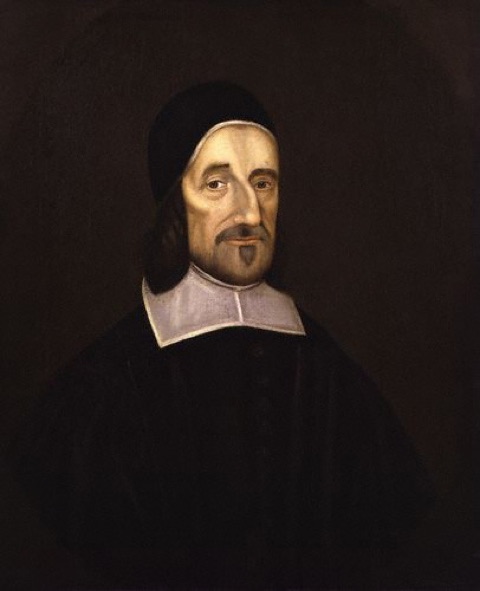
About the author
Richard Baxter
Richard Baxter (1615 to 1691 AD) was born at Rowton in Shropshire and was largely self-educated. Ordained in 1638, he settled at Kidderminster in 1641, where nineteen years of preaching and household catechizing brought most of the town's families into the life of the church. He served as a Parliamentary army chaplain and spent his career seeking common ground among Presbyterians, Independents and moderate Episcopalians. After the Restoration he declined the bishopric of Hereford, was ejected by the Act of Uniformity in 1662, and lived in London, writing and preaching when he could. In 1685 he was tried before Judge Jeffreys and imprisoned. He wrote over 160 books, among them The Saints' Everlasting Rest, The Reformed Pastor and A Call to the Unconverted, and died in London in 1691.